Samsung vs LG cells, BMS protection, voltage, capacity, and how to compare e-bike batteries when buying or replacing.
E-Bike Battery Types Explained: Lithium-Ion Cells, BMS, Voltage, and Capacity
Understanding your e-bike battery is the single most important thing you can do as an electric bike owner. The battery determines how far you ride, how much power your motor can draw, and how long the whole system lasts. This guide breaks down the technology inside modern e-bike batteries so you can make informed decisions when buying, replacing, or upgrading.
Lithium-Ion: The Standard for E-Bikes
Nearly every quality e-bike sold in Australia today uses lithium-ion (Li-ion) battery technology. Older chemistries like lead-acid and nickel-metal hydride (NiMH) still appear in budget products, but they are heavier, shorter-lived, and less energy-dense.
Within the lithium-ion family, there are several cell chemistries worth knowing about:
Lithium Nickel Manganese Cobalt (NMC) is the most common chemistry in e-bike batteries. It offers a good balance of energy density, power output, and lifespan. Most mid-range and premium e-bikes use NMC cells.
Lithium Iron Phosphate (LFP or LiFePO4) trades some energy density for improved safety and significantly longer cycle life. LFP batteries can handle 2,000 to 3,000 charge cycles compared to 500 to 1,000 for NMC. They are heavier for the same capacity but increasingly popular in cargo e-bikes and applications where longevity matters more than weight.
Lithium Nickel Cobalt Aluminium Oxide (NCA) is the chemistry Tesla made famous. It offers high energy density and is used in some premium e-bike batteries, though it is less common than NMC in the Australian market.
Cell Formats: 18650 and 21700
Inside your battery pack, individual cylindrical cells are connected in series and parallel configurations. The two dominant formats are:
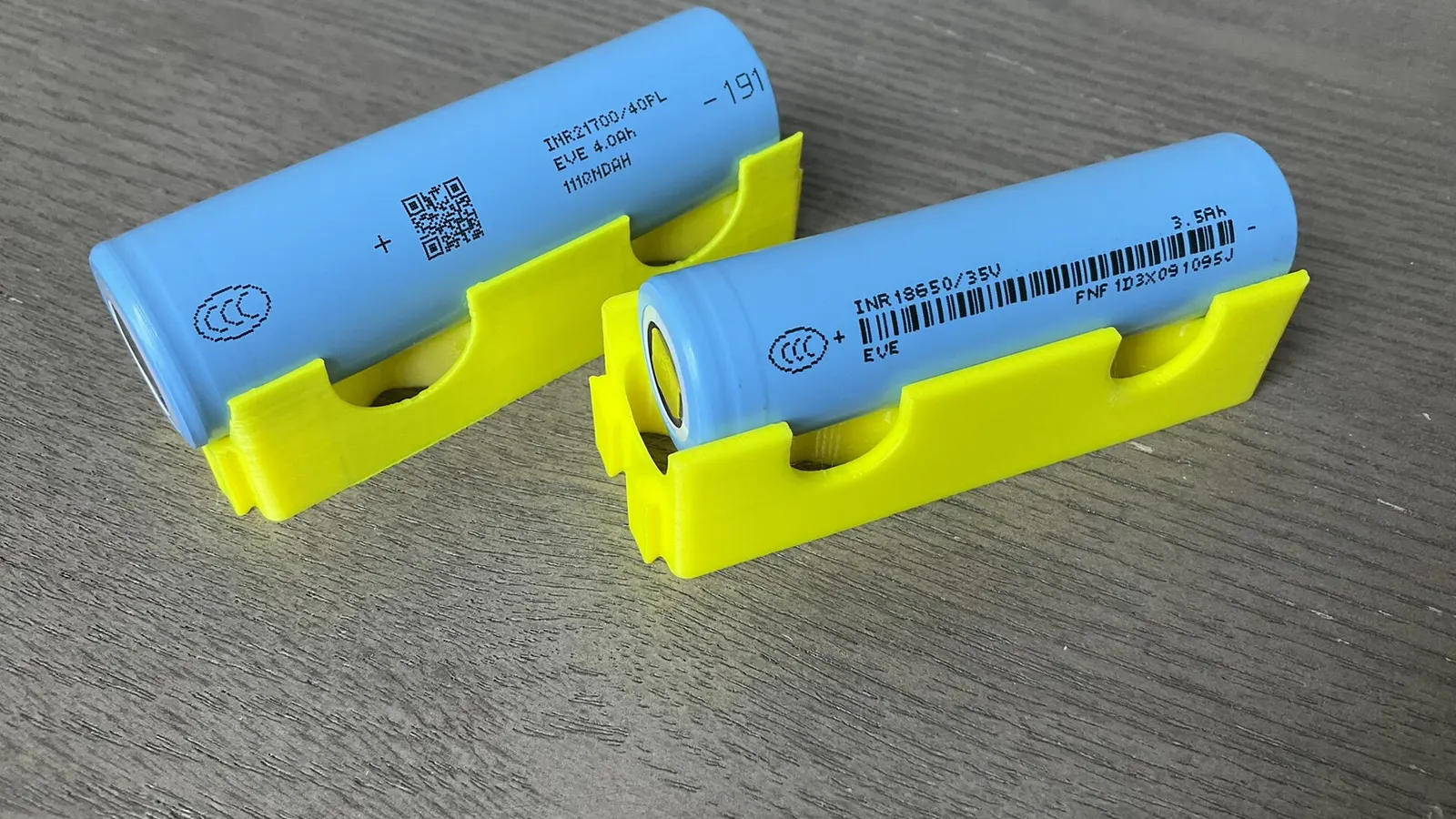
18650 cells measure 18mm in diameter and 65mm in length. They have been the workhorse of e-bike batteries for over a decade. A typical 18650 cell holds between 2,500mAh and 3,500mAh depending on the manufacturer and grade.
21700 cells are newer and larger at 21mm by 70mm. They hold more energy per cell (typically 4,000mAh to 5,000mAh), which means fewer cells are needed for the same capacity. This results in simpler pack construction and often better reliability. Most new premium e-bike batteries are shifting to 21700 format.
Cell Brands Matter
The quality of the cells inside your battery pack has a direct impact on performance, safety, and lifespan. Reputable cell manufacturers include:
Samsung SDI produces widely used cells like the 35E (18650, 3,500mAh) and 50E (21700, 5,000mAh). Samsung cells are found in many quality e-bike batteries sold in Australia.
LG Chem (now LG Energy Solution) makes popular cells including the MJ1 (18650, 3,500mAh) and M50 (21700, 5,000mAh). These are commonly used in Bosch and other branded battery systems.
Panasonic/Sanyo cells appear in some premium applications, including the NCR18650GA (3,450mAh). Panasonic has a long track record of reliability.
EVE Energy and CATL are Chinese manufacturers producing increasingly competitive cells, particularly in the LFP space. Quality has improved significantly, though consistency can vary between production batches.
Budget e-bike batteries often use unbranded or lower-grade cells. These may have inflated capacity ratings and shorter lifespans. If a 48V 20Ah battery costs half the price of a Samsung-cell equivalent, the cells inside are almost certainly lower quality.
The Battery Management System (BMS)
Every lithium-ion battery pack includes a Battery Management System, a circuit board that monitors and protects the cells. The BMS handles:
Cell balancing ensures all cells in the pack charge and discharge evenly. Without balancing, some cells degrade faster than others, reducing overall pack capacity and lifespan.
Overcharge protection cuts off charging when cells reach their maximum safe voltage (typically 4.2V per cell for NMC). Overcharging lithium-ion cells is a fire risk.
Over-discharge protection shuts down the battery before cells drop below their minimum safe voltage (typically 2.5V to 3.0V per cell). Deep discharging damages cells permanently.
Overcurrent protection limits the maximum discharge current to prevent cell damage and overheating.
Temperature monitoring shuts down the battery if cells get too hot or too cold. Charging lithium-ion cells below 0 degrees Celsius can cause lithium plating, which permanently damages cells and creates safety risks.
A quality BMS from a reputable manufacturer like Daly, JBD, or those integrated into branded systems (Bosch, Shimano, Yamaha) will have all these protections working reliably. Cheap BMS units may cut corners on balancing or temperature monitoring.
Voltage Configurations
E-bike batteries come in standard voltage configurations that must match your motor controller:
36V is common on commuter and city e-bikes. A 36V pack uses 10 cells in series (10S configuration) with a full charge voltage of 42V and a nominal voltage of 36V.
48V is the most popular voltage for general-purpose e-bikes in Australia. It uses 13 cells in series (13S) with a full charge of 54.6V and nominal voltage of 48V. The higher voltage allows more power delivery for hills and acceleration.
52V uses 14 cells in series (14S) with a full charge of 58.8V. It provides about 8 percent more power and range compared to 48V for the same amp-hour rating. Some aftermarket batteries use this configuration, but check your controller supports it first.
72V and above appears in high-power e-bikes and electric motorcycles. These are typically not road-legal for bicycle use in Australia.
Capacity: Amp-Hours and Watt-Hours
Battery capacity is rated in amp-hours (Ah) and watt-hours (Wh). The relationship is straightforward:
Watt-hours = Voltage x Amp-hours
A 48V 13Ah battery holds 624Wh. A 36V 14Ah battery holds 504Wh. Even though the 36V pack has a higher Ah rating, it stores less total energy.
For comparing batteries across different voltages, always use watt-hours. A 500Wh battery will take you roughly the same distance regardless of whether it is a 36V or 48V system, assuming similar motor efficiency.
In Australia, most commuter e-bikes ship with batteries between 400Wh and 750Wh. At typical commuting speeds with moderate pedal assist, expect roughly 60 to 100 kilometres per charge from a 500Wh battery, though terrain, rider weight, wind, and assist level all affect this significantly.
Buying and Replacing Batteries in Australia
Replacement batteries for branded systems (Bosch, Shimano, Yamaha, Specialized) are available through authorised dealers and typically cost between $700 and $1,500 AUD depending on capacity. These are plug-and-play replacements with matched BMS and firmware.
Aftermarket batteries for generic e-bikes and conversion kits range from $300 to $1,200 AUD. When buying aftermarket, look for:
- Named brand cells (Samsung, LG, or equivalent)
- A reputable BMS with balance leads
- Appropriate voltage and connector for your system
- A warranty of at least 12 months
- Australian supplier with local support
Avoid buying unbranded batteries directly from overseas marketplaces. Shipping lithium batteries internationally has strict regulations, and warranty claims across borders are difficult. Australian-based suppliers like those stocked at Independent Electric Bikes have already handled import compliance and can support you locally.
Storage and Care
Store batteries between 30 and 80 percent charge when not in use for extended periods. Avoid leaving a fully charged or fully depleted battery sitting for weeks. Keep batteries indoors at room temperature where possible, as Australian summer heat in garages and sheds can accelerate cell degradation.
Charge your battery at room temperature, never in direct sun or extreme cold. Use only the charger supplied with your battery or one rated for the exact voltage and connector type. Using the wrong charger is a fire hazard.
With proper care, a quality e-bike battery should last 500 to 1,000 full charge cycles before capacity drops noticeably, which translates to three to five years of regular use for most riders.
Need Parts or Upgrades?
Find batteries, chargers, conversion kits, tyres and brakes for e-bikes, scooters and more.
Shop Batteries, Parts & Kits →