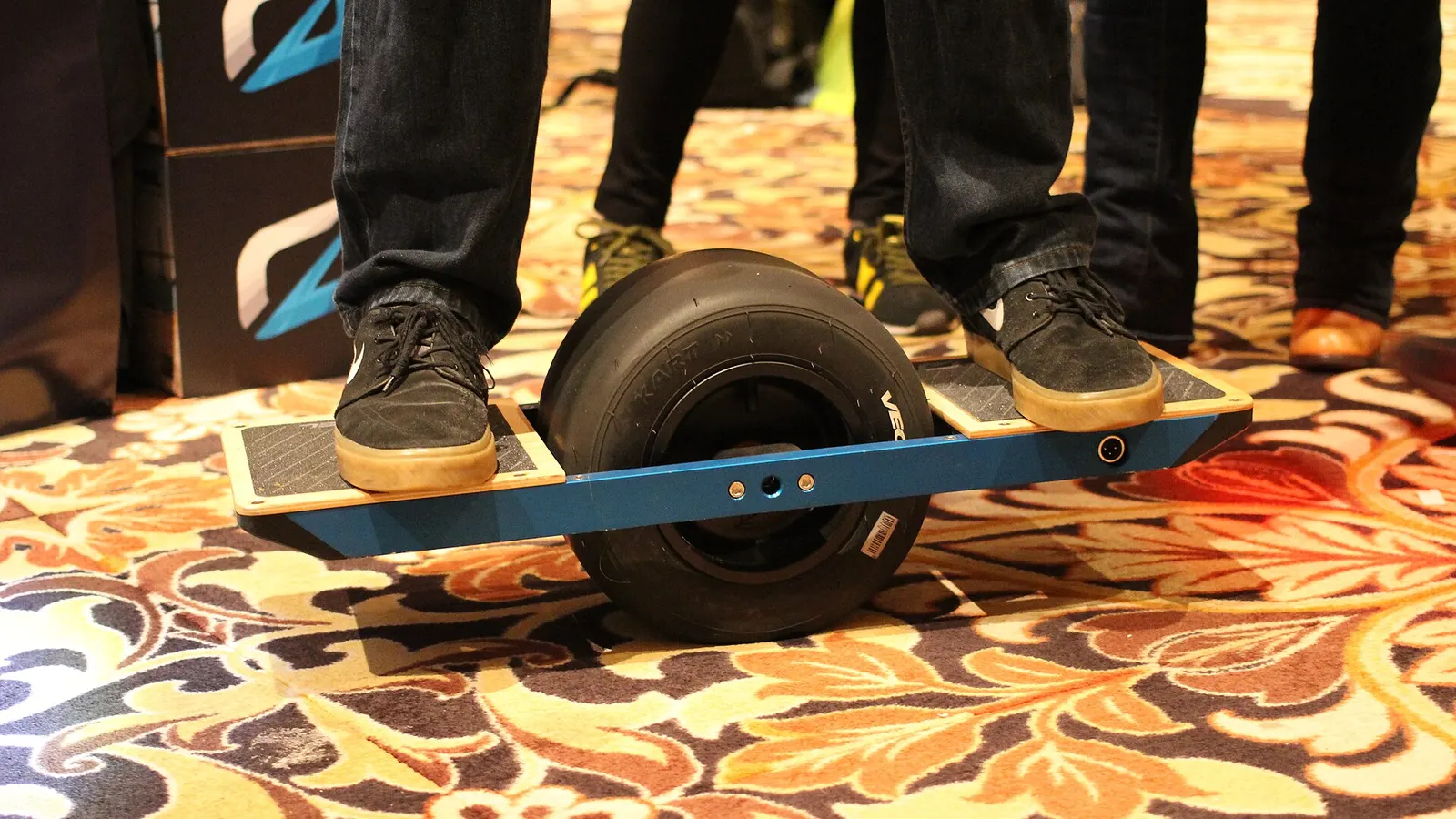
Single-wheel self-balancing boards — how they work, the learning curve, terrain capability, and Australian legal status.
Onewheel-style boards are a distinct category of electric rideable that looks and rides nothing like a traditional skateboard. A single large wheel in the centre of the board, self-balancing technology, and a riding stance closer to snowboarding than skateboarding make these boards a unique experience. This guide covers what you need to know before buying or riding one in Australia.
How They Work
A onewheel-style board has a single hub motor wheel mounted in the centre of the deck, with foot pads on either side. An internal gyroscope and accelerometer detect your body position and adjust motor power to keep the board balanced.
Lean forward to accelerate. Shift your weight toward the nose and the motor drives the wheel forward. Lean back to slow down and stop. The system reverses the motor to decelerate. Lean side to side to turn, using your ankles and hips to tilt the board into carves.
There is no remote control. All speed and braking input comes from your body position. This is what makes onewheel-style boards feel so different from remote-controlled electric skateboards, and why the learning curve is steeper.
The board only balances while it has power and detects a rider. Step off or run the battery flat and it falls over like a skateboard without wheels.
The Learning Curve
Expect to spend your first few sessions just learning to stand on the board and ride in a straight line. This is not a criticism; it is the reality.
Session one. Most people spend 30 to 60 minutes wobbling, stepping off repeatedly, and riding short distances at walking speed. Holding a wall or a friend's shoulder while mounting helps.
Session two to three. You start to find your balance point and can ride short distances without constant corrections. Turns feel awkward and wide.
Session five to ten. Basic riding feels comfortable. You can turn smoothly, manage moderate speed, and stop deliberately rather than by bailing.
Beyond ten sessions. Confidence on varied terrain, carving, and riding at higher speeds. Advanced techniques like trail riding come with more experience.
People with snowboarding, surfing, or wakeboarding experience tend to pick it up faster because the balance mechanics are similar. Skateboarders often struggle initially because the balance point and turning mechanics are different from what they are used to.
Terrain Capability
This is where onewheel-style boards genuinely stand out. The large, wide tyre handles terrain that would be impossible on a standard electric skateboard.
Grass. The wide tyre rolls over grass easily. Park riding is a genuine option, not just a theoretical one.
Gravel and dirt. Compacted gravel paths and dirt trails are well within the board's capability. Fire trails in national parks and reserves are excellent riding terrain.
Sand. Hard-packed beach sand works surprisingly well. Loose, deep sand does not, but riding along the tide line where the sand is firm can be genuinely fun.
Rough footpaths. The tyre absorbs cracks, lips, and uneven surfaces that would throw you off a standard skateboard. This makes them practical for Australian suburban footpaths, which are often far from smooth.
Wet surfaces. The board works on damp ground, but wet surfaces reduce traction significantly. Wet grass, wet tiles, and painted road markings are all dangerously slippery. Exercise caution.
Specifications That Matter
Wheel size and tyre type. Most boards use a tyre around 10 to 11 inches in diameter. Some use a treaded tyre for off-road grip, others a slick for smoother on-road riding. Some boards let you swap between tyre types.
Range. Battery capacity determines range. Budget models offer around 12 to 18 km. Premium boards can reach 25 to 40 km or more. As with all electric vehicles, real-world range depends on rider weight, terrain, speed, and temperature.
Top speed. Most onewheel-style boards top out at 25 to 35 km/h. The speed limit is partly a safety feature: the board needs reserve power to maintain balance. Pushing the board past its comfortable speed range triggers a pushback (the nose lifts to warn you). Ignoring pushback is the leading cause of serious nosedive crashes.
Weight. These boards are heavy. Expect 10 to 14 kg for a standard model. This is a consideration for carrying, though most boards have a carry handle integrated into the design.
Nosedive risk. This is the most discussed safety issue with onewheel-style boards. A nosedive occurs when the motor cannot maintain balance, usually because the rider has exceeded the speed limit, the battery is too low, or the rider has demanded too much torque (such as accelerating hard uphill). The nose drops suddenly, and the rider is thrown forward. Understanding and respecting the board's limits is essential.
Australian Laws
Onewheel-style boards fall under the same legal grey area as other electric personal transport devices in Australia. They are generally classified as motorised personal transport or similar.
Victoria has enacted personal mobility device legislation. Speed and power limits apply. Check the current VicRoads guidelines.
Queensland allows personal mobility devices on footpaths and shared paths with speed limits, typically 25 km/h on paths and 12 km/h in pedestrian areas.
New South Wales has been historically stricter. Electric rideables without specific approval may technically be prohibited on roads and footpaths, though enforcement varies.
Other states and territories have their own rules, which are evolving. Before riding, check your local transport authority's current position on personal mobility devices.
As a practical matter, riding sensibly on shared paths and footpaths at reasonable speeds rarely attracts attention. Riding on busy roads or at reckless speeds in pedestrian areas is asking for trouble regardless of the legal framework.
Cost in Australia
Onewheel-style boards are not cheap.
Budget options ($800 to $1,500). Third-party brands offer boards at lower price points. Quality varies significantly. Research thoroughly before buying, and look for boards with local warranty support.
Mid-range ($1,500 to $2,500). Better build quality, longer range, and more reliable electronics. This is the range where you find boards suitable for regular commuting or trail riding.
Premium ($2,500 to $4,000+). The original Onewheel brand and top-tier third-party boards. Long range, refined ride feel, strong build quality, and established service networks.
Factor in the cost of safety gear (helmet, wrist guards, knee pads), which adds $150 to $300 to your initial investment.
Essential Safety Gear
Onewheel-style boards have a specific crash profile. Falls tend to be forward (from nosedives or catching the nose on an obstacle) or sideways (from losing balance in a turn).
Wrist guards. Your instinct when falling forward is to put your hands out. Wrist guards prevent the fractures that commonly result from this.
Helmet. AS/NZS 2063 certified at minimum. A full-face helmet is worth considering for faster or off-road riding.
Knee and elbow pads. Protect the joints that take the brunt of sideways falls.
Appropriate shoes. Flat-soled shoes with good grip. Skate shoes work well. Avoid running shoes with curved soles, which can interfere with sensor activation and balance feel.
Tips for Getting Started
Start on grass. Soft ground is more forgiving when you fall, and the slower speed on grass gives you more time to react.
Learn to dismount. Before you worry about riding, learn to get off the board cleanly. Most boards require you to lift your heel off the rear sensor pad to disengage the motor. Practise this at a standstill until it is automatic.
Respect pushback. When the nose lifts to warn you that you are approaching the speed limit, slow down. Nosedives are the most dangerous failure mode, and they are almost always rider error.
Carry your charger. If your commute is at the edge of the board's range, carry the charger and top up at your destination. Running the battery too low increases nosedive risk and can leave you stranded.
Join a community. Australian onewheel groups on social media are active and welcoming to beginners. Group rides are a good way to learn from experienced riders, discover local trails, and get advice on setup and maintenance.
Onewheel-style boards are not for everyone. The learning curve is real, the price is significant, and the nosedive risk requires respect. But for riders who connect with the feel, they offer something no other electric rideable can match: the closest thing to snowboarding or surfing on dry land.
Ready to Balance?
See electric unicycles and hoverboards for beginners and experienced riders.
Shop Self-Balancing EVs →