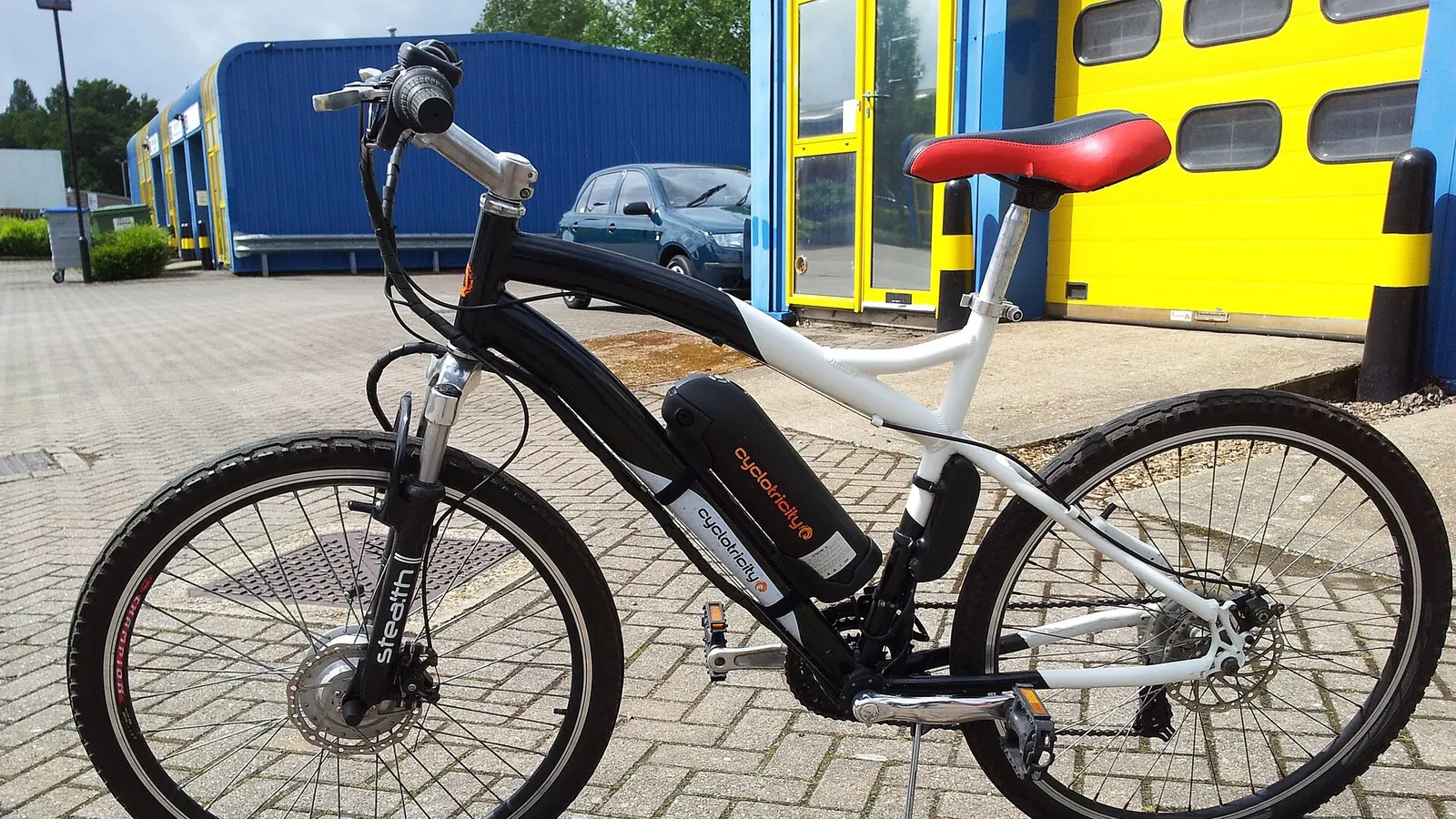
What to expect from a budget e-bike, what to prioritise, where to buy, and the upgrades that make a $1,500 bike ride like a $2,500 one.
A $2,000 budget buys a real, usable e-bike in Australia — not a toy. You will not get Bosch or Shimano motors at this price, but you will get a bike that handles a daily commute, climbs moderate hills, and lasts 3–5 years with proper maintenance.
What to Expect Under $2,000
What You Get
- Motor: hub motor (rear), 250 W, 35–50 Nm torque. Adequate for flat to moderately hilly terrain.
- Battery: 360–500 Wh. Range: 30–60 km on medium assist.
- Brakes: mechanical disc brakes (adequate but not as good as hydraulic).
- Gears: 7–9 speed derailleur (Shimano Tourney or Altus — entry-level but functional).
- Frame: aluminium alloy, decent quality.
- Display: basic LCD showing speed, battery level, assist mode, and distance.
What You Do Not Get
- Mid-drive motor: these start at $2,500+ for the cheapest Bafang systems and $3,500+ for Bosch/Shimano.
- Hydraulic disc brakes: most budget e-bikes come with mechanical discs. Upgrading to hydraulic costs $100–$200.
- Integrated battery: budget bikes often have external frame-mounted or rack-mounted batteries (functional but less sleek).
- Premium display and app connectivity: no Bluetooth, no smartphone integration, no over-the-air updates.
- Suspension fork (quality): budget forks are heavy and offer minimal damping. Functional on smooth roads, poor on rough terrain.
What Matters Most at This Price
1. Battery Quality
The battery is the most important component and the most common failure point on budget e-bikes. Look for:
- Named cells: Samsung, LG, or Panasonic cells (ask the seller). No-name cells degrade faster and are a fire risk.
- Minimum 400 Wh: below this, range is too limited for practical commuting.
- BMS (Battery Management System): every reputable battery has a BMS. If the seller cannot confirm BMS protection (overcharge, over-discharge, short circuit, temperature), do not buy.
2. Braking
A 25 kg e-bike needs reliable brakes. Mechanical disc brakes are acceptable at this price point — but test them. They should stop the bike firmly from 25 km/h within 10 metres on dry road.
Upgrade path: if the bike comes with mechanical disc brakes, you can upgrade to hydraulic for $100–$200 at a bike shop. This is the single best upgrade you can make on a budget e-bike.
3. Tyre Quality
Cheap tyres puncture constantly. If the stock tyres are no-name, budget $60–$100 to replace them with puncture-resistant tyres (Schwalbe Marathon, Continental Contact Plus). This saves more frustration than any other upgrade.
4. Frame Fit
A cheap bike in the right size is better than an expensive bike in the wrong size. Check standover height, reach, and seat height range. Test ride before buying.
Where to Buy
Online Direct (Best Value)
Many budget e-bike brands sell direct to consumer online, skipping the bike shop margin. You assemble the bike yourself (typically handlebars, pedals, front wheel, and seat — 15–30 minutes with basic tools).
Advantage: lowest price. Disadvantage: no in-person test ride, no professional assembly, warranty service may be slow.
Bike Shops
Some local bike shops carry budget e-bike brands. You pay more ($200–$400 premium) but get professional assembly, a test ride, and local warranty service.
Advantage: test ride, professional setup, local support. Disadvantage: higher price, limited brand selection.
Marketplaces (eBay, Amazon Australia)
Budget e-bikes are available on eBay and Amazon. Prices can be very low ($800–$1,500), but:
- Quality is unpredictable
- Warranty service may be non-existent (especially from overseas sellers)
- Australian Consumer Law may not apply to overseas sellers
- Assembly instructions may be poor
- Replacement parts may be unavailable
Recommendation: buy from an Australian-based seller on these platforms. Check the return policy and warranty terms before purchasing.
What to Avoid
- Sub-$1,000 e-bikes: at this price, the battery is small (under 300 Wh), the cells are no-name, the brakes are weak, and the overall build quality is poor. You will spend more fixing it than you saved buying it.
- No-name brands with no Australian presence: if the brand has no website, no Australian contact, and no spare parts availability, avoid it. When something breaks (and it will), you need parts and support.
- Overpowered motors (500 W+, 750 W+): these are not legal on Australian roads (250 W continuous is the limit). They are also a sign that the bike is designed for markets with different regulations and may not meet Australian safety standards.
- Throttle-only bikes (no pedal assist): pure throttle e-bikes above 200 W are not classified as bicycles in most Australian states. You need pedal assist.
Upgrades Worth Doing
If you buy a budget e-bike and want to improve it:
| Upgrade | Cost | Impact |
|---|---|---|
| Puncture-resistant tyres | $60–$100 | High — eliminates the most common maintenance hassle |
| Hydraulic disc brakes | $100–$200 | High — dramatically better stopping power and feel |
| Ergonomic grips | $20–$40 | Medium — reduces hand numbness on longer rides |
| Quality saddle | $40–$80 | Medium — comfort on rides over 30 minutes |
| Mudguards | $30–$60 | Medium — essential for wet weather commuting |
| Rear rack | $30–$60 | Medium — carries panniers for commuting gear |
Total upgrade cost: $280–$540. A $1,500 bike with $400 in upgrades often rides better than a $2,500 bike out of the box.
Longevity
A well-maintained budget e-bike lasts 3–5 years of daily commuting. The limiting factors are:
- Battery: 500–800 charge cycles before significant degradation (2–4 years of daily use)
- Motor: hub motors are durable (5,000–15,000 km before bearing replacement)
- Drivetrain: chain every 2,000–4,000 km, cassette every 6,000–10,000 km
- Frame: aluminium frames last indefinitely with normal use (no crashes)
Annual maintenance budget: $200–$400 for chains, brake pads, tyres, and an annual service.
Bottom Line
A budget e-bike under $2,000 is a viable daily commuter if you buy smart: prioritise battery quality (named cells, 400+ Wh), check the brakes, and upgrade the tyres. Avoid sub-$1,000 bikes and no-name brands with no Australian support. The best value is a $1,400–$1,800 bike with $200–$400 in targeted upgrades (tyres, brakes, grips). It will not match a $4,000 Bosch-powered bike, but it will get you to work reliably for 3–5 years at a fraction of the cost.
Ready to Find Your E-Bike?
Browse commuter, cargo, folding and mountain e-bikes from Brunswick, Victoria, with express freight across Australia.
Shop E-Bikes →