How hub motors, mid-drive motors, and friction drives work — torque, efficiency, maintenance, and which type suits your riding style.
Every e-bike has a motor. The motor type determines how the bike rides, how it handles hills, how much maintenance it needs, and how long it lasts. Here is what each type does, where it sits, and what it is best for.
Hub Motors
A hub motor is built into the centre of a wheel — either the front wheel or (more commonly) the rear wheel. The motor spins the wheel directly.
Rear Hub Motors
The most common e-bike motor type worldwide. The motor sits in the rear wheel hub and drives the wheel directly.
How it works: the motor spins the rear wheel. Your pedalling and the motor both drive the same wheel. The bike's gears (if it has a derailleur) only affect your pedal input — the motor always drives the wheel at a fixed ratio.
Subtypes:
Geared hub motor:
- Contains internal planetary gears that reduce motor speed and increase torque
- Smaller and lighter than direct-drive (2–3 kg)
- Has a freewheel mechanism — when the motor is off, the wheel spins freely with no drag
- Moderate torque (40–60 Nm)
- Quieter at low speed, slight whir at high speed (gear noise)
- Gears wear over time (3,000–10,000 km depending on load)
- Cannot do regenerative braking (the freewheel disconnects the motor)
Direct-drive hub motor:
- The motor IS the hub — no gears, no moving parts except the axle and bearings
- Larger and heavier (3–6 kg)
- No freewheel — the motor always spins with the wheel, creating slight drag when the motor is off
- High torque at low speed (50–80 Nm)
- Near-silent operation
- Extremely durable (no gears to wear out, only bearings)
- Can do regenerative braking (the motor acts as a generator when coasting or braking)
Front Hub Motors
The motor sits in the front wheel hub. Less common than rear hub, but used on some conversion kits and budget e-bikes.
Advantage: creates an all-wheel-drive effect — the motor drives the front wheel, your pedals drive the rear wheel. This can improve traction on loose or slippery surfaces.
Disadvantages:
- Front-heavy weight distribution (the motor adds 2–4 kg to the front wheel)
- Reduced front-wheel traction on steep climbs (weight shifts backward, front wheel lightens)
- Steering feels heavier
- Higher risk of front-wheel spin on wet or loose surfaces (the motor can overpower front-wheel traction)
Best for: conversion kits where the rear wheel is complicated to modify (internal hub gears, disc brakes, etc.)
Hub Motor Summary
| Feature | Geared hub | Direct-drive hub | Front hub |
|---|---|---|---|
| Weight | 2–3 kg | 3–6 kg | 2–4 kg |
| Torque | 40–60 Nm | 50–80 Nm | 30–50 Nm |
| Noise | Slight whir | Near-silent | Slight whir |
| Drag (motor off) | None (freewheel) | Slight (cogging) | Varies |
| Regen braking | No | Yes | Sometimes |
| Hill performance | Moderate | Moderate | Poor |
| Maintenance | Gear replacement (3–10k km) | Bearings only | Gear replacement |
| Best for | City commuting | Flat terrain, regen | Conversion kits |
Mid-Drive Motors
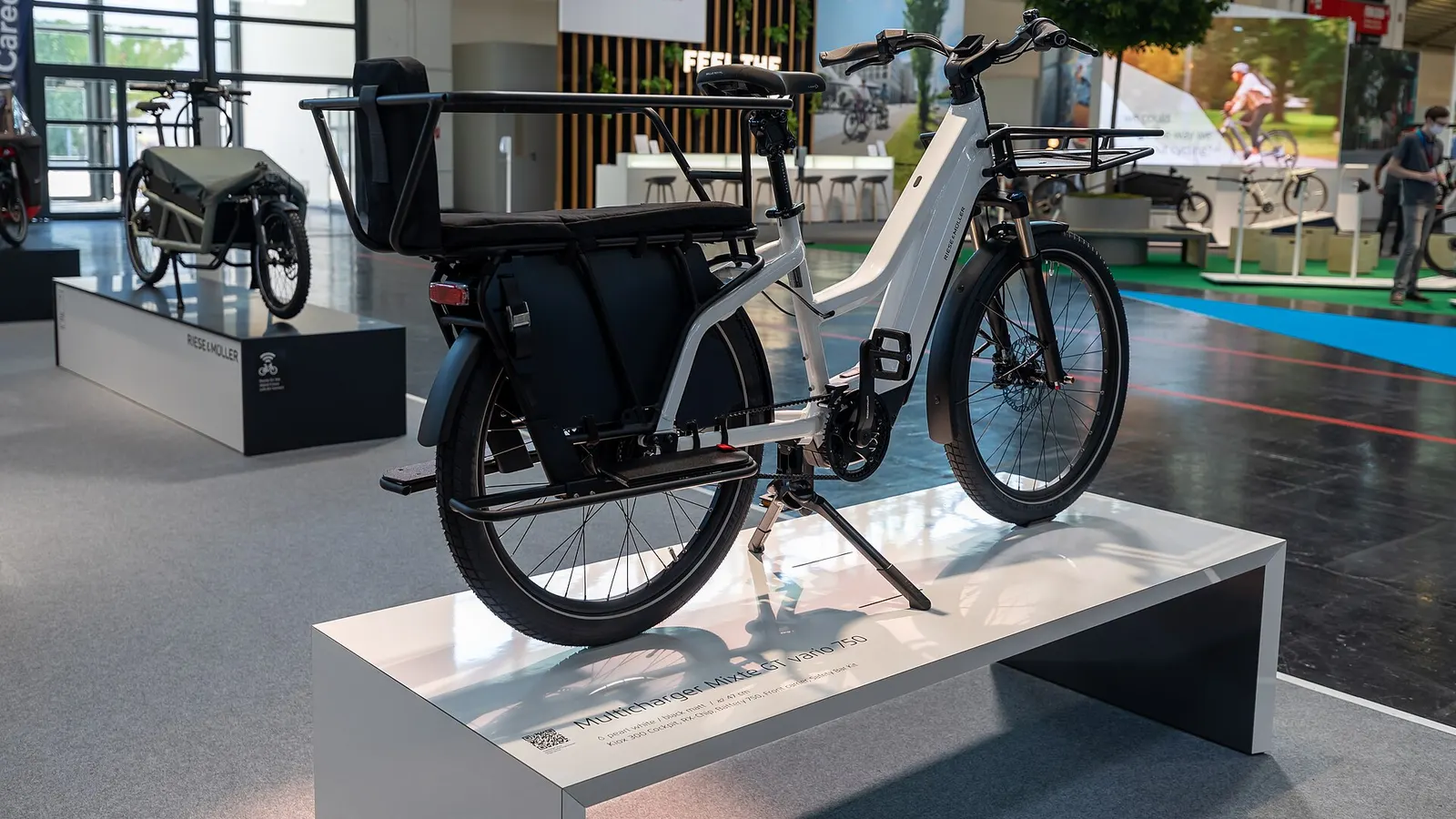
A mid-drive motor sits at the bottom bracket (where the pedal cranks meet the frame). It drives the chain — which means it uses the bike's gears.
How It Works
The motor adds power to the chain at the chainring. When you shift to a lower gear (easier), the motor's output is multiplied by the gear ratio — just like your own pedalling effort. This is why mid-drives excel on hills: in a low gear, the motor's torque is effectively doubled or tripled at the rear wheel.
Advantages
- Exceptional hill climbing: gear multiplication means more torque at the wheel on steep climbs than any hub motor at the same wattage
- Balanced weight: the motor sits low and central in the frame — the bike handles naturally
- Efficient across all speeds: the motor operates at its optimal RPM because the gears keep it in range, regardless of wheel speed
- Compatible with any wheel: the motor is not in the wheel, so you can change tyres, wheels, and hubs freely
- Better suspension performance: unsprung weight (weight in the wheel) is lower than with a hub motor, so suspension works more effectively
Disadvantages
- Accelerated drivetrain wear: the motor's torque goes through the chain, cassette, and chainring. These components wear 2–3× faster than on a non-assisted bike or a hub-motor e-bike.
- Maintenance cost: chains every 1,500–3,000 km, cassettes every 3,000–6,000 km, chainrings every 5,000–10,000 km. On a daily commuter, this adds $100–$300/year in drivetrain parts.
- More expensive: mid-drive systems from Bosch, Shimano, Yamaha, and Bafang cost more than equivalent hub motors
- Noisy shifting under load: if you shift gears while the motor is pushing hard, the chain crunches. You must ease off the pedals momentarily when shifting — this takes practice.
- Cannot run without the chain: if the chain breaks, you have no motor assist and no pedalling. A hub motor works independently of the chain.
Major Mid-Drive Brands
Bosch:
- The premium standard. Performance Line CX (85 Nm), Active Line Plus (50 Nm)
- Smooth, natural-feeling assist. Excellent integration with Bosch displays and app.
- Proprietary — you must use Bosch batteries, displays, and chargers.
- Expensive to repair outside the Bosch dealer network.
Shimano Steps:
- EP8 (85 Nm), E6100 (60 Nm), E5000 (40 Nm)
- Lightweight and compact. Very quiet. Natural pedalling feel.
- Uses Shimano's own battery and display ecosystem.
- Shimano's global dealer network makes service accessible.
Yamaha:
- PW-X3 (85 Nm), PW-CE (50 Nm)
- Powerful and responsive. Slightly noisier than Shimano.
- Less common in Australia than Bosch or Shimano.
Bafang:
- M500/M600 (95 Nm), BBS01/BBS02 (aftermarket conversion)
- Affordable, powerful, widely available. Open protocol — works with third-party batteries.
- Build quality varies. BBS02 is the most popular conversion kit motor in the world.
- Fewer authorised service centres than Bosch or Shimano.
Mid-Drive Summary
| Feature | Value |
|---|---|
| Weight | 2.5–4 kg (motor unit) |
| Torque | 40–120 Nm (at the crank; effective torque at the wheel is higher due to gear multiplication) |
| Noise | Gear whine (variable, depends on brand and speed) |
| Hill performance | Excellent |
| Drivetrain wear | High — budget for chain and cassette replacements |
| Cost | Higher than hub motors |
| Best for | Hills, touring, mountain biking, loaded riding |
Friction Drive Motors
A friction drive motor sits on the bike frame and drives the tyre by pressing a roller against the tyre surface. The roller spins, the tyre spins.
Advantages
- Very simple to install (bolt-on, no wheel removal)
- Works on almost any bike (no compatibility issues)
- Cheap ($200–$500 for a kit)
Disadvantages
- Wears out the tyre (the roller abrades the tyre surface)
- Poor traction in wet conditions (the roller slips on a wet tyre)
- Noisy (roller-on-rubber noise)
- Low efficiency (friction losses at the contact point)
- Low torque (limited by the friction between roller and tyre)
Who Uses Them
Almost nobody. Friction drives are obsolete — superseded by hub motors and mid-drives in every performance metric. They survive only in the cheapest, simplest conversion kits.
How to Choose
| If you... | Choose... |
|---|---|
| Commute on flat terrain | Geared rear hub motor |
| Commute in a hilly city | Mid-drive (Bosch, Shimano, or Bafang) |
| Want minimum maintenance | Direct-drive rear hub motor |
| Want regenerative braking | Direct-drive rear hub motor |
| Want the best hill climbing | Mid-drive with wide-range cassette |
| Are converting an existing bike | Rear hub kit (simple) or Bafang BBS02 mid-drive (powerful) |
| Want the lightest bike | Mid-drive (Shimano EP8 or E5000) |
| Ride off-road / mountain trails | Mid-drive (for ground clearance and suspension compatibility) |
Bottom Line
Hub motors are simple, reliable, and low-maintenance — ideal for flat commuting. Mid-drive motors are more efficient on hills, more natural-feeling, and better for loaded riding — but they wear out chains and cassettes faster. For most Australian urban commuters, a geared rear hub motor is the practical choice. For hilly terrain, touring, or mountain biking, a mid-drive is worth the extra cost and maintenance.
Ready to Find Your E-Bike?
Browse commuter, cargo, folding and mountain e-bikes from Brunswick, Victoria, with express freight across Australia.
Shop E-Bikes →