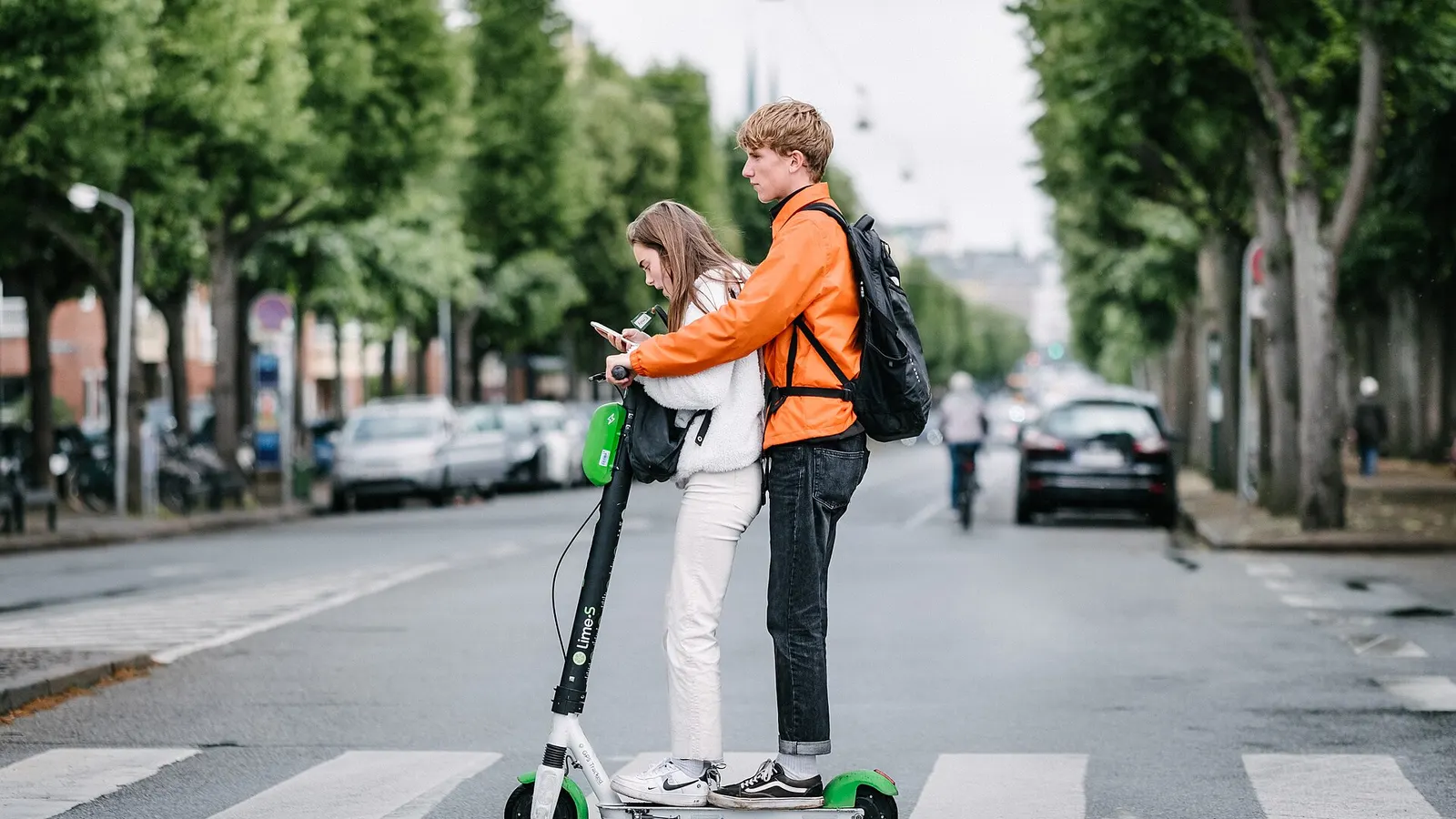
Comparing e-bikes and e-scooters for children and teenagers — legal status by state, age-appropriate choices, safety, cost, and the practical decision.
Kids want wheels. Electric bikes and electric scooters are the two most practical options — but they suit different ages, different riding environments, and different levels of responsibility.
Legal Status for Kids
Electric Bikes
In Australia, a pedal-assist e-bike (250 W, 25 km/h cut-off) is classified as a bicycle. Children can ride them wherever bicycles are allowed:
- Roads (varies by age — in Victoria, children under 12 should be accompanied by an adult on roads)
- Bike paths and shared paths
- Footpaths (state-dependent — allowed for children in all states)
No licence required. No registration required. Helmet mandatory at all ages.
Age consideration: most e-bikes are designed for adult-sized riders. A child under 12 may not be able to reach the ground, the handlebars, or the brake levers safely on a full-sized e-bike. Smaller e-bikes (20" or 24" wheels) are available for younger riders.
Electric Scooters
The legal status of electric scooters for children varies dramatically by state:
| State | E-scooter on roads | E-scooter on footpaths | Age restriction |
|---|---|---|---|
| VIC | Illegal | Illegal (unless zero-powered) | N/A (illegal for all) |
| NSW | Illegal | Illegal | N/A (illegal for all, trial areas excepted) |
| QLD | Legal (bike lanes, paths, footpaths) | Legal | 12+ (under 16 on footpath only) |
| SA | Legal (with restrictions) | Legal | 16+ (provisional) |
| WA | Limited trials | Limited | Varies |
| TAS | Legal (bicycle rules apply) | Legal | No age restriction |
| ACT | Legal | Legal | No age restriction |
| NT | Legal | Legal | No age restriction |
Critical note: in Victoria and NSW, private e-scooters are currently illegal on public roads, paths, and footpaths. Only rental scooters in approved trial areas are permitted. This makes e-bikes the only legal electric option for kids in these states.
Age-Appropriate Choices
Ages 5–8
Best option: regular bicycle or kick scooter. Electric vehicles are not necessary or appropriate at this age — children need to develop balance, coordination, and road awareness on unpowered vehicles first.
Ages 8–12
Best option: electric bike with speed limiter or small electric scooter (where legal).
E-bike considerations:
- 20" or 24" wheel size to fit the child
- Speed limiter (many children's e-bikes limit assist to 15–20 km/h)
- Simple controls (single assist level or a parent-adjustable limit)
- Must be able to touch the ground flat-footed when seated
- Must be able to reach and squeeze both brake levers fully
E-scooter considerations (where legal):
- Maximum speed 15–20 km/h
- Lightweight (under 12 kg — they need to carry it up steps and onto buses)
- Solid tyres (no punctures) or pneumatic tyres (better ride)
- Dual brakes (front electronic + rear foot brake, or dual disc)
Ages 12–16
Best option: either, depending on the child's needs and your state's laws.
E-bike advantages for teens:
- Legal everywhere in Australia
- Exercise (the motor assists, but they still pedal)
- Longer range than scooters (30–60 km vs 15–30 km)
- Carries bags and gear (school bag on a rear rack)
- Teaches road cycling skills that carry into adulthood
E-scooter advantages for teens (where legal):
- Compact and portable (fold and carry inside, onto public transport)
- No storage problem (stands in a corner, fits under a desk)
- Lower entry cost ($500–$1,500 vs $1,200–$3,000 for an e-bike)
- Easier to learn (stand and go vs pedalling and balancing)
- Cooler (teen social currency — scooters are currently more fashionable than bikes in many peer groups)
Ages 16+
At 16, teens can ride adult-sized e-bikes and (in most states) electric scooters with full-power specs. The choice depends on distance, terrain, and purpose:
- E-bike for commuting to school/work (5+ km, hills, carrying gear)
- E-scooter for short trips (under 5 km, flat terrain, no cargo)
Safety Comparison
E-Bike Safety
- Stability: two wheels with a low centre of gravity. Stable at speed and over rough surfaces.
- Braking: disc brakes (mechanical or hydraulic) provide strong, consistent stopping.
- Visibility: larger profile than a scooter. More visible to drivers.
- Protection: more balanced — a fall from an e-bike at 20 km/h is manageable with a helmet.
- Skill level: requires cycling proficiency (balance, steering, gear shifting, signalling).
E-Scooter Safety
- Stability: two small wheels with a high centre of gravity. Less stable than a bike, especially on rough surfaces, wet roads, and over bumps.
- Braking: varies widely. Good scooters have dual disc brakes. Cheap scooters have weak or unpredictable braking.
- Visibility: small profile, low to the ground. Less visible to drivers than a cyclist.
- Falls: scooter falls tend to be forward (over the handlebars) and are more likely to result in wrist, elbow, and head injuries. The standing position makes falls less controlled than bicycle falls.
- Skill level: low entry barrier (easy to learn) but high risk at speed (small wheels + rough surfaces = sudden stops).
Injury Data
Hospital data from Australian emergency departments shows that e-scooter riders are more likely to present with upper-limb injuries (wrists, arms) and head injuries than cyclists. The standing position and small wheels contribute to sudden, uncontrolled falls.
Cost Comparison
| Kids' e-bike | Kids'/teen e-scooter | |
|---|---|---|
| Purchase price | $800–$2,500 | $400–$1,500 |
| Helmet | $50–$150 | $50–$150 |
| Lock | $50–$100 | $30–$50 (scooter is portable — lock optional) |
| Annual maintenance | $100–$300 | $50–$150 |
| Battery replacement | $300–$800 (after 3–5 years) | $200–$500 (after 2–4 years) |
E-bikes are more expensive upfront but offer a longer useful life (the child can ride a properly sized e-bike for 3–5 years, then pass it down or sell it). E-scooters are outgrown less (they are one-size) but have shorter battery life and are more likely to be damaged or abandoned.
The Practical Decision
Choose an e-bike if:
- Your state restricts e-scooters (VIC, NSW)
- The child commutes more than 3 km
- The route includes hills
- They need to carry a school bag
- You want them to get exercise
- You want a vehicle that lasts 3+ years
Choose an e-scooter if:
- Your state allows them (QLD, TAS, ACT, NT, trial areas in other states)
- The child's trips are short (under 3 km)
- Storage is limited (apartment, no garage)
- They use public transport as part of the journey (fold and carry)
- Budget is tight
Bottom Line
For most Australian kids and teens, an e-bike is the safer, more legal, and more versatile choice — it works in every state, carries gear, provides exercise, and teaches cycling skills. E-scooters are cheaper, more portable, and easier to learn, but their legal status is restricted in the two most populous states (VIC and NSW). Whichever you choose: helmet always, start slow, and supervise until the child demonstrates consistent road awareness and vehicle control.
Ready for the Kids?
Browse electric balance bikes, dirt bikes, go-karts and trikes for young riders.
Shop Kids & Off-Road EVs →