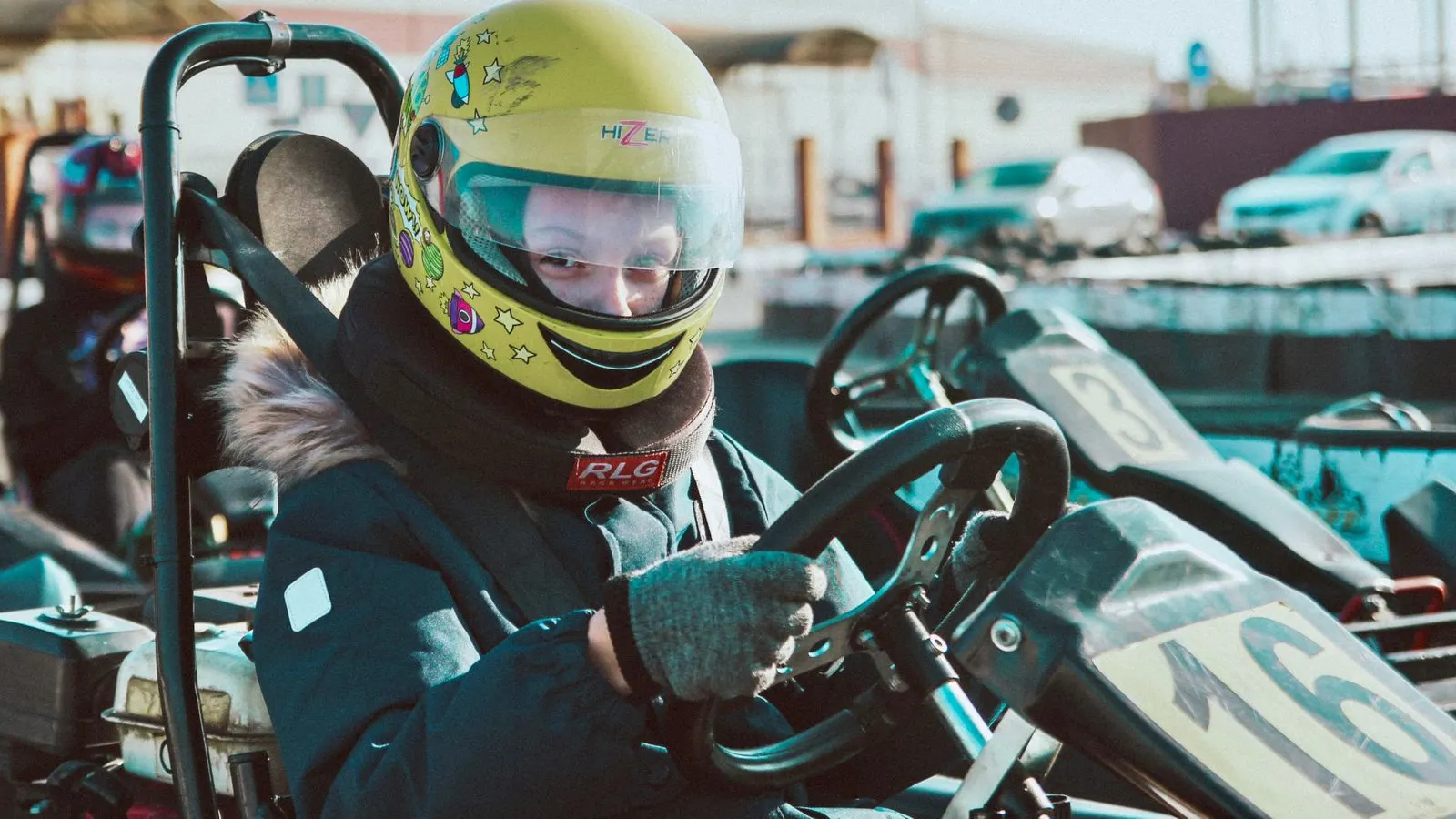
Electric go-karts and drift trikes — types, age ranges, speed settings, driveway vs track use, and Australian options.
Electric Go-Karts for Kids: Types, Speeds, and What Australian Parents Need to Know
Electric go-karts give kids a taste of motorsport without the noise, fumes, and mechanical complexity of petrol karts. Whether your child wants to tear around the driveway or you are considering a stepping stone into karting, this guide covers what is available in Australia and how to choose the right one.
Types of Electric Go-Karts
Not all electric go-karts are built the same. They fall into three broad categories:
Ride-On Toy Karts (Ages 3-7)
These are battery-powered ride-on toys shaped like go-karts. They typically run on 12V or 24V lead-acid batteries, reach 5-10 km/h, and weigh 15-25 kg. They have plastic bodies, basic steering, and minimal suspension. Think of them as a step up from a Power Wheels car.
Price range: $200-$600 AUD.
Best for: Driveways, flat backyards, and supervised play on smooth surfaces.
Performance Electric Karts (Ages 6-14)
These are proper four-wheeled vehicles with steel or aluminium frames, pneumatic tyres, adjustable seats, and sometimes even roll cages. Power comes from 36V or 48V systems producing 500W-1500W. Top speeds range from 15 km/h to 35 km/h, usually with multiple speed settings.
Price range: $800-$3,000 AUD.
Best for: Larger backyards, paddocks, unsealed driveways, and private tracks.
Drift Karts (Ages 8-16)
A specialised type with hard plastic rear wheels designed to break traction and slide. Drift karts are built for controlled sliding on smooth surfaces like car parks, warehouse floors, or sealed driveways. They typically run 36V-48V systems and reach 15-25 km/h.
Price range: $600-$2,500 AUD.
Best for: Smooth, flat surfaces only. Not suitable for rough ground.
Speed and Power by Age
Here is a practical guide to matching kart capability with age:
- Ages 3-5: Maximum 8 km/h. A 12V ride-on kart with a single speed or a parental remote control. The child should be able to reach the pedal and steer confidently.
- Ages 5-8: Up to 15 km/h. A 24V kart with adjustable speed. The child needs to understand "stop means stop" and be able to steer around obstacles.
- Ages 8-12: Up to 25 km/h. A 36V or 48V kart with disc brakes and proper tyres. At these speeds, a helmet is essential.
- Ages 12-16: Up to 35 km/h. Higher-powered karts approaching the performance of entry-level petrol karts. Full safety gear is non-negotiable.
Driveway vs Track Use
Most families buy an electric go-kart for driveway and backyard use. This works fine with a few considerations:
Driveway riding:
- Clear the area of cars, bins, toys, and other obstacles
- Block the driveway entrance so the kart cannot reach the street
- Smooth concrete or asphalt is ideal; gravel works for pneumatic-tyred karts but not plastic-wheeled toy karts
- Supervise at all times, especially near slopes — even gentle inclines can accelerate a kart faster than the child expects
Paddock or property riding:
- Mow the grass short so the kart does not bog
- Check for hidden holes, rocks, and debris
- Flag or mark any hazards like fence posts, irrigation covers, or tree stumps
- Keep the riding area away from dams, creeks, and livestock
Track use:
- Some indoor karting centres do not allow private electric karts due to insurance
- Outdoor kart tracks may allow private karts during practice sessions — ask the operator
- Purpose-built backyard tracks (using hay bales or tyres as barriers) work well for performance karts
Safety Gear and Precautions
For toy-grade karts under 10 km/h, a bicycle helmet and closed-toe shoes are the minimum. For anything faster:
- Helmet: AS/NZS 2063 bicycle helmet minimum. A full-face karting or motocross helmet is better for speeds above 15 km/h.
- Gloves: Protect against blisters and abrasions.
- Long pants and sleeves: Jeans and a long-sleeve top prevent gravel rash.
- Closed-toe shoes: Boots or sturdy sneakers. No thongs.
- Seatbelt or harness: If the kart has one, use it. If it does not and the kart exceeds 15 km/h, consider adding one.
Other precautions:
- Never let children ride on public roads or footpaths. Electric go-karts are not road-legal in any Australian state.
- Set the speed limiter to the lowest mode for the first few sessions.
- Teach braking before speed. The child should be able to stop the kart reliably before you allow higher speed modes.
- Check tyre pressure, steering responsiveness, and brake function before each session.
Battery Life and Charging
Ride times vary by kart type and usage:
- 12V toy karts: 30-60 minutes
- 24V toy karts: 45-90 minutes
- 36V performance karts: 60-120 minutes
- 48V performance karts: 90-180 minutes
Aggressive riding (constant acceleration and braking) drains the battery faster. Hills also consume more power. Most karts charge fully in 4-8 hours. Lithium battery karts charge faster and last longer than lead-acid models but cost more upfront.
Store batteries indoors during Australian summers. Temperatures above 40 degrees Celsius damage lithium and lead-acid batteries alike.
Brands and Availability in Australia
The Australian market for kids' electric go-karts includes:
- Razor: The Razor Crazy Cart and Razor Dune Buggy are widely available through retailers like Toyworld, Big W, and online. Entry-level pricing from around $400 AUD.
- Berg: Dutch brand offering pedal and electric karts. Higher build quality and price point, available through specialty retailers. From $1,500 AUD.
- Segway Ninebot GoKart: An electric kart attachment for the Segway Ninebot S. Clever design but limited availability in Australia. Around $1,500-$2,500 AUD.
- Various imports: Many electric karts sold on marketplace platforms come from Chinese manufacturers. Quality ranges from surprisingly good to dangerously poor. Look for genuine disc brakes, steel frames, and pneumatic tyres as quality indicators.
What to Look for When Buying
- Weight capacity: Check the maximum rider weight. Overloading a kart strains the motor, battery, and frame.
- Speed control: Adjustable speed modes are essential. A kart with only one speed setting is either too slow for older kids or too fast for younger ones.
- Braking system: Disc brakes are preferable. Friction brakes on the wheel or motor are adequate for slow toy karts but insufficient at higher speeds.
- Frame material: Steel or aluminium frames are durable. Plastic frames crack and flex.
- Tyre type: Pneumatic (air-filled) tyres grip better and absorb bumps. Solid plastic or foam tyres are maintenance-free but offer poor grip and a harsh ride.
- Spare parts: Can you buy replacement batteries, tyres, and brake pads in Australia? If the answer is no, think carefully before buying.
The Bigger Picture
An electric go-kart is often a child's first experience with controlling a powered vehicle at speed. It teaches steering, braking, spatial awareness, and risk assessment in a relatively low-consequence environment. For families in regional or rural Australia with space to ride, it is a practical alternative to screen time that gets kids outdoors and active.
For children who develop a serious interest, the transition to competitive karting (either electric or petrol) is a natural next step. Karting Australia runs junior categories from age 7, and the skills learned on a backyard electric kart translate directly to the track.
Ready for the Kids?
Browse electric balance bikes, dirt bikes, go-karts and trikes for young riders.
Shop Kids & Off-Road EVs →