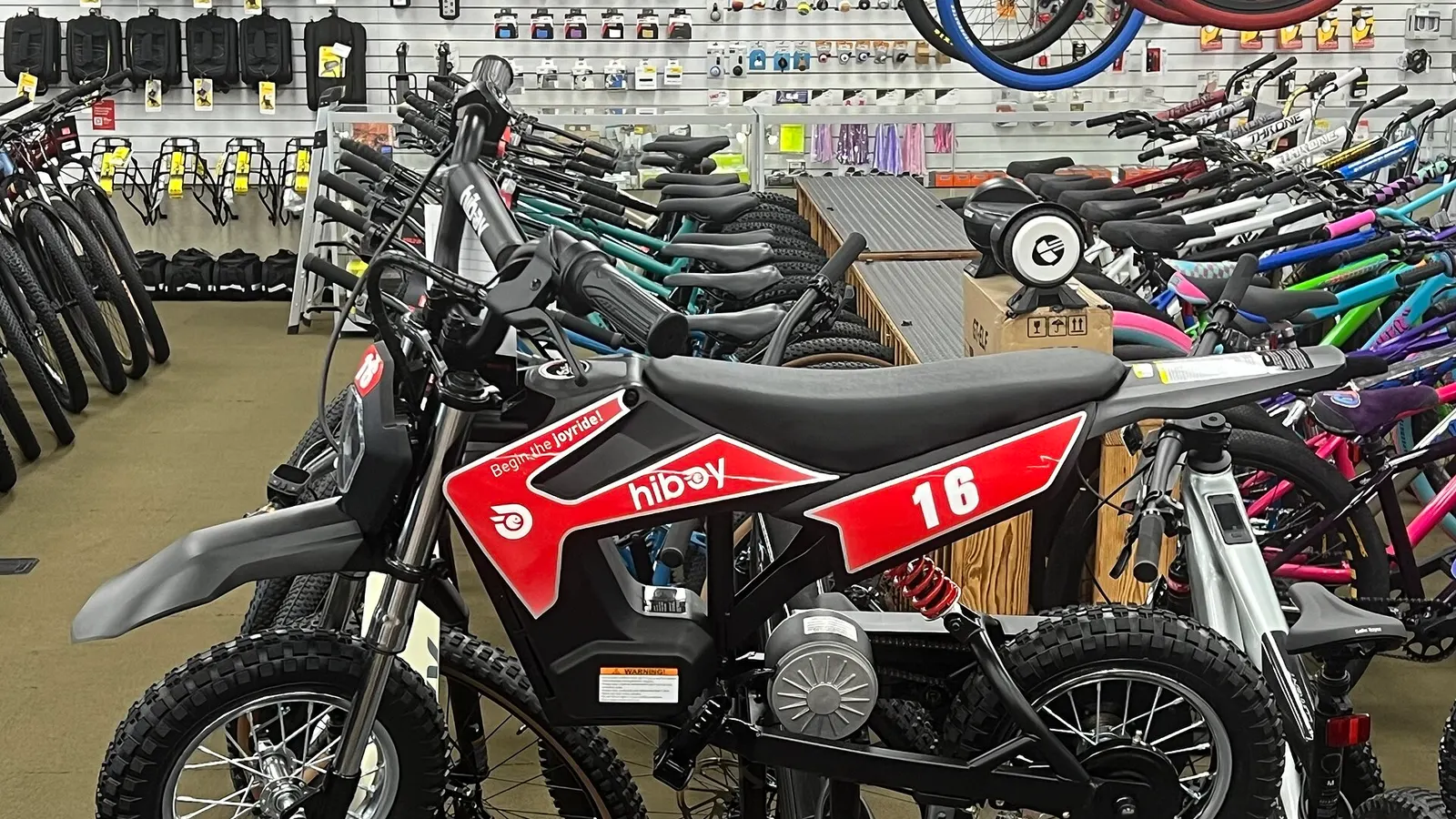
Choosing an electric dirt bike for kids — power levels, age suitability, safety gear, Australian rules, and the top models.
Youth Electric Dirt Bikes: A Buying Guide for Australian Families
Electric dirt bikes for kids have gone from novelty to mainstream in Australia. With no exhaust fumes, minimal noise, and dramatically lower maintenance than petrol bikes, they are increasingly the first choice for families introducing children to off-road riding. This guide covers power levels, age suitability, safety requirements, and the legal side of things.
Why Electric Over Petrol for Young Riders?
The practical advantages are substantial:
- No hot exhaust pipe: The single biggest injury risk on a petrol dirt bike for young children is burns from the exhaust. Electric bikes eliminate this entirely.
- Quiet operation: You can ride in the backyard without upsetting the neighbours. This also means more riding time and more practice.
- Instant, predictable power: Electric motors deliver torque smoothly from zero RPM. There is no clutch to stall, no throttle lag, and no powerband to surprise a new rider.
- Adjustable power: Most electric dirt bikes let parents dial down the output, so the bike grows with the child's skill level.
- Low maintenance: No oil changes, no air filters to clean, no carburettor tuning, no spark plugs. Charge and ride.
Power Levels and Age Suitability
Youth electric dirt bikes span a wide range. Here is a breakdown by typical age group:
Ages 3-6: Entry Level (100W-350W)
- Top speed: 10-16 km/h
- Weight: 10-20 kg
- Examples: Razor MX125, various 24V mini bikes
- These are essentially powered toys. Light, slow, and forgiving. Training wheels are sometimes included or available as accessories.
Ages 5-9: Beginner Trail (500W-1000W)
- Top speed: 16-25 km/h
- Weight: 20-35 kg
- Examples: Razor MX350, Razor MX650, various 36V models
- A step up in capability. Suitable for flat trails, paddocks, and beginner motocross tracks. Multiple speed settings are standard.
Ages 7-12: Intermediate (1000W-3000W)
- Top speed: 25-45 km/h
- Weight: 35-55 kg
- Examples: KTM SX-E 3, GASGAS MC-E 3, Husqvarna EE 3
- Proper motocross-grade bikes with hydraulic suspension, disc brakes, and adjustable ride modes. The KTM/GASGAS/Husqvarna platform is the benchmark in this category, priced around $7,000-$9,000 AUD.
Ages 10-16: Advanced (3000W-5000W)
- Top speed: 45-70 km/h
- Weight: 50-80 kg
- Examples: KTM SX-E 5, Stark Varg Alpha (youth settings), Sur-Ron Light Bee
- These are fast, capable machines. Riders at this level should have years of experience, proper motocross gear, and ideally be training at a club or track.
Essential Safety Gear
No child should ride any dirt bike, electric or otherwise, without full safety gear. The Australian minimum:
- Helmet: AS/NZS 2063 or better. A full-face motocross helmet is strongly recommended. Budget $150-$400 AUD for a quality youth helmet from Fox, Alpinestars, or Bell.
- Goggles: Motocross goggles protect against dirt, dust, and branches. From $30 AUD.
- Gloves: Full-finger motocross gloves. $25-$60 AUD.
- Boots: Ankle-supporting motocross boots. This is where many parents skimp, and it is a mistake — ankle injuries are common in off-road riding. Youth MX boots start around $100 AUD.
- Body armour: A chest protector or roost guard. Especially important for track riding or faster bikes. $60-$150 AUD.
- Knee guards or braces: Knee injuries can be serious even at low speeds on uneven ground. Soft knee guards start at $30 AUD; proper braces cost $200+ AUD per pair.
Total gear cost for a properly equipped young rider: $400-$900 AUD. Do not skip items to save money.
Australian Rules and Where to Ride
Electric dirt bikes are motorised vehicles under Australian law. The rules are consistent across states:
- Public roads: No. Electric dirt bikes are not road-registered and cannot be ridden on public roads, footpaths, or shared paths.
- Public parks and reserves: Generally no. Most councils prohibit motorised vehicles in parks.
- Private property: Yes. This is where most family riding happens — backyards, farms, rural properties.
- Motocross tracks and riding parks: Yes. Many MX clubs welcome young riders. Motorcycling Australia (MA) membership provides insurance and access to sanctioned events. Some commercial riding parks also cater to electric bikes.
- State forests: Rules vary by state. In some states, registered vehicles only. Check your state's forestry or parks authority.
For families on suburban blocks, the quiet operation of electric bikes is a genuine advantage — you can often ride in a backyard without noise complaints, though local council bylaws still technically apply.
Battery Life and Charging
Ride time depends heavily on the bike's battery capacity, the speed mode used, rider weight, and terrain:
- Entry level (24V): 30-60 minutes
- Beginner trail (36V): 45-90 minutes
- Intermediate (48V lithium): 60-120 minutes
- Advanced (large lithium packs): 90-180 minutes
For most family riding sessions, 60-90 minutes is plenty before the child (and parents) are ready for a break. Charging from flat takes 2-6 hours depending on the battery size and charger. Some premium bikes like the KTM SX-E 5 offer removable batteries, so you can swap a charged pack and keep riding.
Store batteries indoors, away from extreme heat. Australian summers can push shed temperatures above 40 degrees, which degrades lithium cells rapidly.
What to Spend
The Australian market breaks down roughly like this:
- $300-$600 AUD: Budget 24V bikes. Fine for very young children on flat ground. Expect basic construction and limited spare parts availability.
- $600-$1,500 AUD: Mid-range 36V bikes. Better build quality, adjustable speed, disc brakes. Suitable for backyard and light trail use.
- $1,500-$4,000 AUD: Quality bikes with proper suspension, hydraulic brakes, and lithium batteries. Brands like Oset and Torrot sit here.
- $4,000-$9,000 AUD: Competition-grade bikes from KTM, GASGAS, and Husqvarna. Built to race, with dealer support and genuine spare parts availability across Australia.
Buying Tips
- Buy from a dealer if possible: Warranty support, spare parts, and setup advice are worth the premium over marketplace imports.
- Check the weight: The child should be able to pick the bike up from a fall. If they cannot, the bike is too heavy for their current size and strength.
- Prioritise brakes: Disc brakes front and rear are the minimum for any bike ridden off flat ground. Drum brakes are inadequate on hills or loose surfaces.
- Test speed modes: Before the child rides, familiarise yourself with how to set and lock speed modes. Some bikes require a tool or key to change modes, which is preferable.
- Plan for growth: A bike that suits a 5-year-old will be too small at 7. Budget for an upgrade or buy with resale in mind.
Progression Path
A typical riding progression for an Australian kid might look like this:
- Age 2-3: Electric balance bike (Stacyc, GASGAS MC-E 1)
- Age 4-6: Small electric dirt bike (Oset 12.5, entry-level 24V)
- Age 6-9: Intermediate electric dirt bike (KTM SX-E 3 or equivalent)
- Age 9-12: Full-size youth electric or transition to petrol (KTM SX-E 5, 65cc two-stroke)
- Age 12+: Junior motocross competition or trail riding
Not every child follows this path, and there is no rush. The goal is confidence, skill development, and enjoyment — not speed.
Ready for the Kids?
Browse electric balance bikes, dirt bikes, go-karts and trikes for young riders.
Shop Kids & Off-Road EVs →