How electric drift trikes work, age suitability, speed settings, track vs driveway use, and choosing between a kart and a trike.
Electric Drift Trikes and Go-Karts: What They Are, How They Work, and Where to Ride
Drift trikes and electric go-karts have carved out a niche in the Australian kids' EV market. They are not traditional off-road vehicles and they are not road-legal transport — they sit in a fun, recreational space that appeals to kids (and adults) who want something different from a dirt bike or scooter. This guide explains what they are, how they differ, and how to use them safely.
What Is an Electric Drift Trike?
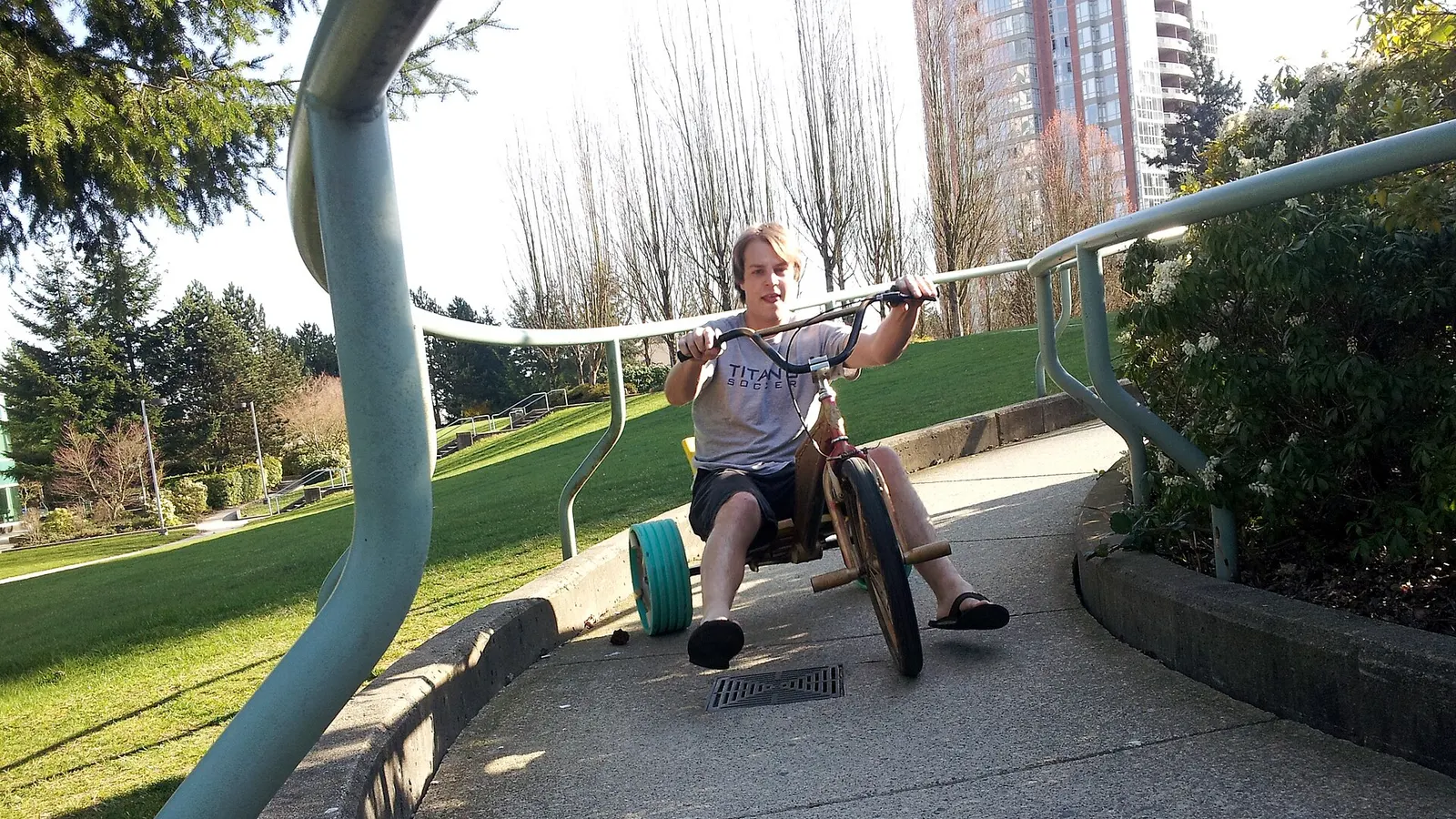
A drift trike is a three-wheeled vehicle with a front wheel that grips and two rear wheels that are designed to slide. The rear wheels are typically made from hard PVC plastic or have smooth plastic sleeves fitted over them. The rider sits low, steers with handlebars, and uses the throttle and body weight to initiate and control slides.
Electric drift trikes add a hub motor (usually in the front wheel) or a chain-driven motor. The motor provides forward momentum, and the rider steers into turns where the rear wheels lose traction and the trike slides sideways in a controlled drift.
Key features of electric drift trikes:
- Three wheels: one front (pneumatic, with grip), two rear (hard plastic, designed to slide)
- Low seat position, often just 15-25 cm off the ground
- Handlebar steering
- Electric motor: typically 250W-500W
- Battery: 24V-48V lithium-ion
- Top speed: 15-25 km/h
- Weight: 20-40 kg
- Age range: typically 8-16 years (some adult models exist)
The sensation is unlike any other vehicle. Initiating a drift feels like a controlled loss of traction — the rear swings out, and the rider steers through the slide. It requires smooth surfaces to work properly.
What Is an Electric Go-Kart?
An electric go-kart is a four-wheeled vehicle with a low centre of gravity, a steering wheel, and an electric motor driving the rear wheels. Unlike drift trikes, go-karts are designed for grip — the goal is cornering speed and control, not sliding.
Some go-karts are built as "drift karts" — a hybrid that uses hard rear wheels like a drift trike but in a four-wheeled go-kart form factor. These combine the seated go-kart position with the sliding capability of a drift trike.
Key features of electric go-karts:
- Four wheels
- Steering wheel (not handlebars)
- Seat with back support (some have harnesses)
- Electric motor: typically 250W-1500W
- Battery: 24V-48V
- Top speed: 10-40 km/h depending on model
- Weight: 25-60 kg
- Age range: 5-16 years depending on size and power
How They Differ
| Feature | Drift Trike | Go-Kart | Drift Kart |
|---|---|---|---|
| Wheels | 3 | 4 | 4 |
| Steering | Handlebars | Wheel | Wheel |
| Rear traction | Slides (hard plastic) | Grips (rubber) | Slides (hard plastic) |
| Stability | Moderate | High | Moderate-High |
| Best surface | Smooth sealed | Any smooth | Smooth sealed |
| Primary skill | Drift control | Racing lines | Drift control |
| Rollover risk | Very low | Low | Low |
How Drifting Works
Drifting on a trike or drift kart relies on the difference in traction between the front and rear wheels. The front wheel (or wheels) grips the surface, providing steering control. The rear wheels are intentionally low-traction, so when the rider turns and applies throttle, the rear breaks loose and swings outward.
Controlling a drift involves:
- Entry: Turn the handlebars or steering wheel and apply throttle
- Slide: The rear wheels lose traction and the vehicle rotates around the front contact patch
- Control: Counter-steer (turn toward the slide) and modulate throttle to maintain the drift angle
- Exit: Straighten the steering and reduce throttle to regain rear traction
It takes practice. Early attempts will be clumsy and the rider will spin out frequently. This is normal and part of the learning process.
Safety
Gear
- Helmet: Full-face is recommended. At minimum, an AS/NZS 2063 bicycle helmet.
- Gloves: Essential. Hands are exposed on drift trikes and at risk of contact with the ground during slides.
- Elbow and knee pads: The low riding position means elbows and knees are close to the ground surface.
- Closed-toe shoes: Boots or sturdy sneakers. Feet may drag or touch the ground.
- Long pants and sleeves: Gravel rash from a fall on sealed surfaces is painful.
Risks
- Low-speed falls: The most common incident. The trike or kart tips during a drift, or the rider falls off during a spin. Injuries are usually minor with proper gear.
- Collisions: Running into walls, fences, bollards, parked cars, or other riders. More common in confined spaces.
- Traffic: The biggest danger. Drift trikes and karts should never be used near cars or on public roads.
- Surface hazards: Gravel, sand, oil, or water on a smooth surface can cause unpredictable slides and loss of control.
Speed Considerations
Most drift trikes and karts do not feel fast in a straight line, but the sliding adds a perception of speed and risk. A 20 km/h drift feels much faster than 20 km/h in a straight line. Start with the lowest speed setting and build up as the rider develops control.
Where to Ride in Australia
Electric drift trikes and go-karts need smooth, sealed surfaces to work properly. This limits the options:
Ideal surfaces:
- Sealed driveways (flat, private)
- Empty car parks (with permission from the property owner)
- Warehouse floors or covered areas
- Sealed tennis courts or basketball courts (private, not council-owned)
- Purpose-built tracks on private property
Unsuitable surfaces:
- Gravel or dirt (rear wheels will not slide predictably; front wheel will lose grip)
- Grass (too much rolling resistance; motors struggle)
- Wet surfaces (reduced control, risk of aquaplaning on hard plastic wheels)
- Public footpaths or roads (illegal for motorised vehicles)
Legal position: Electric drift trikes and go-karts are motorised vehicles under Australian law. They cannot legally be used on public roads, footpaths, shared paths, or public spaces in any state or territory. Riding is restricted to private property or commercial venues that permit their use.
Some indoor karting centres and entertainment venues offer drift trike sessions — these are a good way to try the activity before buying equipment.
Brands and Options in Australia
Drift trikes:
- Razor DXT Drift Trike (pedal-powered, not electric — a common entry point)
- Triad Drift Trikes (pedal/gravity)
- Various electric drift trike imports available through online retailers
- Custom-built electric drift trikes are popular in the enthusiast community
Electric go-karts and drift karts:
- Razor Crazy Cart and Crazy Cart Shift (drift karts, widely available, $300-$600 AUD)
- Razor Ground Force and Ground Force Drifter (go-karts, $400-$800 AUD)
- Segway Ninebot GoKart (attaches to a Ninebot S, $1,500-$2,500 AUD)
- Berg electric karts (high quality, $1,500+ AUD)
- Various imports from Chinese manufacturers ($400-$2,000 AUD)
Battery and Maintenance
Electric drift trikes and karts use standard lithium-ion or lead-acid battery packs:
- Lead-acid (24V): Cheaper, heavier, 30-60 minute ride time, 6-12 month battery life with regular use
- Lithium-ion (36V-48V): Lighter, longer ride time (60-120 minutes), 2-4 year battery life, higher upfront cost
Maintenance is minimal:
- Charge the battery after each session
- Check tyre pressure on pneumatic front wheels
- Inspect the rear wheels for excessive wear (hard plastic wheels wear down over time and need replacing)
- Check chain tension and lubrication on chain-driven models
- Tighten all bolts periodically
- Store indoors or undercover to protect electronics from weather
Is It Worth Buying?
Drift trikes and electric karts fill a specific niche: they are recreational fun vehicles for smooth surfaces. They are not transport, not serious motorsport equipment, and not suitable for rough ground.
If you have access to a smooth, flat, private surface — a long driveway, a quiet car park on weekends with permission, or a shed with a sealed floor — they provide hours of outdoor entertainment. The drifting mechanic is genuinely engaging and develops real vehicle control skills.
If you only have grass, gravel, or small paved areas, a drift trike or kart will be frustrating. Consider a dirt bike or quad instead.
For families who want something different from the standard dirt bike path, and who have the right surface to ride on, an electric drift trike or kart is a worthwhile investment in outdoor fun.
Ready for the Kids?
Browse electric balance bikes, dirt bikes, go-karts and trikes for young riders.
Shop Kids & Off-Road EVs →