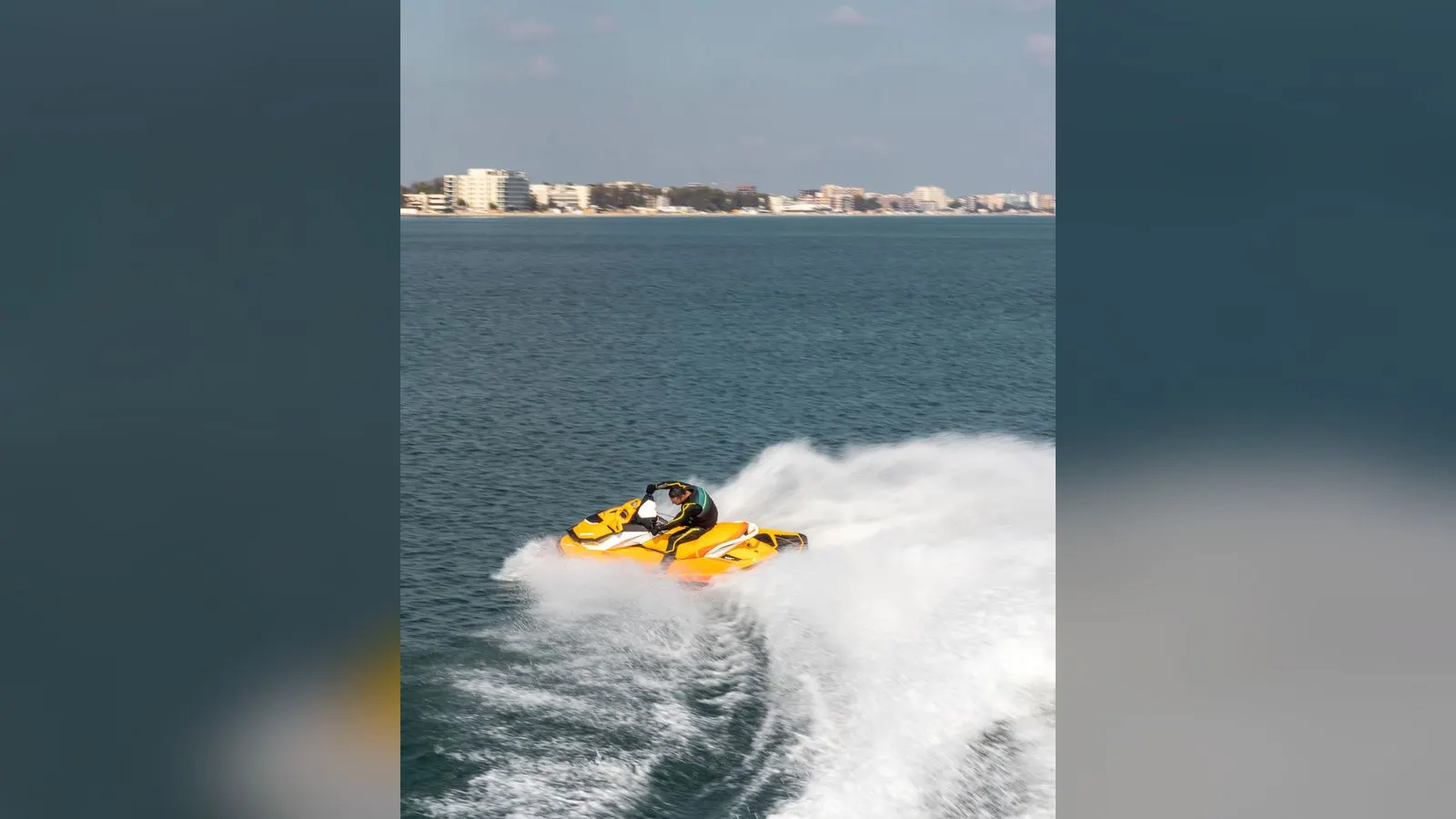
Electric personal watercraft — pricing, range, registration, Australian boating laws, and the models available or coming soon.
Electric Jet Ski Buying Guide Australia
Electric personal watercraft (PWCs) are arriving in Australia. After years of prototypes and announcements, several manufacturers now offer or are about to offer production electric jet skis that deliver real-world performance. If you are considering an electric jet ski, this guide covers the current options, pricing expectations, registration, and Australian boating laws you need to know.
The Current Electric Jet Ski Market
The electric PWC market is still young, but several serious contenders have emerged. Here are the key names Australian buyers should know.
Sea-Doo Rise by BRP
The Sea-Doo Rise is the most anticipated electric PWC globally. Made by BRP (Bombardier Recreational Products), the same Canadian company behind the Sea-Doo brand that dominates the petrol jet ski market, the Rise is positioned as the first mass-market electric jet ski.
What is publicly known: the Sea-Doo Rise is a zero-emission, battery-powered personal watercraft designed for the recreational market. BRP has committed to bringing electric watercraft to production and has invested heavily in electric marine propulsion through its Rotax E-Power platform.
At the time of writing, BRP has not released full production specifications including exact battery capacity, range, top speed, or Australian pricing. The company has shown the Rise at trade shows and confirmed it is coming, but specific performance numbers should be confirmed when official specs are released. Australian availability will likely come through BRP's existing Sea-Doo dealer network.
Taiga Orca
Taiga Motors, a Canadian company, produces the Orca electric PWC. The Orca is available in several variants:
- Orca Sport: Entry-level performance, lighter weight
- Orca Performance: Higher top speed and acceleration
- Orca Carbon: Premium model with carbon fibre construction
The Taiga Orca offers up to approximately 100 km/h top speed depending on variant, with ride times of roughly 1.5 to 2 hours at cruising speed. Pricing for the Orca range starts around USD $15,000 to $24,000, which translates to approximately AUD $23,000 to $37,000 before shipping, import duties, and Australian compliance. Direct Australian distribution is limited, so availability may require import through a specialist dealer.
Narke Electrojet GT45
The Narke GT45 is a Hungarian-made electric jet ski positioned at the premium end of the market. It features a carbon fibre hull, hydrofoil-assisted design for efficiency, and a focus on range optimisation.
The GT45 is priced at the luxury end — well above AUD $40,000 — and targets buyers who want cutting-edge technology and are less price-sensitive. Australian availability is through direct order or specialist import.
What to Expect From Electric Jet Skis
If you are coming from a petrol jet ski, there are some key differences to set expectations around.
Ride time: Current electric jet skis offer approximately 1 to 2.5 hours of ride time depending on speed and conditions. Aggressive riding at full throttle reduces this significantly. Cruising at moderate speed extends it. This is substantially less than a petrol jet ski with a full tank, which can run 3 to 5 hours or more.
Charging: Charging from a standard power outlet takes 4 to 10 hours depending on battery size. Faster charging options (Level 2 or DC fast charging) are available on some models and can reduce this to 1 to 3 hours. Charging infrastructure at marinas and boat ramps in Australia is currently very limited.
Performance: Electric jet skis deliver instant torque, which means rapid acceleration from a standstill. The feel is different from petrol — there is no engine note building, just smooth, immediate thrust. Top speeds on current models range from 80 to 110 km/h depending on the model.
Noise: Electric jet skis are dramatically quieter than petrol models. The sound is mainly water noise at speed. This has practical benefits: less noise disturbance for waterside residents, wildlife, and other water users. Some waterways with noise restrictions may be more accessible to electric craft.
Maintenance: No engine oil, no spark plugs, no fuel system, no exhaust, no winterisation of a fuel system. Maintenance is primarily rinsing after saltwater use, battery care, and occasional inspection of the jet pump and electrical systems.
Pricing in Australia
Electric jet skis are more expensive than equivalent petrol models at this stage. A mid-range petrol jet ski in Australia costs $15,000 to $25,000. Electric alternatives start around $23,000 and go well above $40,000 for premium models.
For models not officially distributed in Australia, you need to factor in:
- Shipping from the manufacturer (often $2,000 to $5,000 for a PWC)
- Import duty (5 percent on watercraft)
- GST (10 percent on the landed cost including duty)
- Australian compliance if required
- Any dealer markup
As production volumes increase and more manufacturers enter the market, prices are expected to come down. BRP's entry with the Sea-Doo Rise is likely to be the most significant price driver, given their scale and existing dealer network.
Registration in Australia
In Australia, PWC registration and licensing are managed at the state and territory level. The rules apply equally to electric and petrol jet skis.
New South Wales: PWCs must be registered with Transport for NSW. The operator needs a boat driving licence (general boat licence) and must be at least 16 years old.
Victoria: PWCs must be registered with Maritime Safety Victoria. A marine licence is required, and the operator must be at least 16. PWC-specific endorsements may apply.
Queensland: PWCs must be registered with Maritime Safety Queensland. A recreational marine driver licence (RMDL) is required.
South Australia: Registration through the Department for Infrastructure and Transport. A boat operator's licence is required.
Western Australia: Registration through the Department of Transport. A recreational skipper's ticket (RST) is required for PWC operation.
Tasmania, ACT, Northern Territory: Check with your local marine authority for current requirements.
In all states, PWCs must carry safety equipment including a kill switch lanyard, fire extinguisher (if required for the vessel class), and personal flotation devices.
Where You Can and Cannot Ride
Electric jet skis are subject to the same waterway access rules as petrol PWCs, with one potential advantage: some waterways that restrict engine noise may be more accessible to quiet electric craft.
Speed limits: Most Australian waterways have speed limits. Common zones include 4-knot areas near shore, swimming areas, and marinas, with open-water zones allowing higher speeds. These limits apply regardless of propulsion type.
PWC exclusion zones: Some lakes, rivers, and coastal areas restrict or ban PWC use entirely. Check with your state's marine authority and local council before riding in a new area.
Noise restrictions: Some popular waterways near residential areas have noise limits. Electric PWCs may comply more easily with these limits, potentially opening access to waterways where petrol jet skis are restricted. However, this is not guaranteed — noise rules are set by local authorities and may apply to all motorised watercraft regardless of type.
Charging at the Water
One of the practical challenges of electric jet skis in Australia is charging at or near the water. Most boat ramps and marinas do not have public EV charging points suitable for watercraft.
Options include:
- Charge at home before trailering to the water. This is the most practical approach currently.
- Portable generators at the boat ramp, though this somewhat defeats the zero-emission benefit.
- Marina power outlets where available, with the marina's permission. Standard 240V outlets can charge an electric PWC but will take several hours.
- Mobile battery packs designed for marine use, if available for your model.
As electric watercraft adoption grows, marina charging infrastructure will likely improve. For now, planning your charge before you leave home is the most reliable approach.
Insurance
Insuring an electric jet ski in Australia follows the same process as petrol PWCs. Contact your marine insurer and confirm:
- The electric model is eligible for coverage
- The agreed value includes the battery pack (the most expensive single component)
- Saltwater use is covered
- Transport (trailering) is included
Some insurers may not yet have the electric model in their system, so you may need to provide specifications and purchase price documentation.
Should You Buy Now or Wait
Electric jet skis are real, available products — not vapourware. But the market is early. Prices are high, charging infrastructure is limited, and ride time is shorter than petrol.
Buy now if:
- You value zero-emission, quiet operation and will use the jet ski on noise-sensitive waterways
- You want the latest technology and can absorb the price premium
- Your typical riding sessions are under 2 hours
- You have the ability to charge at home before each trip
Wait if:
- You need all-day riding capability
- You want the best value for money
- You prefer to buy from an established Australian dealer network with local warranty support
- You want to see how the Sea-Doo Rise compares to existing options once it reaches the Australian market
Either way, the electric jet ski market in Australia is growing. The next few years will bring more models, lower prices, and better infrastructure. Whether you jump in now or wait for the next wave, electric PWCs are here to stay.
Ready for the Water?
Explore electric jet skis, eFoils and electric surfboards, or contact us for availability and delivery.
Shop Electric Water Sports →