eFoil hydrofoils and electric surfboards — how they work, learning curve, brands (Fliteboard, Lift, Awake), and getting started in Australia.
Electric Surfboards and eFoils for Beginners
Electric surfboards and eFoils have opened up water sports to people who never thought they could surf. No waves required. No tow boat. No kite. Just a battery-powered board, flat water, and a willingness to get wet a few times while learning. This guide covers how they work, what the learning curve looks like, the main brands available in Australia, and what beginners need to know.
Electric Surfboards vs eFoils: What is the Difference
These are two distinct types of board, and the riding experience is very different.
Electric surfboards (also called jetboards) have a built-in electric jet drive that pushes the board across the surface of the water. You ride on top of the water, like a motorised surfboard. The board stays flat on the surface. Think of it as a surfboard with an engine — no waves needed.
eFoils (electric hydrofoils) have an electric motor mounted on a mast that extends below the board. A propeller on the mast generates thrust, and a hydrofoil wing beneath the water lifts the board above the surface once you reach sufficient speed. You fly above the water on the foil, typically 30 to 90 centimetres above the surface.
The riding sensations are completely different. An electric surfboard feels like carving through water. An eFoil feels like flying — quiet, smooth, and unlike anything else on the water.
How eFoils Work
An eFoil board sits on top of a vertical mast (typically 60 to 90 cm long) with a hydrofoil wing at the bottom. The electric motor and propeller are mounted on the mast, usually just above the wing.
When you start riding, the board sits on the water like a surfboard. As the motor accelerates, the hydrofoil wing generates lift — the same principle as an aircraft wing, but in water. Once enough speed is reached (typically 12 to 20 km/h), the wing lifts the entire board, mast, and rider above the water surface.
Once foiling, the ride is remarkably smooth because the board is above the chop and surface turbulence. You control speed with a wireless hand controller, and you steer by shifting your weight — leaning into turns, adjusting front-to-back balance to control height.
The Learning Curve
Electric surfboards: Relatively easy to pick up. If you can stand on a surfboard or a stand-up paddleboard, you can ride an electric surfboard within 10 to 30 minutes. The board is stable on the water surface, and the hand controller gives you gradual speed control. Beginners can be cruising comfortably in their first session.
eFoils: Harder to learn, but not as difficult as many people expect. Most beginners go through these stages:
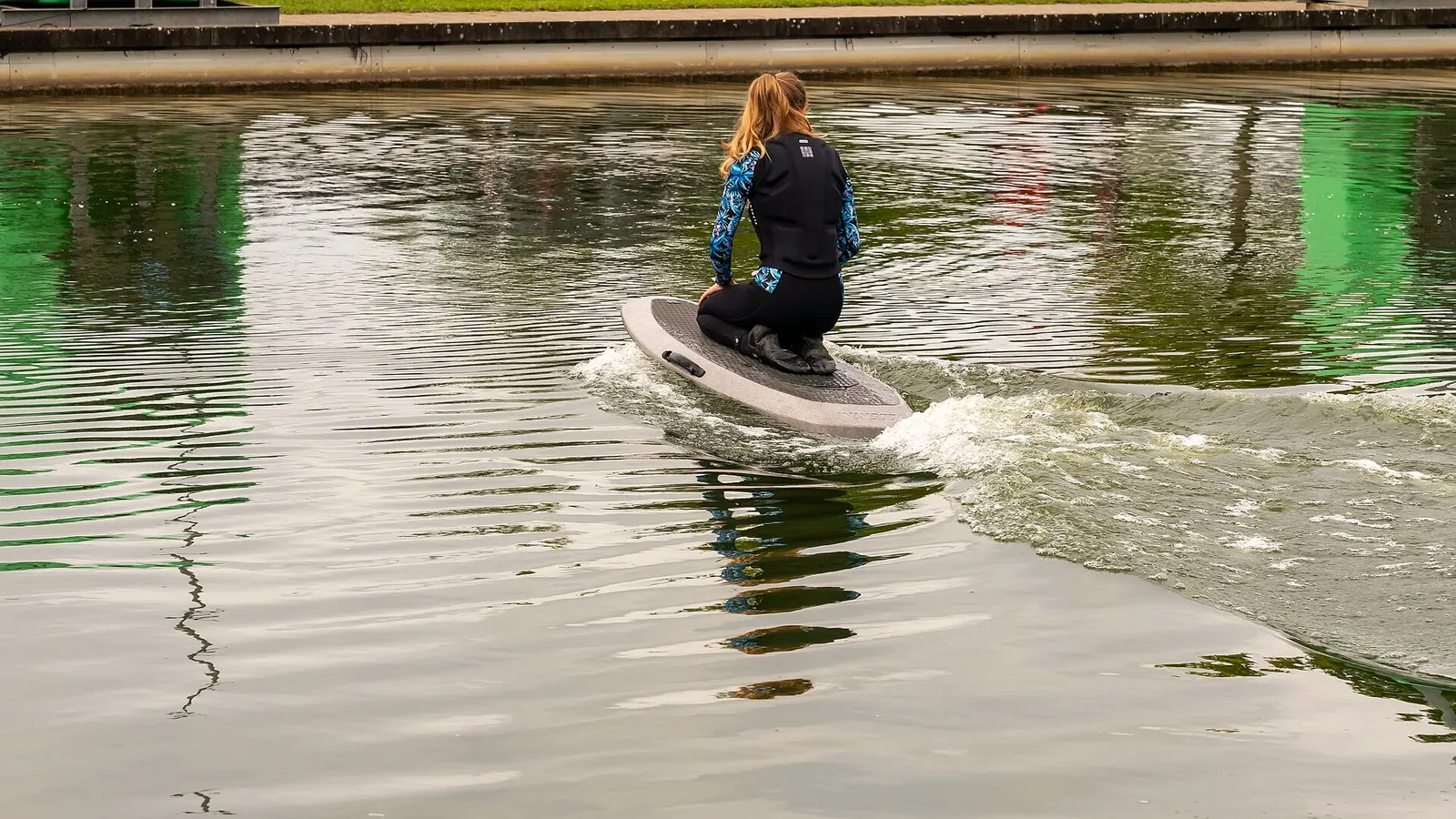
- Session one (30 to 60 minutes): Riding on your knees or belly, getting used to the throttle and balance. Expect several falls.
- Sessions two to three: Standing up and riding on the surface without foiling. Learning throttle control and turning.
- Sessions three to five: First foiling — lifting off the water for short intervals. This is the exciting and frustrating phase. You will oscillate between flying and crashing.
- Sessions five to ten: Consistent foiling. Longer flights, smoother turns, better height control.
- Beyond ten sessions: Carving, turning at speed, and riding with confidence.
Most people with average balance and water comfort can foil consistently within 5 to 10 sessions of about 30 to 60 minutes each. Prior board sport experience (surfing, skateboarding, snowboarding, wakeboarding) speeds this up significantly.
Brands Available in Australia
Fliteboard (Australian)
Fliteboard is an Australian company based in Byron Bay, and they are one of the global leaders in eFoil technology. Their boards are designed and assembled in Australia, which means local warranty support, parts availability, and customer service.
Fliteboard offers several models ranging from beginner-friendly to performance-oriented. Their boards are known for build quality, quiet operation, and a refined riding experience. Pricing starts around AUD $13,000 to $17,000 depending on the model and configuration.
Being Australian-made, Fliteboard is the most accessible eFoil brand for local buyers in terms of support and spare parts.
Lift Foils
Lift is a US-based eFoil manufacturer and one of the pioneers of the category. Their eFoil range covers beginners through to advanced riders. Lift boards are available in Australia through dealers and direct import.
Pricing is similar to Fliteboard, starting around AUD $13,000 to $18,000 depending on model and options. Parts and service are available through Australian dealers, though turnaround may be longer than a local manufacturer.
Awake Boards
Awake is a Swedish company that makes high-performance electric surfboards (not eFoils). Their boards are designed for speed and power on the water surface, reaching up to 50 to 55 km/h. They are less about foiling and more about raw surfboard performance.
Awake boards are priced at the premium end, around AUD $15,000 to $25,000. Availability in Australia is through specialist water sports dealers or direct order.
Other Brands
Several other brands sell eFoils and electric surfboards that reach Australia:
- Radinn — Swedish electric surfboards focused on performance and customisation
- Takuma — French brand offering eFoils at a more accessible price point
- Waydoo — Chinese brand offering budget-friendly eFoils starting around AUD $6,000 to $9,000
Budget options from lesser-known manufacturers are available for under AUD $5,000, but quality, safety, and warranty support vary significantly. For a piece of equipment with a lithium battery that you take into saltwater, buying from a reputable brand with proper support is worth the investment.
What Beginners Should Look For
Board size: Larger boards (5'0" to 6'6") are more stable and easier to learn on. Smaller boards (under 5'0") are more manoeuvrable but harder to balance. Start big.
Motor power: Beginner eFoils typically have 3 to 5 kW motors. This is plenty for learning and recreational foiling. Performance models go up to 10 kW or more.
Battery capacity: Most eFoils offer 45 to 90 minutes of ride time per charge. For learning, 45 to 60 minutes is enough per session — you will be physically tired before the battery runs out.
Wing size: Larger hydrofoil wings generate lift at lower speeds and are more stable — better for beginners. Smaller wings are faster and more responsive, suited to experienced riders.
Hand controller: A comfortable, responsive wireless controller is important. Look for one that is ergonomic, waterproof, and has a smooth throttle response.
Safety for Beginners
eFoils and electric surfboards involve real risks. The propeller, the speed, and the hard components (mast, wing, board) can all cause injury.
Wear a helmet. A water sports helmet is strongly recommended, especially while learning. Falls at speed can result in head contact with the board, mast, or water surface.
Wear a life jacket or impact vest. A personal flotation device is essential, particularly for beginners who will be in the water frequently.
Use a leash. A board leash keeps the board attached to you after a fall. A runaway eFoil is a hazard to other water users.
Start in deep water. The mast and wing extend 60 to 90 cm below the board. Shallow water means hitting the bottom, which damages the equipment and can injure you.
Avoid crowded areas. Learn in open water away from swimmers, boats, and other watercraft. An eFoil is quiet and other water users may not hear you approaching.
Learn the kill switch. Releasing the hand controller should cut the motor. Confirm this works before every session.
Cost of Getting Started
A complete eFoil setup (board, battery, motor, mast, wing, controller, charger) costs:
- Budget range: AUD $5,000 to $9,000 (entry-level brands)
- Mid-range: AUD $10,000 to $15,000 (Fliteboard, Lift, established brands)
- Premium: AUD $15,000 to $25,000 (performance models, carbon construction)
Add to that:
- Helmet: $50 to $150
- Impact vest / PFD: $80 to $200
- Board bag for transport: $150 to $400
- Wetsuit (for cooler months in southern Australia): $100 to $350
If you are not sure whether eFoiling is for you, look for a lesson or rental session first. Several operators around Australia offer eFoil lessons for $150 to $300 per hour, which lets you try before committing to a purchase.
Where to Ride in Australia
eFoils and electric surfboards can be ridden on most open waterways where powered watercraft are permitted. Flat water is ideal — harbours, lakes, rivers, estuaries, and sheltered bays.
Check local rules before riding. Some waterways restrict powered watercraft, and regulations may vary depending on whether the vessel is classified as a PWC or a powered surfboard. In most states, electric surfboards under a certain power threshold may not require registration, but this varies — check with your state's marine authority.
Popular eFoil locations in Australia include coastal harbours, the Gold Coast Broadwater, Sydney Harbour bays, Port Phillip Bay, and various lakes and rivers around the country.
Final Thoughts
Electric surfboards and eFoils are the fastest-growing segment in water sports for a reason. They work on flat water, they are quiet, they require no waves or wind, and the feeling of flying above the water on an eFoil is genuinely unique. The learning curve is manageable for most people, and the technology improves every year. If you have been curious, a lesson is the best first step. Once you have tried it, the decision usually makes itself.
Ready for the Water?
Explore electric jet skis, eFoils and electric surfboards, or contact us for availability and delivery.
Shop Electric Water Sports →