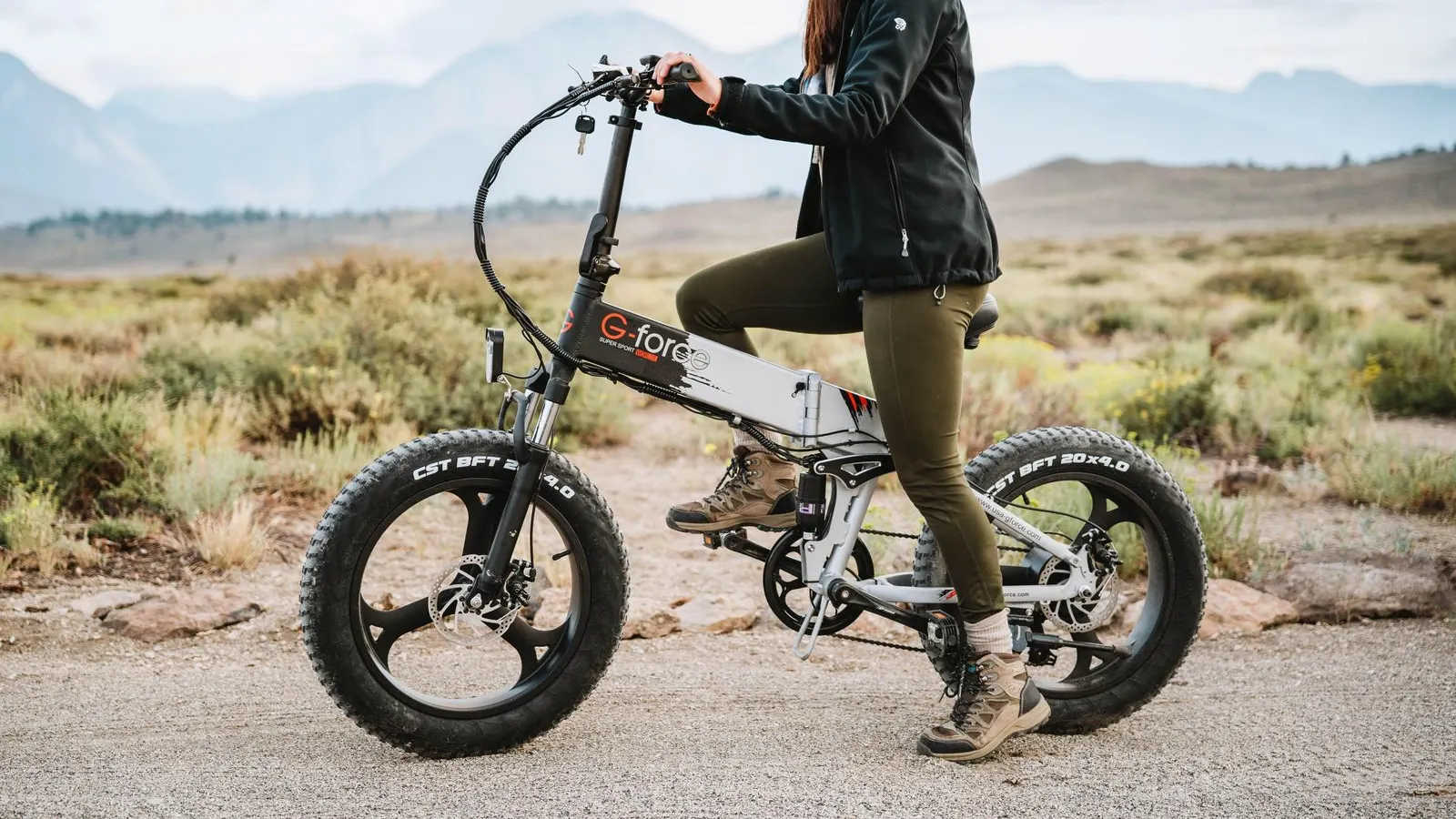
Comparing full-suspension and hardtail eMTBs — suspension travel, trail capability, weight, maintenance, and the best Australian riding spots.
Electric mountain bikes (eMTBs) are the fastest-growing segment of the e-bike market. The motor assist lets you ride longer trails, climb steeper hills, and cover more ground per session — turning a 30 km ride into a 60 km adventure without tripling the fatigue. But the first question every buyer faces is: full suspension or hardtail?
Hardtail eMTBs
A hardtail has a suspension fork at the front and a rigid rear triangle. The rear wheel is bolted directly to the frame with no pivot points, no shock absorber, and no linkage.
Advantages
- Lighter weight: no rear shock, linkage, or pivot hardware saves 1.5–3 kg. A hardtail eMTB typically weighs 22–25 kg vs 25–28 kg for full suspension.
- Lower cost: less engineering and fewer components. A hardtail at $3,000 matches the capability of a $4,500 full-suspension bike in many situations.
- Less maintenance: no rear shock service, no pivot bearings to replace, no linkage bolts to check.
- More efficient pedalling: no pedal bob (the rear suspension compressing under pedal force). Every watt from the motor goes to the wheel.
- Better for fire trails and gravel: where the terrain is rough but not technically demanding, a hardtail is fast and confident.
Limitations
- Less rear-wheel traction on rough terrain: the rigid rear end bounces off rocks and roots instead of tracking over them.
- Less comfort on long, rough descents: your body absorbs every impact the rear wheel hits.
- Less forgiving of mistakes: on technical singletrack, a hardtail punishes poor line choice.
Best For
- Fire trail riding and gravel
- Moderate singletrack with smooth or flowy surfaces
- Riders who value efficiency and low maintenance
- Budget-conscious buyers
Full-Suspension eMTBs
A full-suspension eMTB has a front fork and a rear shock connected through a linkage and pivot system. The rear wheel moves independently of the frame, absorbing impacts and keeping the tyre in contact with the ground.
Advantages
- Better traction: the rear wheel stays planted over rocks, roots, and rough ground. More grip means more control, especially on descents.
- More comfort: the rear shock absorbs hits that would otherwise travel through the saddle and into your spine. On a 3-hour trail ride, the difference in fatigue is significant.
- More confidence on technical terrain: drops, rock gardens, and steep descents are more forgiving. The bike works with you instead of fighting the trail.
- Better climbing on rough surfaces: where a hardtail rear wheel bounces and spins, a full-suspension rear stays planted and delivers consistent traction.
Limitations
- Higher cost: the rear shock and linkage system adds $1,000–$2,000 to the price.
- More maintenance: rear shock service every 100–200 hours of riding. Pivot bearings need checking and occasional replacement. Linkage bolts need torque checks.
- Heavier: 25–28 kg is typical. Some models exceed 30 kg.
- Pedal bob: some pedalling energy is lost to rear suspension compression (mitigated by lockout switches and platform damping on good shocks).
Best For
- Technical singletrack with rocks, roots, and drops
- Steep, rough descents
- Long trail rides where fatigue management matters
- Riders who push their limits and want more forgiveness
Suspension Travel: How Much Do You Need?
Travel is measured in millimetres — how far the fork or shock can compress.
| Travel | Category | Terrain |
|---|---|---|
| 100–120 mm | Cross-country (XC) | Smooth trails, fire roads, light singletrack |
| 130–150 mm | Trail / All-mountain | Most Australian singletrack, moderate rocks and roots |
| 160–180 mm | Enduro | Steep, rough descents, rock gardens, drops |
| 180–200 mm | Downhill | Bike-park only, shuttle-assisted, extreme terrain |
For Australian trail riding, 130–150 mm is the most versatile choice. It handles the majority of marked singletrack trails from easy green to intermediate blue ratings.
Motor Considerations for eMTBs
Trail riding demands more from the motor than road commuting:
- Torque matters more than wattage. An 85 Nm mid-drive (Bosch CX, Shimano EP8) can crawl up grades that a 250 W hub motor stalls on.
- Mid-drive is strongly preferred for trail riding. It works through the gears, keeps the weight centred, and delivers torque where you need it.
- Battery capacity 625 Wh+ recommended for trail use. Technical climbing consumes 30–50 % more energy than road riding. A 500 Wh battery may give only 30–40 km on steep, technical trails.
Australian Trail Riding Spots
Some of Australia's best eMTB trails:
- Yarra Trails, Victoria: 100+ km of connected singletrack from Warburton to Lilydale. Mix of flow, technical, and climb.
- Derby, Tasmania: world-class purpose-built trails, including the Blue Tier descent. Shuttle services available.
- Thredbo, NSW: chairlift-accessed downhill in summer. Gravity trails suit enduro and full-suspension eMTBs.
- Stromlo Forest Park, ACT: cross-country and gravity trails 15 minutes from Canberra CBD.
- Atherton Tablelands, QLD: rainforest singletrack with elevation, roots, and humidity.
Most Australian trail networks allow e-bikes classified as pedal-assist (EN 15194 compliant, 250 W, 25 km/h cut-off). Check local trail rules before riding — some parks restrict eMTBs on certain trails.
Bottom Line
Choose a hardtail if you ride mostly fire trails, gravel, and moderate singletrack, or if budget and low maintenance are priorities.
Choose full suspension if you ride technical singletrack regularly, push into steeper or rougher terrain, or want maximum comfort and confidence on long trail days.
Both are excellent with the right motor and battery. The trail, not the marketing, should drive your decision.
Ready to Find Your E-Bike?
Browse commuter, cargo, folding and mountain e-bikes from Brunswick, Victoria, with express freight across Australia.
Shop E-Bikes →