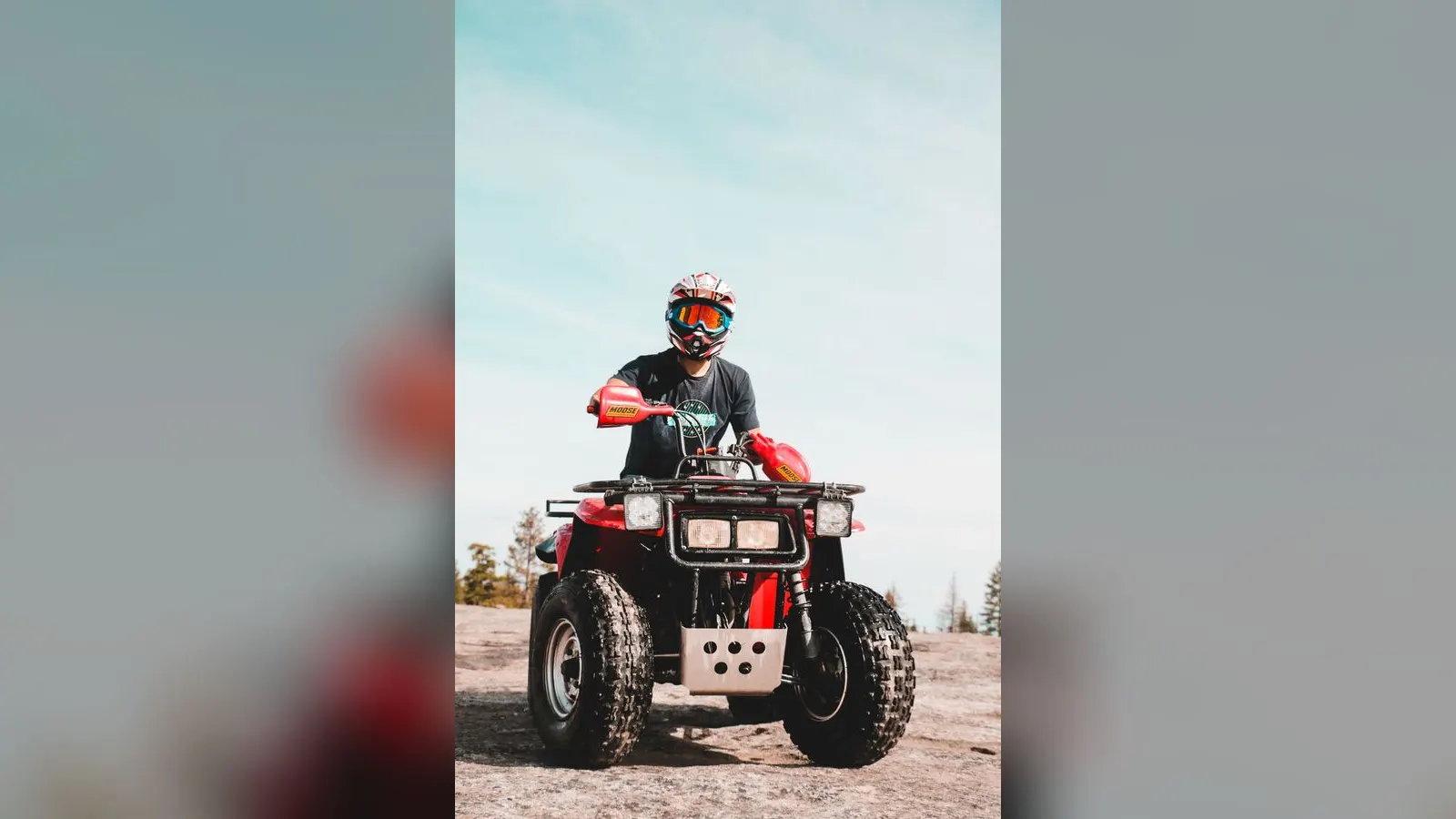
Essential safety equipment for electric quad bike riders — helmets, chest protectors, roll-over protection, and supervised riding for children.
Electric Quad Bike Safety: Helmets, Gear, and Riding Guidelines
Quad bikes are one of the most dangerous vehicles used in Australia. Between 2001 and 2023, over 230 people died in quad bike incidents across the country, and hundreds more were seriously injured each year. Electric quads are quieter and simpler to operate, but they carry the same rollover and collision risks as petrol models. Safety is not optional. This guide covers helmets, protective gear, speed management, and supervised riding for both adults and children.
Why Quad Bikes Are Dangerous
Quad bikes have a narrow wheelbase relative to their height, a high centre of gravity (especially with a rider on top), and no seatbelt or cab. They are inherently less stable than a car or side-by-side vehicle. The main risks are:
- Rollover: The leading cause of quad bike deaths in Australia. Rollovers happen on slopes, during sharp turns, when hitting obstacles, and when carrying unbalanced loads.
- Collision: With fences, trees, animals, other vehicles, or terrain features like ditches and embankments.
- Ejection: The rider is thrown from the machine during a rollover, sharp turn, or sudden stop.
- Crush injuries: The quad lands on the rider after a rollover.
Electric quads add one additional consideration: they are very quiet, so other people, animals, and vehicles may not hear you approaching. Extra caution is needed in areas with pedestrians or livestock.
Helmets
A helmet is the single most important piece of safety gear for quad riding. Head injuries are the primary cause of death in quad bike incidents.
Which standard to look for: In Australia, helmets should comply with AS/NZS 1698 (motorcycle helmets). This is the standard recommended by Safe Work Australia, state workplace health and safety bodies, and farming safety organisations. A bicycle helmet (AS/NZS 2063) is not adequate for quad riding — it is not designed for the impact speeds and forces involved.
Helmet types suitable for quad riding:
- Full-face motocross/off-road helmets: Best protection. They cover the chin and jaw, which are vulnerable in a forward impact. They include a visor peak for sun and debris. Pair with goggles for dust protection.
- Full-face road helmets: Good protection but can be hot and heavy for farm work. The built-in visor fogs in cold weather.
- Open-face helmets with a chin bar: A compromise. Less hot, easier to communicate, but less chin protection.
What to avoid: Half helmets (skull caps), novelty helmets, and any helmet without the AS/NZS 1698 sticker. Also avoid old helmets — the foam liner degrades over time. Replace any helmet that has been in a crash or is more than five years old.
Fitting: A helmet must fit snugly without pressure points. It should not rock forward, backward, or side to side when you shake your head. The chin strap must be fastened every time. An unfastened helmet comes off in a crash and provides zero protection.
Cost: Decent AS/NZS 1698 helmets in Australia start around $80 for basic open-face models and $150 to $400 for quality full-face off-road helmets.
Operator Protection Devices (OPDs) and Crush Protection
An operator protection device (OPD) is a structure fitted to the quad bike that reduces the risk of the rider being crushed if the machine rolls over. They are sometimes called roll bars, roll-over protection structures (ROPS), or crush protection devices (CPDs).
Australian regulations: Several states have moved toward requiring or incentivising OPDs on farm quad bikes.
- Victoria: WorkSafe Victoria has required OPDs on quad bikes used as workplaces since 2021. Rebates have been available to assist with the cost of fitting approved devices.
- New South Wales: SafeWork NSW strongly recommends OPDs and has funded rebate programs.
- Queensland: Workplace Health and Safety Queensland recommends OPDs as a primary safety control.
- Other states and territories: Check your local authority for current requirements.
OPDs are available as aftermarket kits for many quad bike models. Not all OPDs are equal — look for devices that have been independently tested and approved by bodies such as the University of New South Wales Transport and Road Safety Research centre or equivalent.
Do OPDs work? Research by the Australian Competition and Consumer Commission (ACCC) and university studies have shown that OPDs significantly reduce the severity of crush injuries in rollover incidents. They are not a guarantee against injury, but they provide a meaningful layer of protection.
Protective Clothing and Gear
Beyond a helmet, the following gear is recommended for all quad bike riders:
Gloves: Full-finger gloves protect hands from blisters, vibration, branches, and abrasion in a fall. Motocross-style gloves with knuckle protection are ideal. Even basic leather work gloves are better than bare hands.
Boots: Sturdy, ankle-covering boots with a solid sole. Off-road or motocross boots are best. Work boots (such as steel-cap boots) are acceptable for farm use at moderate speeds. Avoid thongs, sandals, or open-toed shoes — a crushed foot is a common quad bike injury.
Eye protection: Goggles or a full-face helmet visor. Dust, insects, and debris at speed can impair vision and cause eye injuries. Standard sunglasses do not provide adequate side protection.
Long pants and long sleeves: At minimum, denim jeans and a long-sleeved shirt. For higher-speed riding or trail work, consider motocross pants with built-in knee and hip armour.
Body armour: For children, teenagers, and anyone riding at speed on trails, a chest protector, knee guards, and elbow guards are strongly recommended. Junior off-road body armour sets cost $80 to $250 in Australia.
High-visibility clothing: On farms and properties where other vehicles or machinery are operating, a hi-vis vest makes the rider visible. This is especially important on electric quads, which are not audible from a distance.
Speed Governors and Limiters
Speed management is one of the most effective ways to reduce quad bike injuries. Most serious incidents involve excessive speed for the conditions — too fast for the slope, the surface, the load, or the rider's skill level.
Electric quad advantage: Almost all electric quads include built-in speed limiters that are easier to set and more reliable than aftermarket limiters on petrol machines. Common types include:
- Electronic speed cap: Set via a key switch, app, or controller setting. The motor will not exceed the set speed regardless of throttle input.
- Throttle restrictor: Limits how far the throttle can be opened, reducing both acceleration and top speed.
- Mode selection: Low, medium, and high power modes that change the speed and torque characteristics.
- Remote kill switch: Allows a parent or supervisor to cut power to the machine from a distance, typically via a wireless key fob.
Recommended speed limits:
- Children under 8: no more than 5 to 8 km/h
- Children 8 to 12: no more than 15 to 20 km/h
- Teenagers 12 to 16: no more than 25 to 35 km/h, depending on experience and terrain
- Adults on farm work: 30 to 40 km/h is a sensible working limit
- Adults on trails: match speed to terrain and visibility, not to the machine's capability
Supervised Riding for Children
Children should never ride a quad bike unsupervised. This applies to electric quads just as much as petrol models. The quiet operation of electric quads can create a false sense of safety — the machine may feel gentler, but the physics of a rollover or collision are the same.
Guidelines for supervising children on electric quads:
Match the machine to the child. A quad too large or too powerful for the rider is a primary risk factor. The child should be able to reach all controls comfortably while seated, with both feet flat on the footrests.
Start on flat, open ground. Avoid slopes, obstacles, and rough terrain until the child has demonstrated consistent control at low speed.
Teach braking first. Before increasing speed, the child must be able to stop smoothly and predictably every time.
Use the speed limiter. Set it to the lowest practical speed and increase gradually over multiple sessions as skill improves.
No passengers. Quad bikes are single-rider vehicles. A passenger changes the weight distribution and handling in ways the rider may not be able to manage.
No public roads or footpaths. Children on quad bikes must stay on private property.
Always wear full safety gear. Helmet, gloves, boots, long pants, long sleeves. No exceptions, even for a short ride.
Supervise every ride. An adult should be present, watching, and close enough to intervene if needed. A remote kill switch provides an additional layer of control.
Training Resources in Australia
Several organisations offer quad bike safety training:
- Safe Farming Australia runs accredited ATV safety courses in multiple states
- State farming federations (VFF, NSW Farmers, AgForce QLD) often coordinate training programs
- TAFE and registered training organisations offer nationally accredited quad bike operation units as part of agriculture and land management courses
- Manufacturers and dealers sometimes offer basic rider training with new purchases
A structured training course covers terrain assessment, slope limits, correct riding posture, loading, emergency procedures, and maintenance checks. Even experienced riders benefit from formal training — many habits picked up over years of self-taught riding are dangerous.
Pre-Ride Safety Checklist
Before every ride, take two minutes to check:
- Tyre pressure and condition
- Brake function (squeeze the lever, press the pedal)
- Throttle returns to off when released
- Kill switch works
- Battery charge level is adequate for the planned ride
- Lights work (if riding in low light)
- Racks and loads are secure
- Helmet is on, strapped, and fits correctly
- No loose clothing that could catch on moving parts
This checklist takes less time than making a cup of tea and could prevent a serious incident.
Summary
Electric quads are quieter, simpler, and cheaper to run than petrol models, but they are not safer by nature. The same rollover and collision risks apply. Safety comes from the right gear (starting with an AS/NZS 1698 helmet), the right machine for the rider, sensible speed limits, proper training, and constant supervision for children. Invest in safety equipment and training before investing in upgrades or accessories. It is the most important purchase you will make.
Ready for the Property?
Browse kids and adult electric quad bikes and ATVs for recreation and farm work.
Shop Electric Quads →