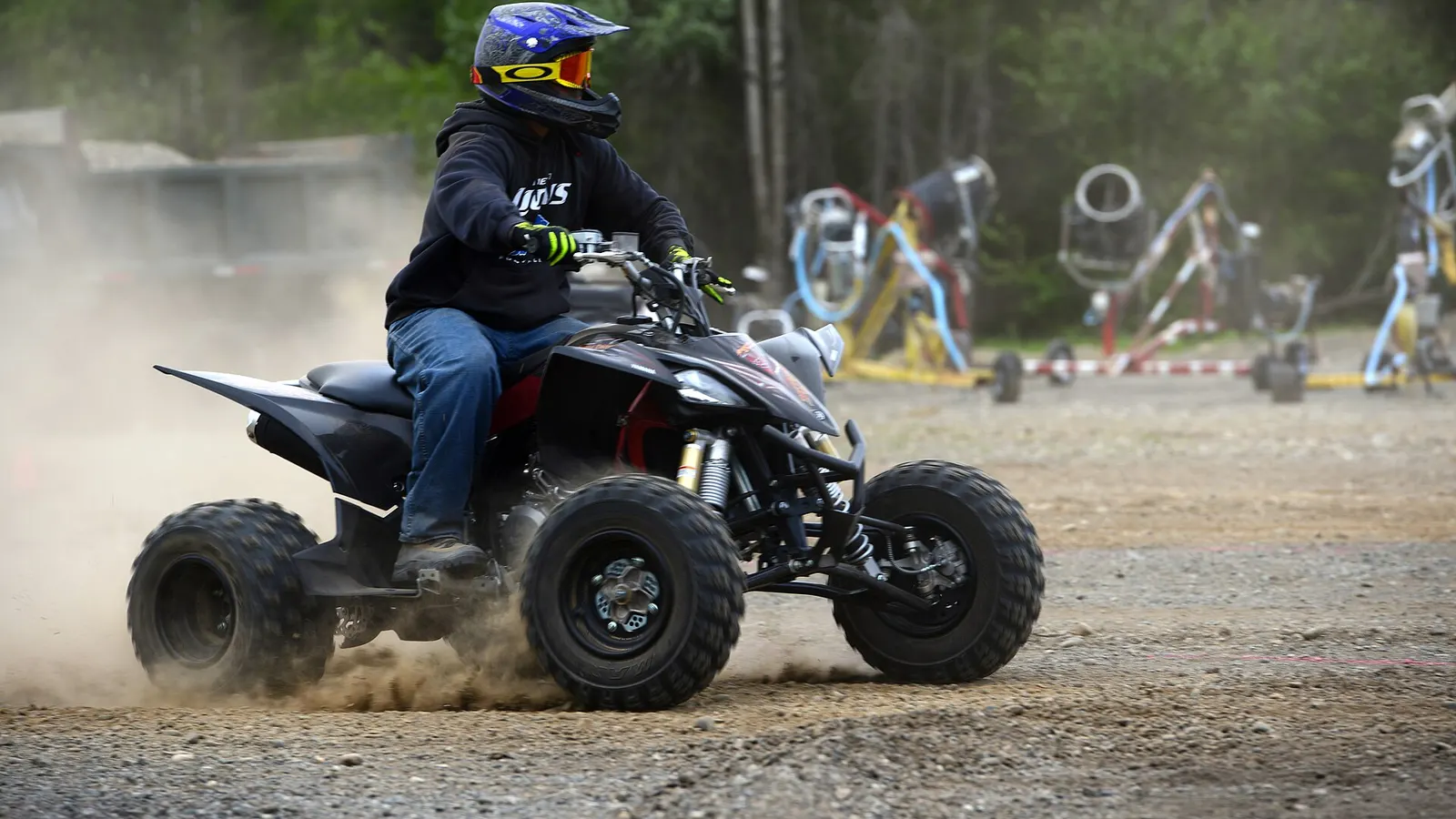
Keeping children safe on electric quad bikes — speed limiters, protective gear, riding areas, and parental supervision guidelines.
Kids Electric Quad Bike Safety: What Every Australian Parent Should Know
Electric quad bikes (ATVs) for children are popular across Australia, particularly in regional and rural areas where kids have room to ride. They offer a stable four-wheeled platform that feels more secure than a two-wheeled dirt bike, but they come with their own set of risks. This guide covers the safety essentials: speed governors, helmets, riding areas, and what to watch out for.
Why Safety Matters More Than You Think
Quad bikes are the leading cause of death in Australian farming accidents, and children are disproportionately represented in the statistics. While most serious incidents involve full-size petrol quads on working farms, the underlying risks — rollovers, collisions, and ejections — apply to kids' electric quads too.
The good news is that purpose-built children's electric quads are far safer than adult machines. They are lighter, slower, and designed with safety features that adult quads lack. But they still require respect, supervision, and proper use.
Speed Governors: The Non-Negotiable Feature
Every quality children's electric quad bike includes a speed governor — a device or setting that limits the maximum speed. This is the single most important safety feature on the vehicle.
How speed governors work on electric quads:
- Adjustable throttle limiters: A screw or dial on the throttle housing that physically restricts how far the throttle can be twisted or pressed. Simple, reliable, and tamper-resistant if you tighten it properly.
- Electronic speed modes: Software-controlled speed levels, typically two or three settings. Changed via a switch, key, or button combination. Easier to adjust but also easier for a tech-savvy child to override.
- Parental remote controls: Some entry-level quads include a wireless remote that lets a parent cut the motor instantly. Useful for very young riders but limited range and reliability can be issues.
Recommended maximum speeds by age:
- Ages 3-5: 5 km/h maximum. Walking pace. The child is learning to steer and stop.
- Ages 5-8: 10-15 km/h. Comfortable jogging pace. The child should be able to stop on command.
- Ages 8-12: 15-25 km/h. The child needs proper safety gear and demonstrated competence.
- Ages 12+: Up to 35 km/h for experienced riders with full gear on appropriate terrain.
Start at the lowest setting every time, even if the child has ridden before. Increase speed gradually based on demonstrated skill, not the child's enthusiasm.
Helmets and Safety Gear
Helmets
A helmet is mandatory for every ride, every time, no exceptions. For electric quad riding in Australia:
- AS/NZS 2063 bicycle helmets are acceptable for low-speed toy quads under 10 km/h.
- Full-face motocross helmets are strongly recommended for anything faster. Youth MX helmets from brands like Fox, Fly Racing, and Bell range from $100 to $350 AUD.
- The helmet must fit properly: snug but not tight, level on the head, chin strap fastened. A loose helmet is almost as dangerous as no helmet.
Other Essential Gear
- Goggles: Dust, insects, and small stones are real hazards on unsealed ground. From $25 AUD.
- Gloves: Full-finger gloves protect hands during falls and provide better throttle grip. From $25 AUD.
- Boots: Over-the-ankle boots protect feet and ankles. Motocross boots are ideal; sturdy work boots or hiking boots are an acceptable minimum. No thongs, no bare feet.
- Long pants: Jeans at minimum. Motocross pants offer better protection.
- Chest protector: Recommended for any riding above 15 km/h or on rough terrain. From $50 AUD.
Supervised Riding Areas
Where a child rides is as important as what they ride. The rules in Australia:
Where Kids CAN Ride Electric Quads
- Private property: Backyards, paddocks, farms, and rural blocks. This is where the vast majority of kids' quad riding happens.
- Dedicated off-road parks: Some commercial riding parks allow youth quads. Check with the operator first.
- Private motocross facilities: Some clubs have quad-specific areas or sessions.
Where Kids CANNOT Ride Electric Quads
- Public roads: Electric quads are not road-registered. Riding on public roads, even quiet rural roads, is illegal in every state.
- Footpaths and shared paths: Motorised vehicles are prohibited.
- Public parks and reserves: Most councils ban motorised vehicles.
- National parks and state forests: Generally prohibited unless specifically signed as open for recreational vehicles.
Setting Up a Safe Riding Area
If you are creating a riding area on your property:
- Clear the area: Remove rocks, sticks, wire, and other debris. Walk the area before the first ride.
- Mark boundaries: Use cones, pegs, or hay bales to define the riding area. Children should know they must stay within the markers.
- Avoid slopes: Quad bikes can roll on slopes, even gentle ones. Keep beginners on flat ground. If you must include a hill, ensure it is gentle and the child approaches it straight on, never across the slope.
- Stay away from water: Dams, creeks, and irrigation channels are serious hazards. Keep the riding area well clear.
- No passengers: Children's quads are designed for one rider. Adding a passenger changes the balance and braking of the vehicle.
- Supervise actively: Watch the child ride. Do not supervise from inside the house or while distracted. Be close enough to intervene if something goes wrong.
Common Risks and How to Manage Them
Rollovers
The number one quad bike danger. Even on four wheels, quads can tip over on slopes, during sharp turns, or when hitting obstacles. Mitigation:
- Keep speed low
- Ride on flat ground
- No sharp turns at speed
- The child should never try to ride across a slope
Collisions
Children hit fences, trees, sheds, and parked cars. Mitigation:
- Clear the riding area
- Set clear boundaries
- Start slow
- Teach braking before allowing speed increases
Throttle Stuck Open
Rare on quality electric quads but possible on cheap imports. If the throttle sticks, the motor keeps running. Mitigation:
- Buy from a reputable brand with a kill switch
- Test the kill switch before every ride
- Teach the child to use the kill switch if something feels wrong
- Check throttle return spring regularly
Ejection
A sudden stop (hitting a log, a ditch, or a fence) can throw the rider forward off the quad. Mitigation:
- Chest protectors reduce injury severity
- Keep speed appropriate to the terrain
- Clear obstacles from the riding area
Choosing the Right Quad
When shopping for a kids' electric quad in Australia, prioritise:
- Speed governor: Must have one. Must be adjustable. Must be difficult for the child to change.
- Kill switch: A prominent, accessible engine cut-off switch on the handlebars.
- Disc brakes: Drum brakes are inadequate for anything beyond a slow toy quad.
- Chain or shaft guard: The drive mechanism should be enclosed or guarded so small fingers and clothing cannot get caught.
- Weight capacity: Do not overload the quad. An overweight rider stresses the frame, brakes, and suspension.
- Appropriate size: The child should reach the handlebars comfortably and operate the brake and throttle without stretching.
The Bottom Line
Electric quads are a fantastic way for Australian kids to develop confidence, coordination, and outdoor skills. They are quieter, cleaner, and lower-maintenance than petrol alternatives. But they are not toys — at least not once they exceed walking pace.
Invest in proper safety gear, set up a clear riding area, supervise every session, and start slow. The speed governor is your best friend. Use it.
Ready for the Property?
Browse kids and adult electric quad bikes and ATVs for recreation and farm work.
Shop Electric Quads →