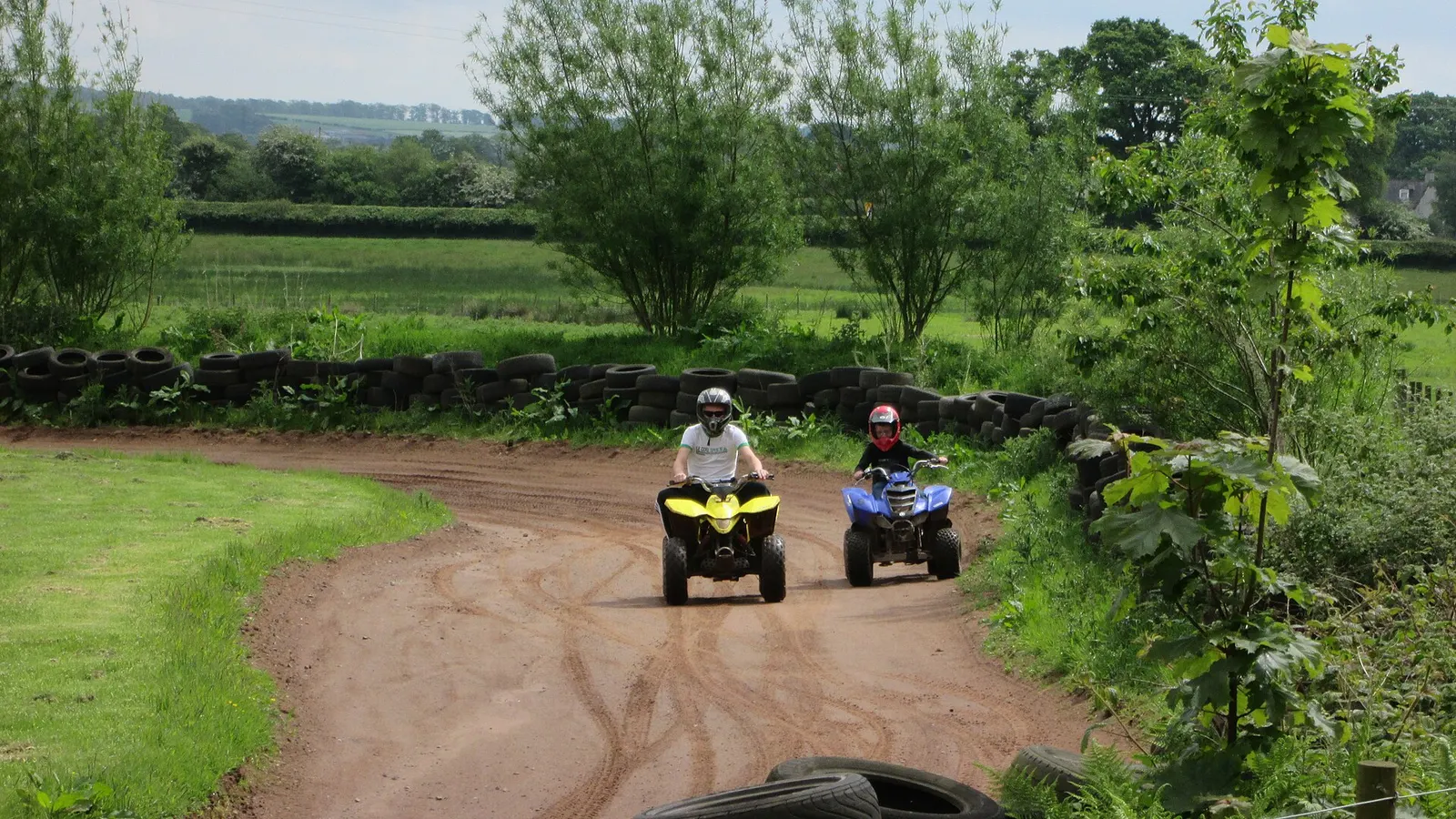
Electric ATVs for Australian farms and properties — livestock work, kids' quads, battery range, safety, and how they compare to petrol quads.
Electric quad bikes (e-ATVs) are moving from novelty to practical tool — on farms, in recreation, and on private properties. They are quieter than petrol quads, cheaper to run, produce no exhaust emissions, and require far less mechanical maintenance. Here is what the Australian market offers in 2026.
How Electric Quads Differ from Petrol
Motor and Power
Petrol quads use internal combustion engines producing 15–60 kW. Electric quads use battery-powered motors delivering equivalent or higher torque at zero RPM — meaning full pulling power from a standstill, with no clutch, no gears, and no engine warm-up.
Advantages of electric:
- Instant torque (no revving needed)
- No gearbox — twist-and-go operation
- Near-silent operation (important for livestock work, wildlife areas, and noise-sensitive properties)
- No exhaust emissions (can be used indoors — barns, sheds, greenhouses)
- Lower vibration (less operator fatigue on long days)
Disadvantages of electric:
- Limited range (30–80 km per charge depending on terrain and load)
- Longer refuelling time (4–8 hours to charge vs 2 minutes to fill a tank)
- Higher upfront cost (20–40 % more than a petrol equivalent)
- Limited model selection in Australia (growing but still smaller than the petrol market)
Farm and Property Use
Livestock Work
Electric quads are transforming livestock management:
- Quiet operation does not stress animals. Cattle, sheep, and horses react calmly to an electric quad — unlike the roar of a petrol engine.
- Zero exhaust means you can use the quad inside sheds, woolsheds, and barns without ventilation concerns.
- Instant throttle response makes low-speed manoeuvring around livestock precise and predictable.
Property Maintenance
- Fencing inspections and repairs
- Spraying (chemical tanks mounted on the rear rack)
- Feed distribution
- Firewood collection
- Moving tools and materials across the property
Orchard and Vineyard
Electric quads are ideal for orchards and vineyards where noise and emissions are problems:
- No exhaust fumes near produce
- Quiet operation allows communication between workers
- Narrow models fit between rows
- Low-speed torque suits hilly vineyard terrain
Recreational Use
Trail Riding
Electric quads handle fire trails, farm tracks, and moderate off-road terrain. They lack the top speed and engine braking of petrol quads, but their instant torque and quiet operation provide a different kind of riding experience — smooth, responsive, and strangely peaceful.
Kids' Quads
Electric quads for children are the safest entry point to quad riding:
- Speed limiters restrict top speed (typically adjustable from 5 to 25 km/h)
- No hot exhaust pipes to burn against
- Quieter — less frightening for young riders
- No fuel handling — no risk of spillage or fire
- Kill switch (tether or remote) stops the quad instantly
Popular kids' models: available in 500 W to 1500 W configurations with appropriate speed limiters for different age groups.
Legal Status in Australia
Electric quad bikes follow the same rules as petrol quads:
- Not road-registrable in any Australian state in the standard ATV configuration
- Legal on private property with the landowner's permission
- Not legal on public roads, footpaths, or bike paths
- Some states (e.g., Queensland) allow registered side-by-side (SSV/UTV) vehicles on specific public roads with engineering compliance — this is a separate vehicle class from ATVs
Farm exemptions: in some states, registered farmers can operate unregistered ATVs (including electric) on public roads between properties, subject to conditions (daylight only, specified distances, appropriate licensing). Check your state's agricultural vehicle rules.
Safety
Quad bike accidents are a leading cause of death and injury on Australian farms. Between 2001 and 2020, over 200 Australians died in quad bike incidents. Electric quads share most of the same risks as petrol quads:
Rollover
The number-one killer. Quads are narrow and top-heavy. Rollovers happen on slopes, in rutted terrain, and during sharp turns at speed.
Prevention:
- Install a crush protection device (CPD) or operator protection device (OPD) — a roll bar or roll cage. This is now mandatory on quad bikes used in workplaces in several states.
- Never ride across a slope — always ride straight up or straight down.
- Reduce speed on slopes, rough terrain, and corners.
- Never carry a passenger on a single-rider quad (it changes the centre of gravity).
Helmet
Always wear a helmet when riding a quad — even on flat, familiar property. Most quad bike deaths involve head injuries.
Speed
Electric quads accelerate silently and smoothly — it is easy to reach high speed without the auditory cue of a revving engine. Monitor your speed, especially on rough terrain where bumps and ruts can throw the bike.
Children
- Supervise children at all times
- Use the speed limiter at the lowest appropriate setting
- Ensure the child can reach all controls (brake, throttle, steering) comfortably
- Never allow children to ride adult-sized quads
Battery and Charging
Capacity
Farm-use electric quads typically carry 2–5 kWh batteries. Range varies with terrain, load, and speed:
| Battery | Flat terrain range | Hilly terrain range |
|---|---|---|
| 2 kWh | 25–40 km | 15–25 km |
| 3 kWh | 40–60 km | 25–40 km |
| 5 kWh | 60–100 km | 40–60 km |
Charging
Most electric quads charge from a standard 240 V household outlet:
- 2 kWh battery: 3–4 hours
- 5 kWh battery: 6–8 hours
Charge overnight and the quad is ready for a full day's work. For properties without mains power, a generator or solar panel system can charge the quad.
Battery Life
Lithium-ion quad batteries last 800–1,200 charge cycles — roughly 5–8 years of daily farm use. Replacement batteries cost $500–$2,000 depending on capacity.
Maintenance
Electric quads have dramatically fewer moving parts than petrol quads:
| Component | Petrol quad | Electric quad |
|---|---|---|
| Oil changes | Every 50–100 hours | Not applicable |
| Air filter | Clean/replace regularly | Not applicable |
| Spark plugs | Replace periodically | Not applicable |
| Coolant | Check regularly | Not applicable (most are air-cooled) |
| Drive belt/chain | Check regularly | Check regularly |
| Brakes | Check regularly | Check regularly |
| Tyres | Check regularly | Check regularly |
| Battery | Not applicable | Check charge cycles, inspect contacts |
Annual maintenance costs are typically 50–70 % lower for electric quads compared to petrol equivalents.
Bottom Line
Electric quad bikes are ready for farm work, property maintenance, and recreational use. They are quieter, cleaner, cheaper to run, and simpler to maintain than petrol quads. The trade-offs — limited range and longer refuelling — are manageable on most properties with overnight charging. For livestock work, orchards, and noise-sensitive environments, an electric quad is not just viable — it is better.
Ready for the Property?
Browse kids and adult electric quad bikes and ATVs for recreation and farm work.
Shop Electric Quads →