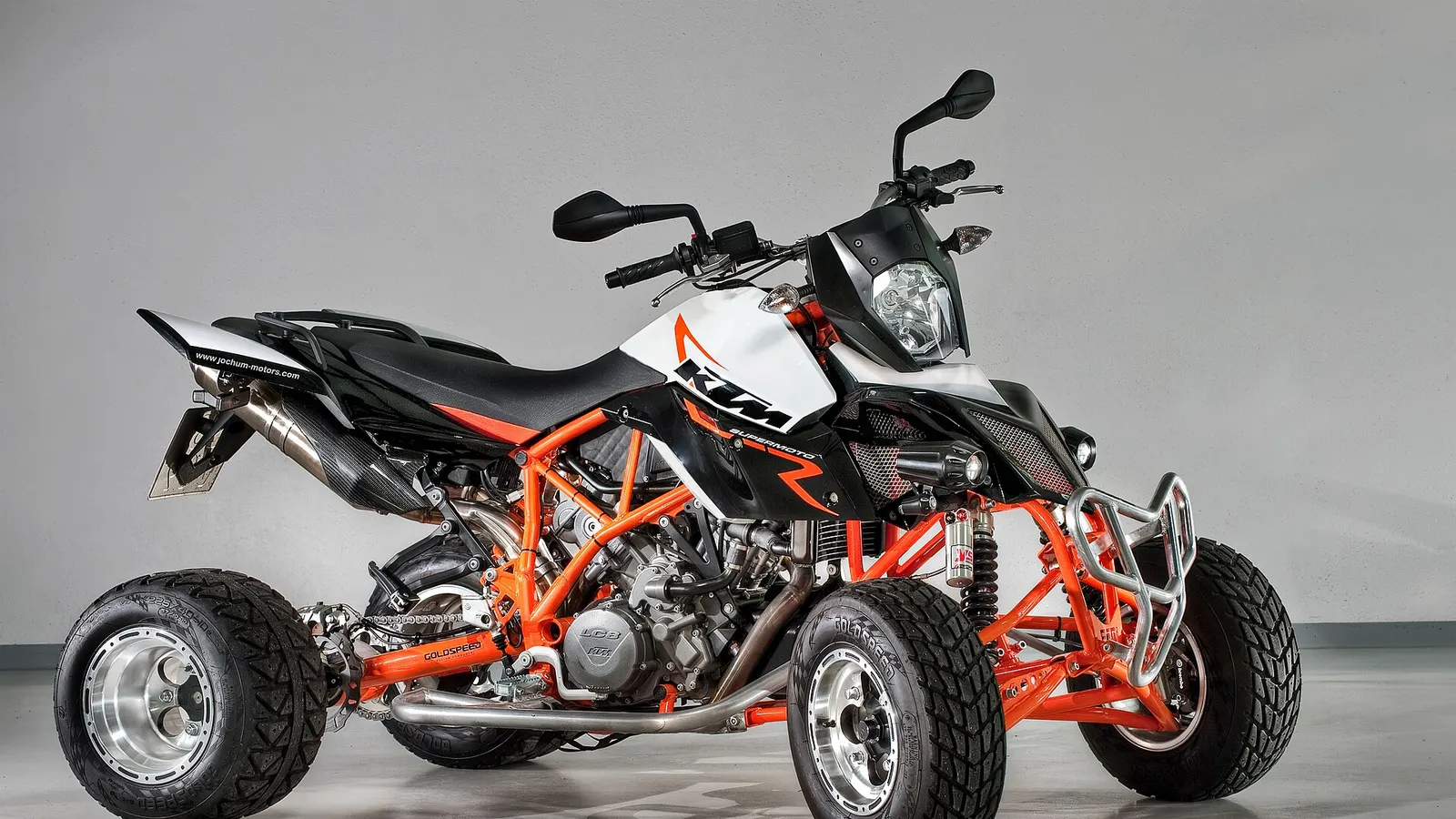
A full comparison of electric and petrol ATVs — noise levels, maintenance schedules, instant torque, range limitations, and cost of ownership.
Electric Quad Bike vs Petrol ATV: A Practical Comparison
The quad bike market in Australia is shifting. Electric models are now available alongside the petrol machines that have dominated farms, trails, and properties for decades. If you are in the market for a new quad, the question is no longer whether electric works — it is whether it works for you. This comparison breaks down the real differences between electric and petrol ATVs across the factors that matter most to Australian riders.
Noise
This is the most immediately obvious difference and one of the biggest practical advantages of electric.
A petrol ATV at full throttle produces 85 to 100 decibels — comparable to a lawnmower or chainsaw. An electric ATV at the same speed produces 30 to 50 decibels, which is closer to a quiet conversation. At idle, a petrol quad rumbles and vibrates. An electric quad is silent.
Why this matters in practice:
- Livestock: Cattle and sheep are calmer around electric quads. Mustering and paddock checks cause less stress, which can improve animal welfare and productivity.
- Neighbours: If your property borders residential areas, early morning and late evening rides on a petrol quad generate complaints. Electric eliminates this issue.
- Hearing: Years of petrol quad use without hearing protection contributes to hearing loss. Electric quads pose no such risk.
- Wildlife: On recreational trails, electric quads cause less disturbance to native wildlife.
Maintenance
Petrol ATVs have internal combustion engines with hundreds of moving parts. Electric ATVs have a motor, a battery, a controller, and a drivetrain. The difference in maintenance requirements is significant.
Petrol ATV maintenance schedule:
- Oil and filter changes every 50 to 100 hours or annually
- Air filter cleaning and replacement
- Spark plug replacement
- Valve clearance checks
- Coolant changes (on liquid-cooled models)
- Carburettor or fuel injection servicing
- Fuel system maintenance (fuel filter, fuel lines)
- Chain or belt adjustment and lubrication
- Brake pad and fluid replacement
- General engine tune-ups
Electric ATV maintenance schedule:
- Brake pad replacement (less frequent due to regenerative braking)
- Chain or belt adjustment and lubrication (if applicable)
- Tyre pressure and condition checks
- Battery health monitoring
- Electrical connection inspections
- Coolant checks (on liquid-cooled battery/motor systems)
The electric list is shorter because there is no engine oil, no air filter, no spark plugs, no exhaust system, and no fuel system. The motor itself is essentially maintenance-free for its entire lifespan in most cases.
For a farmer or property owner who does their own servicing, electric means less time in the shed and more time working. For those who use a dealer, it means lower annual service bills.
Torque and Power Delivery
Electric motors produce maximum torque at zero RPM. This means full pulling force is available the instant you press the throttle, with no need to rev up, find the power band, or slip a clutch.
Petrol engines produce peak torque at a specific RPM range. Below that range, pulling force is reduced. This is why petrol quads can struggle to start a heavy load on a hill — the engine needs to build revs before it delivers full torque.
In practical terms:
- Towing from a standstill: Electric is smoother and more controlled
- Hill starts with a load: Electric handles these with less effort
- Low-speed manoeuvring: Electric provides precise, consistent power
- High-speed trail riding: Both perform similarly once up to speed
The power delivery of an electric motor feels different from a petrol engine. There is no gear shifting on most electric ATVs (they use a single-speed reduction drive), so acceleration is smooth and linear. Some riders prefer this; others miss the engagement of shifting gears.
Range and Refuelling
This is where petrol still holds an advantage, and it is the main reason some buyers hesitate on electric.
A petrol ATV with a 15-litre tank and average fuel consumption of 6 to 10 litres per 100 km can cover 150 to 250 km on a tank. Refuelling takes two minutes from a jerry can.
An electric ATV with a mid-size battery pack (5 to 8 kWh) covers 40 to 80 km per charge, depending on terrain and load. Charging takes 4 to 10 hours from a standard outlet, or 2 to 4 hours with a fast charger.
For many Australian use cases — daily farm rounds, short recreational rides, property maintenance — 40 to 80 km is more than enough. Most farmers do not ride 100 km in a day. But for all-day mustering on large stations, long trail rides, or remote work far from power, the limited range and long charge time of electric is a genuine constraint.
The workaround for some owners is a second battery pack. Swap it in and you double your range. But spare lithium packs are not cheap, and not all models support quick battery swaps.
Running Costs
The numbers favour electric over the life of the machine.
Fuel vs electricity (annual estimate for regular farm use):
- Petrol: $800 to $1,500 per year at current Australian fuel prices
- Electricity: $100 to $300 per year from mains power (less with solar)
Maintenance (annual estimate):
- Petrol: $300 to $600 for servicing and consumables
- Electric: $50 to $150 for brake pads and minor items
Total annual running cost:
- Petrol: $1,100 to $2,100
- Electric: $150 to $450
Over five years, the running cost difference can be $4,000 to $8,000 in favour of electric. This helps offset the higher purchase price.
Purchase Price
Electric ATVs typically cost more upfront. A mid-range petrol farm quad in Australia costs $8,000 to $15,000. An equivalent electric model costs $10,000 to $20,000, depending on battery size and features.
Premium electric utility ATVs with large batteries and high towing capacity can exceed $25,000. Budget electric quads start around $5,000 but often lack the durability and range needed for serious farm work.
The gap is narrowing as battery costs fall and more manufacturers enter the market, but for now, electric carries a price premium at purchase.
Durability and Lifespan
Petrol ATV engines, well maintained, can last 5,000 to 15,000 hours depending on the model and use. Electric motors typically outlast this — they have fewer wearing parts and do not suffer from the carbon buildup, valve wear, and seal degradation that affect combustion engines.
The weak point of an electric ATV is the battery. Lithium-ion packs degrade over time and with use. After 500 to 1,000 charge cycles, capacity may drop to 70 to 80 percent of original. Depending on use, that means 3 to 7 years before the battery noticeably loses range. Replacement battery packs cost $1,500 to $5,000 depending on the machine.
A petrol quad with a worn engine can be rebuilt. An electric quad with a degraded battery needs a new pack. Both have a finite lifespan on their core component, but the electric drivetrain around the battery is simpler and more durable.
Cold and Hot Weather Performance
Australia's climate varies enormously, and temperature affects both types.
Petrol in cold weather: Can be hard to start on cold mornings, especially carburetted models. Runs fine once warm.
Electric in cold weather: Battery capacity drops in cold temperatures (roughly 10 to 20 percent loss below 5 degrees Celsius). Performance is otherwise normal.
Petrol in hot weather: Can overheat during sustained low-speed work in high ambient temperatures. Coolant maintenance is important.
Electric in hot weather: Battery management systems may limit power output if the pack gets too hot. Most quality models handle Australian summers without issue, but sustained heavy use in 40-degree heat can trigger thermal management.
Environmental Impact
Electric ATVs produce zero direct emissions during use. No exhaust fumes, no fuel spills, no oil contamination. This matters for waterway-adjacent properties, organic farms, and conservation areas.
The manufacturing footprint of an electric ATV, including battery production, is higher than a petrol equivalent. Over the machine's lifespan, total environmental impact depends on how the electricity is generated. On a solar-powered property, the lifetime emissions of an electric ATV are a fraction of a petrol model. On grid power, the advantage is smaller but still significant given Australia's increasing renewable energy share.
Which Should You Choose
Choose electric if:
- Your daily riding is under 80 km
- You work with livestock and value quiet operation
- You have access to mains or solar power for daily charging
- You want lower long-term running costs
- Your property is near neighbours or in a noise-sensitive area
Choose petrol if:
- You need all-day range without access to charging
- You ride long distances in remote areas
- You need the absolute lowest upfront purchase price
- You want a wider selection of models and accessories
For a growing number of Australian farmers and recreational riders, electric now makes practical and financial sense. The technology is mature, the range covers typical daily use, and the savings accumulate over years of ownership. Petrol is not going anywhere soon, but the electric option is no longer a compromise — it is a genuine alternative.
Ready for the Property?
Browse kids and adult electric quad bikes and ATVs for recreation and farm work.
Shop Electric Quads →