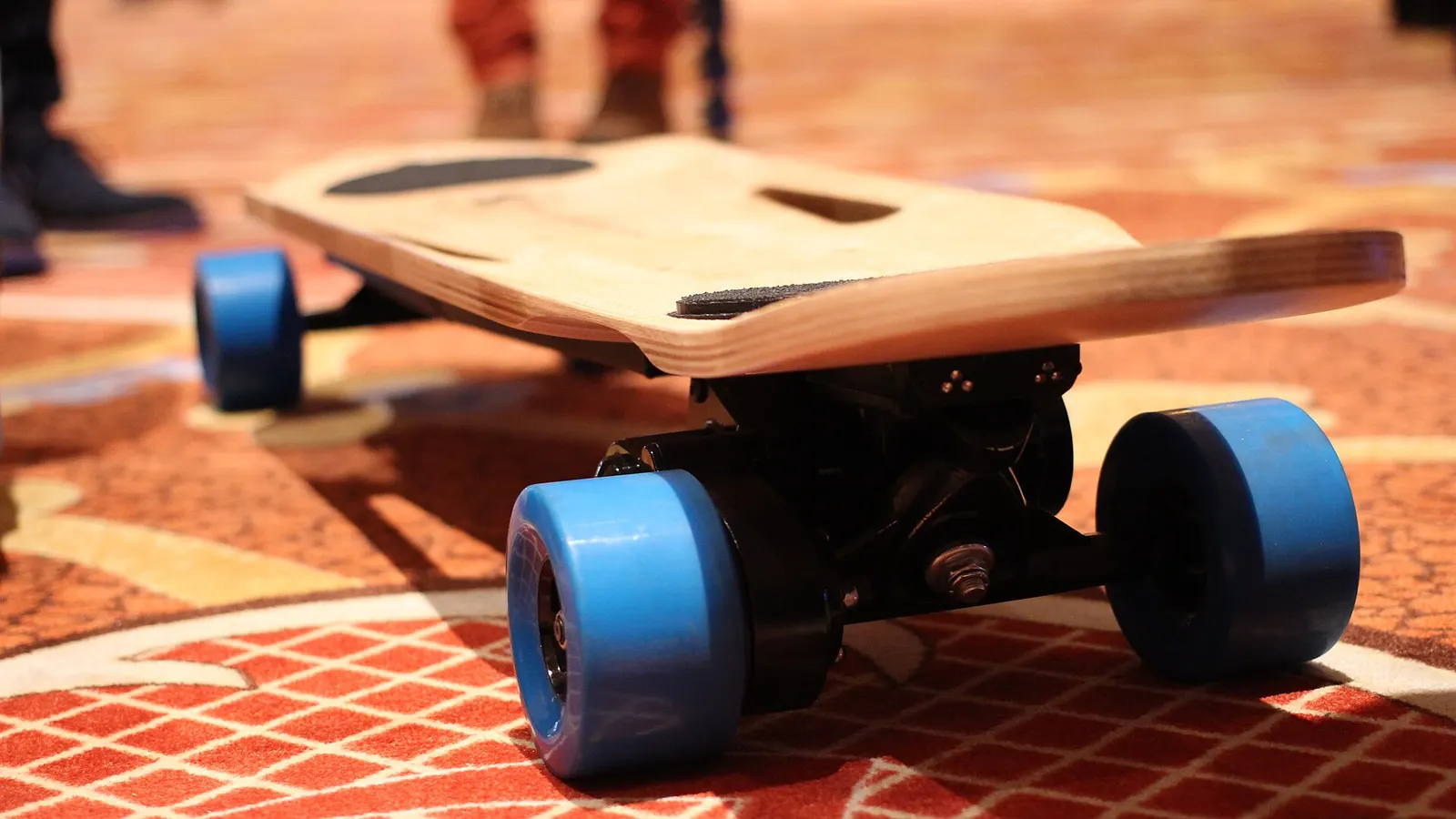
State-by-state legal status of electric skateboards, plus the safety gear every rider needs — helmets, wrist guards, and high-visibility equipment.
Electric skateboards are fast, compact, and exhilarating — but their legal status in Australia is complicated. Most states treat them differently from e-bikes and e-scooters, and the rules are still evolving. Here is what you need to know before riding in 2026.
Legal Status by State
Victoria
Electric skateboards are legal on footpaths and shared paths in Victoria, but with restrictions:
- Maximum speed: 10 km/h on footpaths, 20 km/h on shared paths and bike lanes
- Must give way to pedestrians
- Helmet required (bicycle helmet meeting AS/NZS 2063)
- Not permitted on roads
These rules apply to "personal mobility devices" (PMDs) which include electric skateboards, electric unicycles, and similar motorised personal transport.
New South Wales
NSW has legalised electric skateboards under its personal mobility device framework:
- Speed limit: 10 km/h on footpaths, 25 km/h on roads and bike lanes (where permitted)
- Helmet required
- Riders must be 16+
- Rules vary by local council area — some councils have restricted riding zones
Queensland
Queensland permits electric skateboards as PMDs on footpaths, bike paths, and shared paths:
- Speed limit: 25 km/h
- Helmet required
- Must have a braking system
- No riding on roads with speed limits above 50 km/h
South Australia, Western Australia, Tasmania, ACT, NT
Rules vary and change frequently. Check with your state or territory transport authority before riding. Some states classify electric skateboards as motor vehicles, which would require registration — a pathway that does not exist for skateboards.
Safety Gear: Non-Negotiable
Electric skateboards are riskier than e-bikes or e-scooters for one fundamental reason: no handlebars. You are standing on a board with no physical connection to the vehicle beyond friction and balance. A sudden stop, a crack in the pavement, or a wet patch can throw you forward with no way to steer or brake your body.
Essential Gear
Helmet: mandatory by law in every state that allows electric skateboards. Use a skateboard-specific helmet (covering the back of the head) rather than a road cycling helmet. Standards: AS/NZS 2063 (Australian), or CPSC + ASTM F1492 (US skate standard). Multi-impact helmets (MIPS-equipped) are strongly recommended.
Wrist guards: the most common electric skateboard injury is a broken wrist from a forward fall. Wrist guards with a rigid splint on the palm side prevent hyperextension. Wear them on every ride.
Knee pads: hard-shell knee pads protect against the second most common injury — kneecap impact from forward falls. Skate-style pads (e.g., 187 Killer Pads, Triple Eight) fit under loose trousers.
Elbow pads: protect against side falls and slides. Less critical than wrists and knees but still recommended, especially while learning.
Gloves: sliding gloves with puck palms (longboard-style) let you put a hand down during a fall without shredding skin. Not essential for low-speed commuting but valuable at 20+ km/h.
Optional But Smart
- Impact shorts: padded shorts protect the hips and tailbone during backward falls
- High-visibility vest or reflective tape: electric skateboards are low to the ground and hard for drivers to see, especially at dusk
- Lights: front white, rear red — many boards do not include them. Clip-on USB lights work well
Board Types
Hub Motor Boards
The motors are built into the rear wheels. Quiet, simple, lightweight, and lower-maintenance. Slightly less torque than belt-driven boards. Good for flat commutes and smooth surfaces.
Belt-Drive Boards
An external motor drives the wheels via a belt and pulley system. More torque (better hill climbing), louder, and the belts need periodic replacement. Better for hilly terrain and riders who want maximum acceleration.
All-Terrain Boards
Pneumatic (air-filled) tyres instead of urethane wheels. Handle grass, gravel, and rough pavement that would throw a standard board. Heavier, slower top speed, but far more versatile for mixed-surface riding. Some models use independent trucks and bindings for off-road stability.
Riding Tips for Beginners
- Start on flat, smooth ground with no traffic. A car park on a Sunday morning is ideal.
- Learn to stop before you learn to go. Practice slide-stopping (weight shift to brake) and footbraking at low speed.
- Keep your knees bent. A low centre of gravity makes you more stable and less likely to fall.
- Watch for cracks and expansion joints. Skateboard wheels are small — a 5 mm crack that a bike wheel rolls over can stop a skateboard dead and launch you forward.
- Do not ride in the rain. Wet surfaces reduce traction dramatically, and most electric skateboards are not waterproof. Water damage voids most warranties.
- Carry the remote securely. The wireless remote controls your speed and braking. If you drop it, you lose braking. Use a wrist strap.
Maintenance
Electric skateboards are low-maintenance compared to e-bikes:
- Wheels: urethane wheels wear down over time. Replace when you see flat spots or the ride becomes rough. Lifespan: 500–2,000 km depending on riding style and surface.
- Belts (belt-drive only): check for cracks and fraying. Replace every 500–1,500 km or when you notice slipping.
- Bearings: clean and re-lubricate every 500 km or when they sound gritty. Replace when they no longer spin freely after cleaning.
- Battery: same lithium-ion care rules as e-bikes — store at 40–60 % charge, avoid extreme heat, use the original charger.
- Trucks and hardware: check bolt tightness before every ride. Vibration loosens nuts faster than on a regular skateboard.
Bottom Line
Electric skateboards are a viable last-mile commuter option and a genuinely fun way to get around — but they demand more skill and more protective gear than e-bikes or e-scooters. Know your state's laws, wear wrist guards and a helmet at minimum, and practice stopping before you venture into traffic.
Ready to Roll?
Explore street and all-terrain electric skateboards and longboards, plus spare belts, wheels and chargers.
Shop Electric Skateboards →