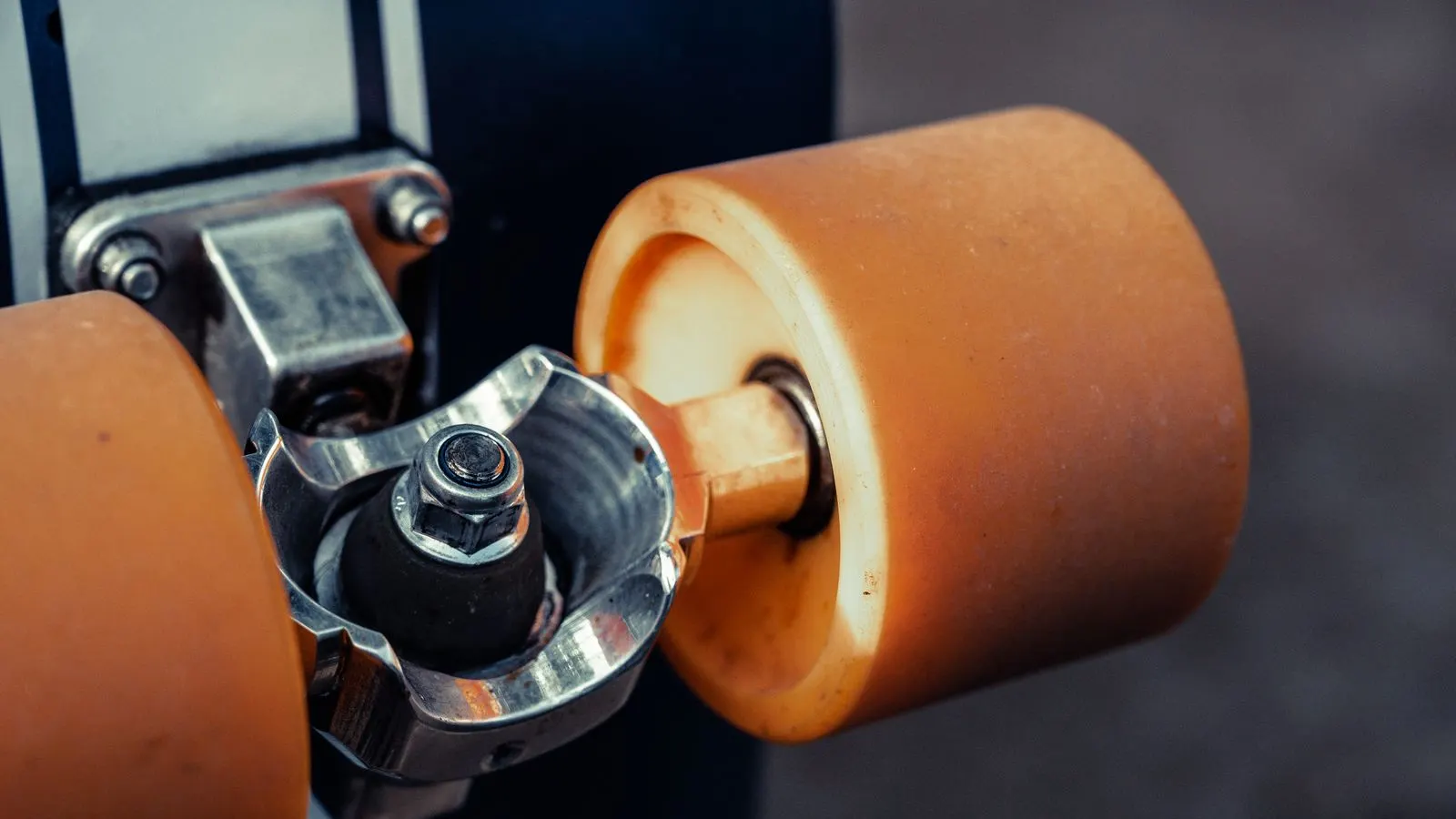
Keep your electric skateboard running smoothly — belt tension, wheel rotation, bearing cleaning, grip tape care, and battery storage.
An electric skateboard is a machine with moving parts, electronics, and a battery. Ignore maintenance and it will let you know, usually at the worst possible moment. This guide covers what needs attention, how often, and how to do it yourself.
Belt Inspection and Replacement
If your board uses a belt drive system, the belts are the single most common wear item. They stretch, fray, and eventually snap with use.
How often to check. Inspect your belts every week if you ride daily, or every few rides if you ride casually. Look for fraying on the belt edges, missing or cracked teeth, and glazing (a shiny, hard surface that reduces grip).
Signs of a worn belt. You will hear it before you see it. A worn belt slips under load, producing a chirping or squealing sound during acceleration or braking. You may also notice reduced braking power or a slight delay in throttle response.
Replacing a belt. Most boards use standard HTD5M timing belts in widths of 12 mm or 15 mm. The length varies by board. Keep spares on hand because once a belt goes, the board is unrideable.
To replace a belt:
- Remove the wheel by loosening the axle nut.
- Slide the motor mount to release belt tension (the exact method varies by board).
- Remove the old belt from the motor pulley and wheel pulley.
- Fit the new belt, ensuring the teeth engage properly.
- Adjust tension so the belt deflects about 5 mm when pressed firmly in the middle.
- Reassemble and test.
Belt tension. Too loose and the belt skips teeth under load. Too tight and it wears faster and puts unnecessary strain on the motor bearings. The 5 mm deflection test is a reliable guide.
Wheel Care and Replacement
Urethane wheels. Street board wheels are made from polyurethane and wear down over time. Uneven wear is common, especially on the drive wheels. Rotate your wheels periodically (swap front and rear, or left and right on the rear) to even out the wear.
Flat spots develop from hard braking or sliding. Small flat spots will round out with riding. Severe flat spots cause vibration and should be addressed by replacing the wheel.
Replace wheels when they are worn down to the point where the ride quality deteriorates noticeably, or when flat spots cause persistent vibration.
Pneumatic tyres. All-terrain board tyres wear like any other pneumatic tyre. Check for tread wear, cuts in the sidewall, and proper inflation. Replace tubes at the first sign of persistent slow leaks, as patching tubes in small skateboard tyres is fiddly and unreliable.
Bearing Maintenance
Bearings allow your wheels to spin freely. Dirty or dry bearings create drag, reduce range, and eventually seize.
How often to clean. Every two to four weeks for regular riders. Immediately after riding in rain, through puddles, or on dusty trails.
Cleaning process:
- Remove the wheels from the board.
- Pop the bearings out of the wheel cores using a bearing puller or the truck axle as a lever.
- Remove the bearing shields (rubber shields pry off; metal shields have a C-clip).
- Soak the bearings in isopropyl alcohol or a dedicated bearing cleaner for 10 to 15 minutes. Shake them gently to dislodge dirt.
- Remove, dry thoroughly (compressed air or let them air dry completely).
- Apply two to three drops of skateboard bearing lubricant (speed cream or similar). Do not use WD-40 or thick grease.
- Replace shields, reinstall in wheels, and reinstall wheels.
Bearing replacement. If bearings feel rough or gritty after cleaning, or if they have noticeable play (wobble) on the axle, replace them. Standard skateboard bearings are 608 size (8 mm bore, 22 mm outer diameter, 7 mm width). Quality bearings from reputable skate brands cost $20 to $40 for a set of eight and are a worthwhile investment.
Deck Care
Grip tape. Grip tape wears smooth over time, especially in your primary foot positions. When you notice your feet sliding more than usual, replace the grip tape. Peel off the old tape (a hair dryer softens the adhesive), clean the deck surface, and apply new tape.
Grip tape also collects dirt and mud. Scrub it with a grip tape cleaner or a stiff rubber eraser to restore grip between replacements.
Deck inspection. Check for cracks, delamination, or soft spots in the deck. Bamboo and composite decks can develop cracks from impacts. Maple decks may delaminate if exposed to water. A structurally compromised deck is a safety issue. Replace it.
Hardware tightness. Vibration loosens bolts. Check all mounting hardware, truck bolts, and motor mount bolts regularly. Use medium-strength threadlocker (blue Loctite) on bolts that loosen repeatedly, except the axle nuts, which you need to remove for wheel service.
Battery Care and Storage
The battery is the most expensive component on your board and the most sensitive to neglect.
Charging habits. Lithium-ion batteries last longest when kept between 20 and 80 percent charge. Charging to 100 percent for a big ride is fine occasionally, but storing the board fully charged or fully depleted degrades the cells faster.
Storage. If you will not ride for more than a couple of weeks, store the board at around 50 to 60 percent charge in a cool, dry place. Do not leave it in a hot car, a garage that bakes in summer, or outside in the sun. Australian summers are particularly unkind to lithium batteries. Temperatures above 40 degrees Celsius accelerate cell degradation.
Charging temperature. Do not charge the battery immediately after a ride in hot weather. Let it cool to room temperature first. Similarly, do not charge in freezing conditions, though this is rarely an issue in most of Australia.
Water exposure. Most electric skateboards have some water resistance but are not waterproof. Avoid riding through deep puddles. If the board gets wet, dry it as soon as possible. Water and lithium batteries are a dangerous combination.
Battery inspection. If the battery develops a noticeable bulge, produces an unusual smell, or loses capacity suddenly, stop using the board and consult the manufacturer or a qualified repair shop. Damaged lithium batteries are a fire risk.
Truck Maintenance
Bushings. The rubber bushings in your trucks control how the board turns. They wear out and flatten with use, making the board feel vague and unstable. Replace them when they look noticeably compressed or cracked. Bushing hardness (durometer) affects ride feel, so experiment with different ratings to find what suits your weight and riding style.
Pivot cups. The small plastic cup in the baseplate where the hanger pivots can crack or wear, causing clicking or clunking sounds when turning. These are cheap and easy to replace.
Kingpin tightness. Adjust truck tightness to your preference. Tighter trucks are more stable at speed. Looser trucks turn more easily but can develop speed wobbles. Start tight and gradually loosen until you find your preference.
Electronics and Connections
Connectors. Check the cable connections between the battery, ESC (electronic speed controller), and motors periodically. Vibration can loosen connectors, causing intermittent power cuts or reduced performance.
Remote pairing. If the remote starts dropping connection, replace the batteries in the remote (if applicable) and re-pair it with the board following the manufacturer's instructions.
Firmware. Some boards receive firmware updates that improve performance or fix bugs. Check the manufacturer's website or app periodically for updates.
Seasonal Maintenance in Australia
Summer. Heat is the main concern. Avoid leaving the board in direct sunlight or a hot car. Ride earlier or later in the day to avoid peak temperatures. Check tyre pressure more frequently as heat increases air pressure.
Winter. Cold reduces battery performance and range temporarily. Dry conditions mean less cleaning, but morning dew or frost can introduce moisture. Wipe down the board after riding on damp surfaces.
Wet season. In tropical areas of Australia, the wet season brings daily rain. This is the hardest time to keep an electric skateboard in good condition. Avoid riding in rain if possible, and dry and clean the board thoroughly if it gets wet.
Tools to Keep on Hand
A basic maintenance kit for an electric skateboard should include: a skate tool (T-tool with socket, Phillips, and Allen key), spare belts (for belt drive boards), spare bearings, bearing lubricant, isopropyl alcohol, a tyre pump (for pneumatic boards), a tube repair kit, Allen keys for motor mount bolts, and medium-strength threadlocker.
Regular maintenance takes about 20 to 30 minutes per week for a daily rider. It is not complicated, and it keeps your board safe, reliable, and performing well.
Ready to Roll?
Explore street and all-terrain electric skateboards and longboards, plus spare belts, wheels and chargers.
Shop Electric Skateboards →