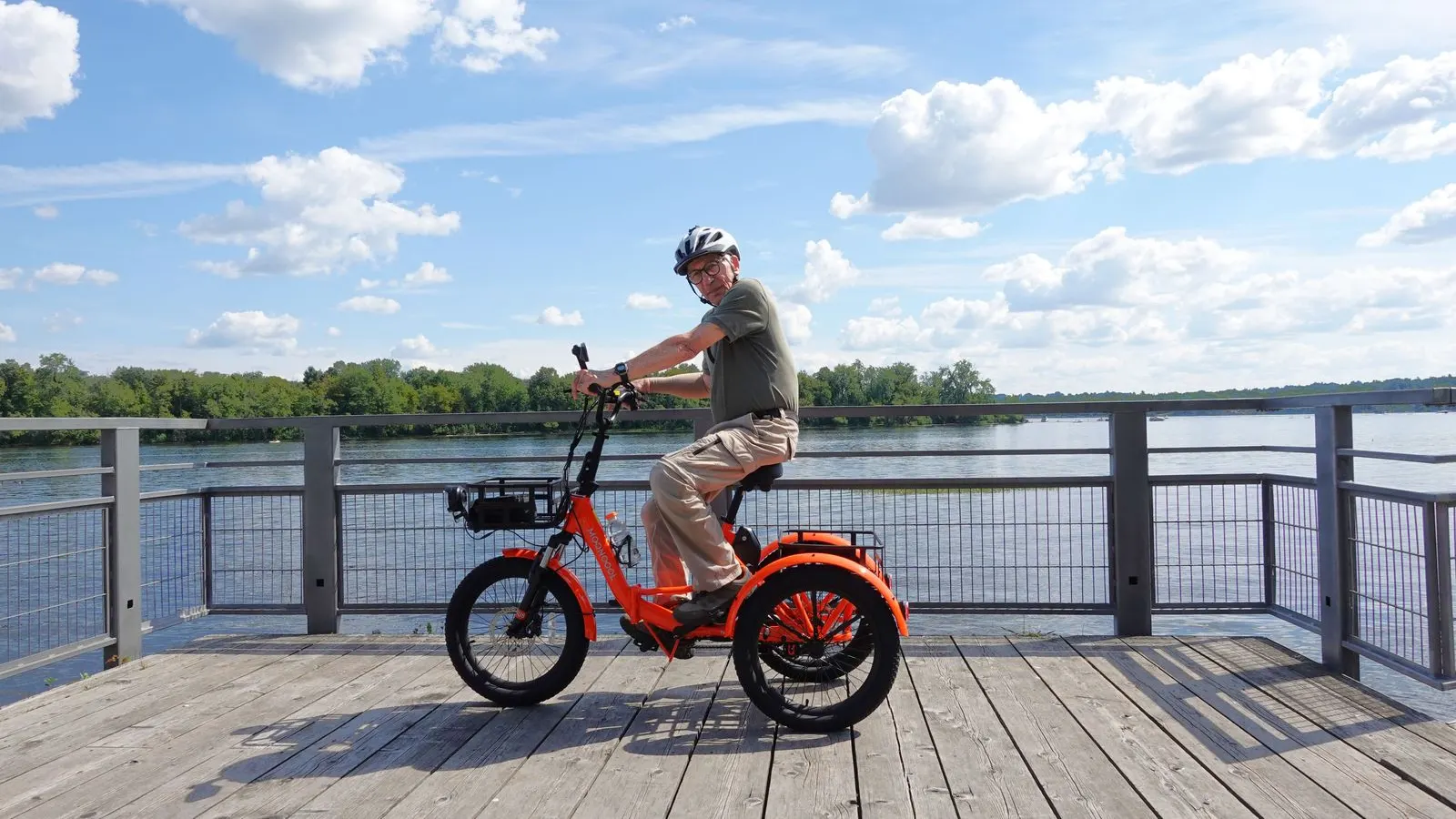
Delta vs tadpole configurations, motor requirements, width considerations, and why e-trikes are the most accessible form of electric cycling.
Three-wheeled electric bikes — e-trikes — offer something that no two-wheeled bicycle can: stability at a standstill. You do not need to balance, you do not need to unclip or put a foot down at lights, and you do not fall over if you stop suddenly. For riders with balance difficulties, disabilities, or age-related stability concerns, an e-trike opens up independent cycling that a standard bicycle cannot.
Who Rides E-Trikes?
E-trikes are not niche. They serve a wide range of riders:
- Older adults who have stopped riding two-wheeled bikes due to balance concerns
- Riders recovering from injury or surgery (hip replacement, knee reconstruction, stroke recovery)
- People with neurological conditions affecting balance (Parkinson's disease, vestibular disorders, MS)
- Riders with physical disabilities that make balancing a two-wheeler difficult or impossible
- Cargo haulers who want a stable platform for heavy loads
- Anyone who simply prefers the confidence of three wheels
Trike Configurations
Delta (Two Rear, One Front)
The most common configuration. Two wheels at the rear, one at the front. The rider steers with the front wheel like a standard bicycle.
Advantages:
- Familiar steering feel
- Easy to mount — step through the frame or sit down from the side
- Wide rear platform for baskets, cargo, or child seats
- Stable under heavy loads
Disadvantages:
- Wider turning radius than a bicycle
- Can tip on sharp corners if taken too fast (the inside rear wheel lifts)
- Wider than a bike lane in some locations
Tadpole (Two Front, One Rear)
Two wheels at the front, one at the rear. Common on recumbent trikes.
Advantages:
- Lower centre of gravity (recumbent position)
- Better cornering stability — the two front wheels resist tipping
- Sportier, faster handling
- Aerodynamic (recumbent models)
Disadvantages:
- Less practical for cargo
- Harder to see in traffic (lower seating position)
- More complex steering (two front wheels need a linkage system)
For most utility and mobility riders, a delta configuration is the better choice. Tadpole trikes suit riders who want performance and already have good upper-body strength.
Electric Assist on a Trike
The motor matters more on a trike than on a bike. Trikes are heavier (30–45 kg without the rider), have higher rolling resistance (three tyres instead of two), and are less aerodynamic. A motor that feels adequate on a 22 kg e-bike may feel underpowered on a 38 kg trike.
Recommendations:
- Motor: 500 W+ hub motor or mid-drive. A 250 W motor works on flat ground but struggles on hills with a heavy trike and rider.
- Battery: 500 Wh+. The extra rolling resistance means 20–30 % less range per watt-hour than a standard e-bike.
- Torque: 50 Nm+ for comfortable hill climbing without maxing out the motor.
Most e-trikes use a rear hub motor on the delta configuration, driving one of the two rear wheels (single-drive) or both (differential drive). Differential drive is more stable under power but more expensive and complex.
Practical Considerations
Width
A standard e-trike is 70–85 cm wide. A regular bike is 45–55 cm. This means:
- Bike lanes: most Australian bike lanes are 1.2–1.5 m wide, so a trike fits — but with less room to manoeuvre around obstacles.
- Shared paths: a trike takes up more than half a standard 2.5 m shared path. Expect to slow down or stop for oncoming cyclists and pedestrians.
- Storage: you need garage or shed space. A trike does not fit in a standard hallway or through most doorways without turning.
- Transport: a trike does not fit on a standard car bike rack. You need a trailer, ute tray, or van.
Speed
Trikes are slower than bikes at the same power level — higher weight, more rolling resistance, and more aerodynamic drag. Expect 15–22 km/h cruising speed versus 22–28 km/h on a two-wheeler.
Cornering
The biggest handling difference. On a bicycle, you lean into corners. On a trike, you do not lean — the outside rear wheel takes the load. Take corners slowly until you learn the trike's limits. Most tipping incidents happen when riders corner too fast, especially downhill.
Rule of thumb: if you feel the inside wheel lifting, you are going too fast for that corner.
Terrain
Trikes handle flat, sealed surfaces and gentle gravel well. They are less suited to:
- Steep, narrow singletrack (too wide)
- Deep sand or mud (three wheels = more friction)
- Very steep descents (harder to control speed with three braking surfaces)
Choosing an E-Trike
- Test ride before buying. Trike handling is completely different from a bicycle. What feels stable at a standstill may feel unfamiliar in motion. Spend 20+ minutes on a test ride.
- Prioritise the motor and battery. Under-powered trikes are frustrating — the extra weight and drag demand adequate motor torque.
- Check the seat and back support. Many trikes have a seat with a backrest — essential for riders with back issues. Ensure the seat height and position are adjustable.
- Consider cargo capacity. Delta trikes often have a large rear basket. If you plan to carry groceries or supplies, check the weight rating.
- Measure your storage space. Know the trike's dimensions before buying.
Bottom Line
E-trikes are the most accessible form of electric cycling. They remove the balance requirement, support riders with a wide range of physical abilities, and carry heavy loads on a stable platform. The trade-offs — wider, heavier, slower — are genuine, but for riders who cannot safely ride a two-wheeler, an e-trike is not a compromise. It is the right tool.
Ready to Find Your E-Bike?
Browse commuter, cargo, folding and mountain e-bikes from Brunswick, Victoria, with express freight across Australia.
Shop E-Bikes →