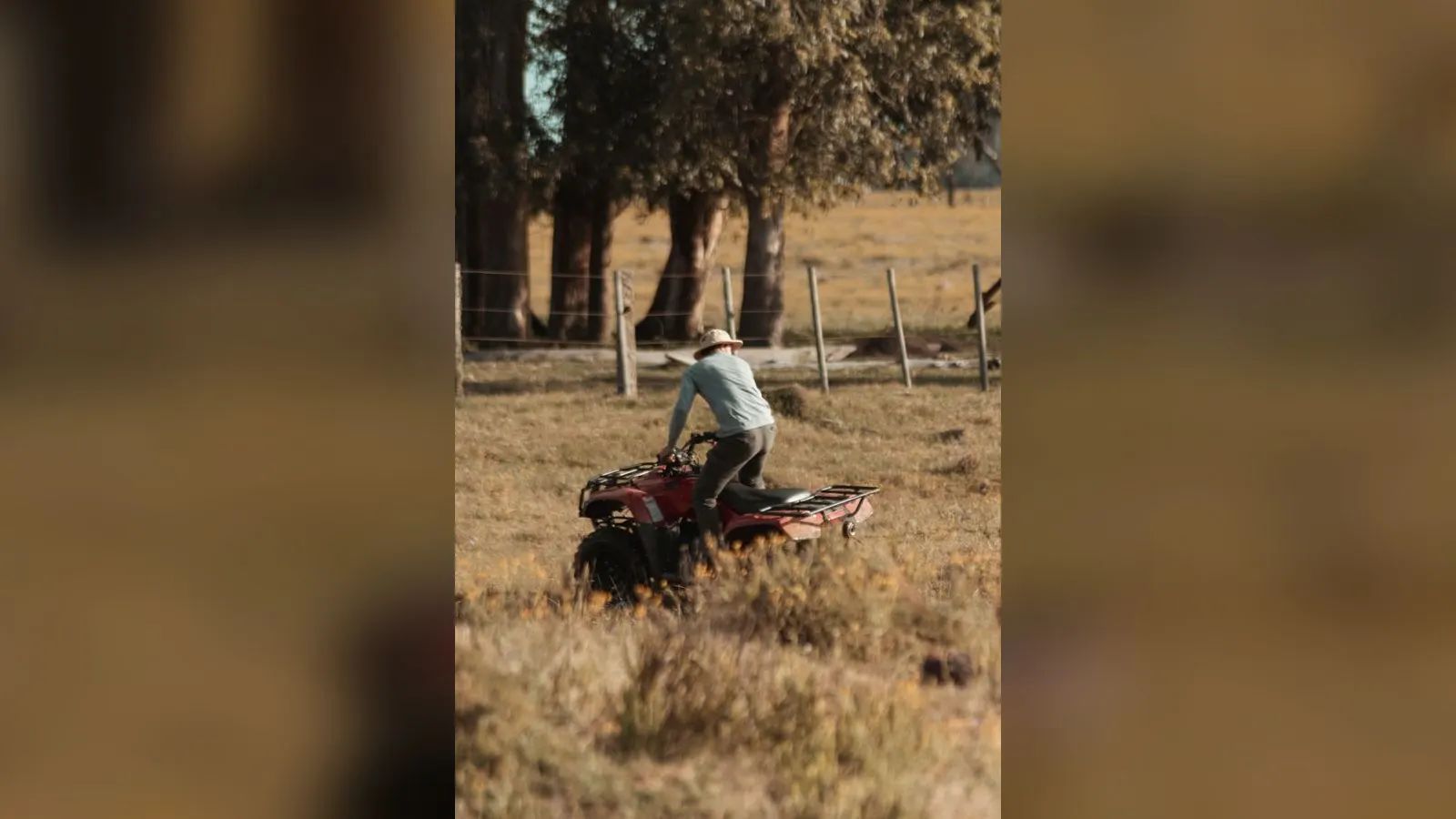
Using electric ATVs for farm work — towing, mustering, property maintenance, battery range on rural terrain, and running costs.
Electric Quads for Australian Farms: A Practical Utility Guide
Quad bikes are one of the most used vehicles on Australian farms. They check fences, muster livestock, haul supplies, and cover ground that trucks and utes cannot reach. Traditionally, that has meant petrol-powered machines. But electric quads are now a realistic option for farm utility work, and they bring advantages that petrol simply cannot match. This guide looks at how electric quads fit into everyday Australian farm operations.
Why Farmers Are Looking at Electric
The two things farmers mention most when they switch to electric are noise and running costs.
Noise matters because livestock react to it. Cattle, sheep, and horses are calmer around quiet vehicles. A petrol quad at working speed produces 85 to 100 decibels. An electric quad at the same speed produces 30 to 50 decibels. That difference translates into less stressed animals during mustering, easier paddock checks near calving or lambing stock, and quieter early morning starts.
Running costs matter because fuel and servicing add up over years. An electric quad costs roughly $150 to $400 per year to run. A petrol quad costs $1,000 to $2,000 per year in fuel, oil, filters, and servicing. Over a five-year ownership period, the difference can pay for the machine itself.
Livestock Work
Electric quads are particularly well suited to livestock work. The quiet motor means:
- Mustering is calmer. Stock move more willingly when they are not startled by engine noise. This can reduce the time and labour needed for a muster.
- Paddock checks do not disturb animals. You can ride through a mob of calving cows or lambing ewes without causing unnecessary movement or stress.
- Working dogs hear commands better. Without engine noise competing, voice commands and whistles carry further and are clearer.
- Night checks are less disruptive. Checking stock at night during lambing or calving season is quieter for the animals and for anyone sleeping nearby.
The instant torque of an electric motor also helps when you need to accelerate quickly during livestock work — for example, getting ahead of a breakaway animal. There is no lag, no revving, no gear change. Full power is immediate.
Fencing and Property Maintenance
Farm quads spend a lot of time hauling tools and supplies. Electric quads handle this well, with some considerations.
Carrying capacity: Most farm-oriented electric quads have front and rear racks rated for 30 to 50 kg each. Combined with rider weight, total payload is typically 150 to 200 kg. That is enough for a fencing kit, a few star pickets, wire, and tools.
Towing: Electric quads rated for farm use typically tow 300 to 600 kg. That covers a small trailer loaded with feed, fencing materials, or water tanks. The instant torque is an advantage here — starting a loaded trailer from a standstill on a slope is easier with electric than petrol because the motor delivers full force without needing to slip a clutch or find the right gear.
Range for fence runs: A mid-range electric quad with a 5 to 8 kWh battery covers 40 to 80 km per charge. A boundary fence check on a 500-acre property might cover 15 to 30 km. That is well within a single charge, with energy to spare.
Terrain and Conditions
Australian farm terrain varies enormously — flat cropping country, hilly grazing land, creek crossings, boggy paddocks, rocky ridgelines, and sandy tracks. Electric quads handle most of this, but there are some points to keep in mind.
Mud and water: Look for models with sealed battery compartments and an IP65 or higher water resistance rating. The motor and electronics must handle creek crossings and muddy conditions without damage. Check the ground clearance — 200 mm or more is recommended for farm use.
Hills: Electric motors maintain consistent torque on climbs, which is an advantage. However, sustained hill climbing drains the battery faster than flat riding. On hilly country, expect 30 to 50 percent less range than the flat-ground rating.
Dust: Australian dust gets into everything. A well-sealed motor and battery compartment are essential. Check that air intakes (for battery cooling) have adequate filtration.
Temperature: Lithium-ion batteries lose some capacity in cold weather (below 5 degrees Celsius, expect 10 to 20 percent less range). In extreme heat (above 40 degrees), the battery management system may limit power to protect the cells. Both conditions are manageable but worth knowing about.
Towing Capacity in Detail
For serious farm utility work, towing matters. Here is what to expect from current electric quads:
Light-duty (towing up to 300 kg): Suitable for small trailers with hand tools, light fencing supplies, or a couple of hay bales. Adequate for small properties and light daily tasks.
Mid-duty (towing 300 to 500 kg): Covers most farm towing needs. A trailer of feed bags, a water tank, fencing gear, or firewood. This is the sweet spot for general farm use.
Heavy-duty (towing 500 kg and above): For larger loads — bulk feed, building materials, heavier equipment. Fewer electric models reach this level, but options are increasing.
When towing, range drops. As a rough guide, towing at half the rated maximum reduces range by about 25 to 35 percent. Towing at the rated maximum on hilly ground can halve the range.
Charging on the Farm
Charging is simpler than many farmers expect. A standard 240V power outlet — the same type found in every shed, barn, and homestead — is all you need.
Charge times:
- Small battery (2 to 4 kWh): 3 to 5 hours
- Mid battery (5 to 8 kWh): 5 to 8 hours
- Large battery (9 to 14 kWh): 8 to 12 hours
A typical daily pattern: ride in the morning, plug in over lunch and through the afternoon, ride again the next morning. Or ride during the day, plug in overnight, and start fresh. For most farms, this cycle works without any disruption to routine.
Solar charging: If you have solar panels on the shed or homestead, charging during daylight hours is effectively free. A 5 kWh battery requires about 5 kWh of solar energy — achievable in 2 to 4 hours from a modest rooftop system on a clear day. This is one of the strongest economic arguments for electric on Australian farms.
Remote paddocks: If you need to charge away from the homestead, a portable generator or a solar panel with an inverter can work. Some farmers set up a charging point at a distant shed or camp for extended property work.
Safety and Compliance
Quad bike safety is a serious issue on Australian farms. Quad bikes are consistently one of the leading causes of farm deaths and injuries.
Operator protection: Several Australian states now require or strongly recommend operator protection devices (OPDs) or crush protection devices (CPDs) on farm quad bikes. In Victoria, for example, rebates are available for fitting approved OPDs. Check your state's requirements — these apply to electric quads just as they apply to petrol.
Helmets: An Australian Standards approved helmet (AS/NZS 1698) should be worn every time. This is a legal requirement in some states for farm quad use and a basic safety measure everywhere.
Speed: Electric quads can be fast. If you are using one primarily for utility work, consider a model with a configurable speed limiter. Setting a maximum of 30 to 40 km/h for daily farm work reduces the risk of rollover and loss-of-control incidents.
Training: Safe Farming Australia and various state bodies offer quad bike safety training courses. These cover terrain assessment, slope limits, loading, passenger rules (quads are single-rider vehicles), and emergency procedures. The training applies equally to electric and petrol machines.
Cost of Ownership Over Five Years
Here is a rough comparison for a mid-range farm quad used regularly:
| Cost | Petrol | Electric |
|---|---|---|
| Purchase price | $10,000 to $15,000 | $12,000 to $20,000 |
| Fuel / electricity (5 years) | $4,000 to $7,500 | $500 to $1,500 |
| Servicing (5 years) | $1,500 to $3,000 | $250 to $750 |
| Battery replacement | N/A | $0 to $3,000 (if needed) |
| Total 5-year cost | $15,500 to $25,500 | $12,750 to $25,250 |
The numbers overlap, but the trend is clear: electric costs more upfront and less over time. With solar charging, the electricity cost drops close to zero, pushing the total cost of electric ownership well below petrol.
Is an Electric Quad Right for Your Farm
An electric quad makes strong sense for:
- Properties under 2,000 acres where daily riding is under 60 to 80 km
- Livestock operations where quiet handling matters
- Farms with solar power for free or near-free charging
- Properties near towns or residential areas where noise is an issue
- Farmers who want to reduce ongoing fuel and maintenance costs
It may not yet suit:
- Very large stations with all-day riding and no mid-route charging
- Extremely remote properties without reliable power
- Operations that require sustained heavy towing over long distances daily
For the majority of Australian farms, electric quads are now a practical working tool. They are not a future technology or an experimental option — they are a current, proven alternative to petrol that saves money, reduces noise, and does the job.
Ready for the Property?
Browse kids and adult electric quad bikes and ATVs for recreation and farm work.
Shop Electric Quads →