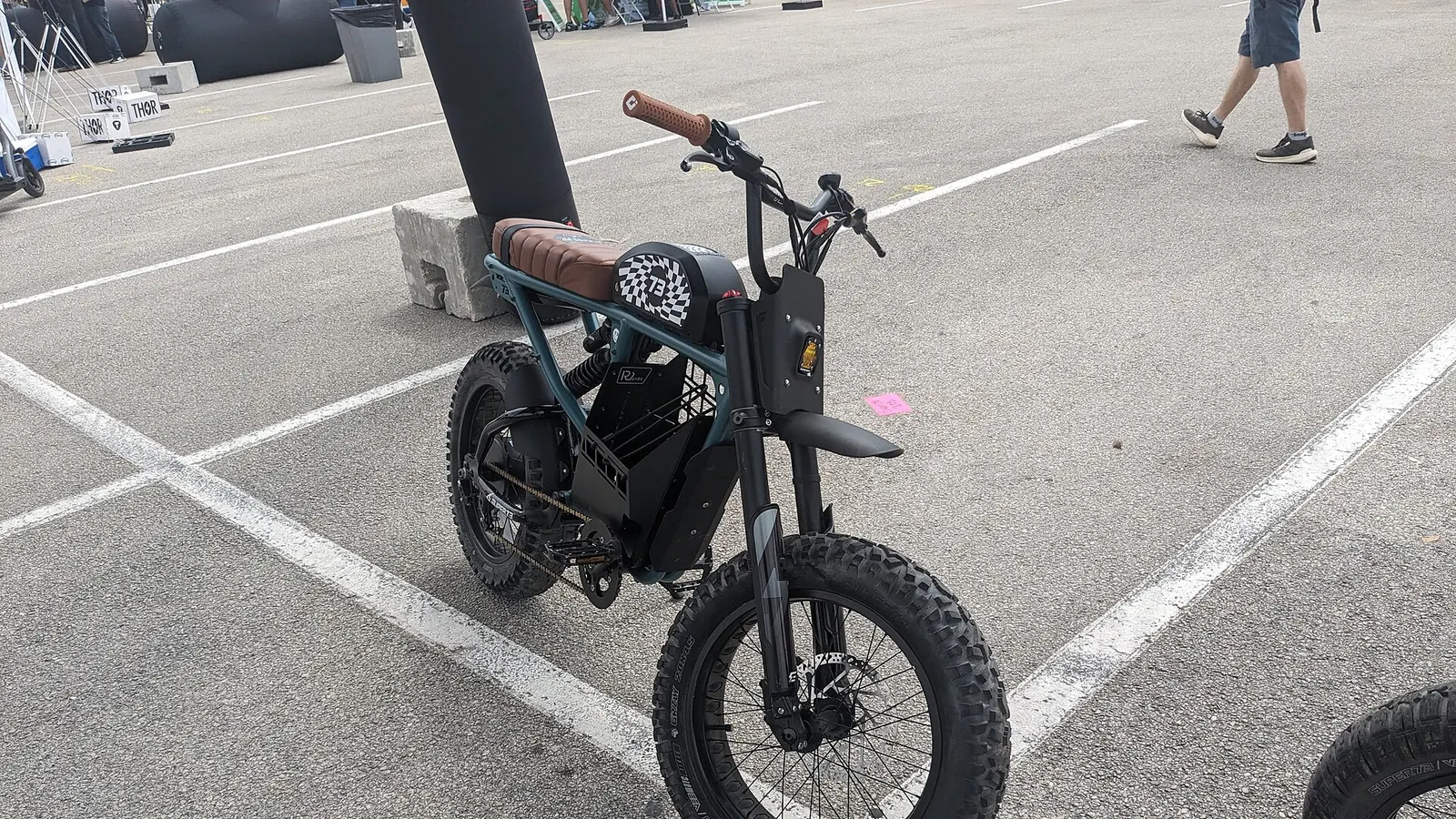
The rise of moped-style and cafe-racer e-bikes — fat tyres, bench seats, and vintage aesthetics with modern electric drivetrains. Legal status in Australia explained.
Moped-style e-bikes look like vintage motorcycles, ride like bicycles, and sit in a legal category that depends entirely on the motor and speed specifications. They are the fastest-growing lifestyle segment of the e-bike market — and the most misunderstood.
What Is a Moped-Style E-Bike?
A moped-style e-bike has:
- A low-slung, motorcycle-inspired frame with a long seat (bench or banana style)
- Fat tyres (3.0–5.0 inches) for a wide, stable stance
- Forward foot pegs or a flat platform instead of traditional pedal position
- Headlight, taillight, and often indicator-style turn signals
- A throttle (twist or thumb) and pedal-assist
- Retro or cafe-racer styling — chrome accents, round headlights, leather-look seats
The result looks like a classic moped from the 1970s but runs on battery power and, in most configurations, qualifies as a bicycle under Australian law.
Popular Styles
Super73 Style
Inspired by the American Super73 brand: chunky fat tyres, low step-over frame, bench seat, aggressive stance. Designed for the beach, the boardwalk, and Instagram. Multiple brands produce similar designs in the Australian market.
Cafe Racer Style
Longer, lower, with drop handlebars or flat bars, a single seat, and minimal bodywork. Inspired by the stripped-down cafe racers of the 1960s. More aggressive riding position than the Super73 style.
Scrambler Style
Knobby fat tyres, higher ground clearance, and a more upright riding position. Designed for mixed terrain — sealed roads plus light off-road (fire trails, gravel, beach tracks). The dual-sport of the moped-style world.
Legal Classification in Australia
This is where buyers get confused — and sometimes fined.
A moped-style e-bike is legally a bicycle (and can be ridden on roads, bike paths, and shared paths without registration) only if:
- Pedal-assist motor limited to 250 W continuous rated power
- Motor cuts off at 25 km/h
- Pedal-assist only (throttle limited to 200 W or 6 km/h walk-assist)
A moped-style e-bike that has:
- A throttle capable of propelling the bike above 6 km/h without pedalling (over 200 W)
- A motor rated above 250 W continuous
- A top assisted speed above 25 km/h
...is classified as a motor vehicle and requires registration, CTP insurance, and a motorcycle licence. No Australian state currently offers a registration pathway for these vehicles, making them effectively illegal for public road use.
In practice: many moped-style e-bikes sold in Australia ship with motors rated at 500 W–1000 W and top speeds of 40–50+ km/h. These are legal to ride on private property only. Riding them on public roads carries fines, vehicle seizure risk, and insurance liability.
What Sellers Do Not Tell You
Some sellers advertise moped-style e-bikes as "road-legal" because they include a pedal-assist mode alongside the throttle. This is misleading. The presence of pedals does not make a 750 W throttle-equipped bike legal. The motor rating, throttle capability, and speed cut-off are what determine legality — not whether pedals are attached.
Ask before buying:
- What is the motor's continuous rated power (not peak power)?
- Does the motor cut off at 25 km/h on pedal assist?
- Is the throttle limited to walk-assist only (6 km/h)?
If the answer to any of these is no, the bike is not road-legal in Australia.
Riding Experience
Moped-style e-bikes ride differently from standard commuter e-bikes:
- Lower centre of gravity: the battery and motor are mounted low in the frame. This makes the bike feel stable and planted, especially at low speed.
- Fat tyres: wide, soft, and forgiving. Excellent on rough surfaces, gravel, and sand. Slower on sealed roads due to rolling resistance.
- Forward foot position: feet are ahead of the bottom bracket, like a motorcycle. Comfortable for cruising but less efficient for pedalling — the pedalling geometry is compromised by the styling.
- Heavier weight: 30–40 kg is common. Manageable on flat ground but noticeable on hills and when parking.
- Head-turning styling: expect attention from pedestrians, other cyclists, and drivers. This is part of the appeal.
Who Buys Moped-Style E-Bikes?
- Style-conscious riders who want a vehicle that makes a statement
- Beach and coastal riders who cruise boardwalks, beach paths, and coastal towns
- Short-distance commuters (under 10 km) on flat routes
- Riders who want motorcycle aesthetics without the licence, registration, and running costs
- Content creators and social media users who use the bike as a lifestyle accessory
What to Look For
- Legal compliance: ensure the bike meets EN 15194 if you plan to ride on public roads. If it does not, understand that you are buying a private-property vehicle.
- Battery capacity: moped-style bikes are heavy and have high rolling resistance. A 500 Wh battery gives 30–50 km of range — adequate for short commutes but limited for longer rides.
- Brakes: hydraulic disc brakes with 180 mm rotors minimum. The weight of these bikes demands serious stopping power.
- Pedal quality: some moped-style bikes treat pedals as an afterthought — small, poorly positioned, and uncomfortable. If you plan to pedal (and you should, for legal compliance), check that the pedal position and crank length are usable.
- Build quality: the moped-style segment includes both premium brands and budget imports with questionable quality control. Check welds, wiring, and component brands before buying.
Bottom Line
Moped-style e-bikes are the most visually striking electric bikes on the market. They combine motorcycle aesthetics with bicycle practicality — but only if the motor and speed specifications comply with Australian law. Before buying, confirm the legal classification. A stunning bike that cannot legally leave your driveway is an expensive ornament.
Ready to Find Your E-Bike?
Browse commuter, cargo, folding and mountain e-bikes from Brunswick, Victoria, with express freight across Australia.
Shop E-Bikes →