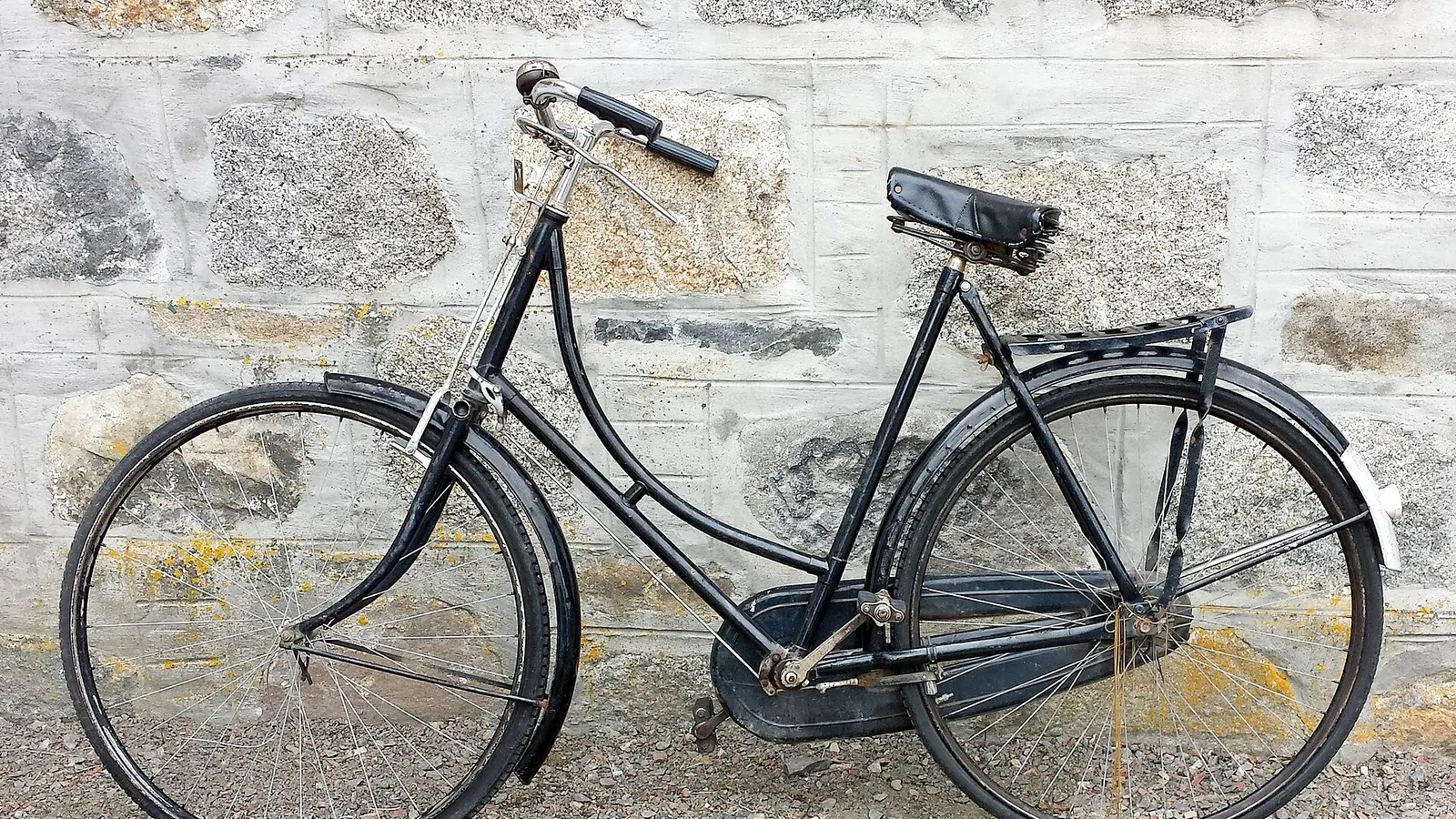
Comparing step-through and step-over e-bike frames — stiffness, weight, accessibility, mounting ease, and why the motor changes the equation.
The frame shape determines how you mount and dismount the bike, how stable it feels, and — for many riders — whether they ride at all. Step-through and step-over frames suit different bodies, different riding styles, and different use cases.
Step-Over (Diamond) Frame
The traditional bicycle frame. A top tube runs from the head tube (steering) to the seat tube, creating a triangulated structure. To mount, you swing one leg over the top tube.
Advantages
- Stiffer and lighter: the triangulated structure is the most efficient use of material. A step-over frame is 0.5–1.5 kg lighter than the equivalent step-through at the same stiffness.
- Better power transfer: the stiff frame wastes less pedalling energy in flex. Noticeable on hard sprints and steep climbs.
- More stable at speed: the rigid triangle resists twisting forces better, which matters above 30 km/h and on rough descents.
- More frame space: the triangle provides room for a large battery (often integrated into the downtube), a full-size water bottle cage, and a frame bag.
Disadvantages
- Harder to mount: swinging a leg over a top tube that is 75–85 cm high requires hip flexibility. For riders with hip issues, knee problems, or limited mobility, this is a genuine barrier.
- Harder to dismount in an emergency: at a sudden stop, stepping through is faster and safer than swinging a leg over.
- Less practical for frequent stops: delivery riders, commuters who stop at every intersection, and parents loading children stop and start dozens of times per ride. Every mount/dismount is harder on a step-over.
Best For
- Riders who prioritise performance and efficiency
- Mountain bike and trail riding (the stiff frame handles rough terrain better)
- Riders with good flexibility and no mobility restrictions
- Competitive cycling or fast commuting
Step-Through (Low-Step / Wave) Frame
The top tube is eliminated or dropped to near the bottom bracket. You step through the frame to mount — both feet stay close to the ground.
Advantages
- Easy mounting and dismounting: no leg swing needed. Step through, sit down, ride. This is the defining advantage and it matters for more riders than the industry traditionally acknowledged.
- Safer at stops: both feet reach the ground easily. At traffic lights, you stand with the frame between your legs, both feet planted. Emergency stops do not require clearing a high top tube.
- Practical for everyday use: wear a skirt, suit, work clothes, or rain gear without restriction. The low frame does not catch on clothing.
- More accessible: riders with hip replacements, knee injuries, back issues, balance concerns, or limited flexibility can ride a step-through when a step-over is impossible.
Disadvantages
- Slightly heavier: the open frame (no top tube triangle) requires thicker or reinforced tubes to achieve the same stiffness. Typically 0.5–1.5 kg heavier.
- Slightly less stiff: the open frame design flexes more under hard pedalling. On a casual commuter ride, this is imperceptible. On a steep sprint or rough trail, it is noticeable.
- Less frame space: the lower downtube limits battery integration options. Some step-through e-bikes mount the battery on the rear rack or behind the seat tube instead of inside the downtube.
Best For
- Commuters who value ease of use over performance
- Older riders and riders with mobility restrictions
- Parents with child seats (easier to mount with a child on board)
- Delivery riders who stop and start frequently
- Anyone who wears restrictive clothing while riding
The In-Between: Low Step-Over (Mixte / Semi-Step-Through)
Some frames split the difference: the top tube is lowered but not eliminated, creating a frame that is easier to mount than a full diamond but stiffer than a full step-through. These are sometimes called mixte frames.
Standover height: typically 55–65 cm (compared to 75–85 cm for diamond and 30–45 cm for step-through).
This is a good compromise for riders who want some of the stiffness of a diamond frame but cannot manage a full-height top tube.
Standover Height: The Number That Matters
Standover height is the distance from the ground to the top tube when you straddle the bike. You need at least 3–5 cm of clearance between the top tube and your body when standing flat-footed over the frame.
How to check:
- Stand over the bike in the shoes you will ride in
- With both feet flat on the ground, there should be 3–5 cm of clearance above the top tube
- If the top tube presses into you, the frame is too tall — try a smaller size or a step-through
For step-through frames, standover height is effectively not a constraint — the frame is low enough for almost any rider to step through.
Does Frame Type Affect E-Bike Performance?
On an e-bike, the performance difference between step-through and step-over is smaller than on a non-assisted bike. Here is why:
- The motor compensates for flex. Frame flex absorbs some pedalling energy, but the motor adds 250 W+ of assist. The energy lost to flex is a small percentage of the total power.
- E-bikes are already heavy. A 22 kg step-over vs a 23.5 kg step-through is a 6 % difference — in the context of a 95 kg total system weight (bike + rider), it is negligible.
- Most e-bike riders do not sprint. The performance advantage of a stiffer frame matters at maximum effort — which most commuters never reach.
Bottom line for e-bikes: choose the frame that you can mount and dismount comfortably. The motor eliminates the performance gap that matters on an unpowered bike.
Sizing Considerations
Both frame types come in multiple sizes. The right size ensures:
- Proper leg extension at the bottom of the pedal stroke (slight bend in the knee)
- Comfortable reach to the handlebars (no stretching, no hunching)
- Adequate standover clearance
Most e-bike manufacturers publish size charts based on rider height. As a starting point:
| Rider height | Typical frame size |
|---|---|
| 150–165 cm | Small (S) or 15–16" |
| 165–175 cm | Medium (M) or 17–18" |
| 175–185 cm | Large (L) or 19–20" |
| 185–195 cm | Extra Large (XL) or 21–22" |
Important: these are guidelines. Arm length, leg inseam, and torso length vary. A test ride is the best sizing tool.
Bottom Line
Step-over frames are stiffer, lighter, and better for performance riding. Step-through frames are easier to mount, safer at stops, and more accessible for riders with limited mobility. On an e-bike, the motor reduces the performance gap to near zero — making the step-through the better default choice for commuters, while step-over remains the right choice for trail riders and performance-focused cyclists.
Ready to Find Your E-Bike?
Browse commuter, cargo, folding and mountain e-bikes from Brunswick, Victoria, with express freight across Australia.
Shop E-Bikes →