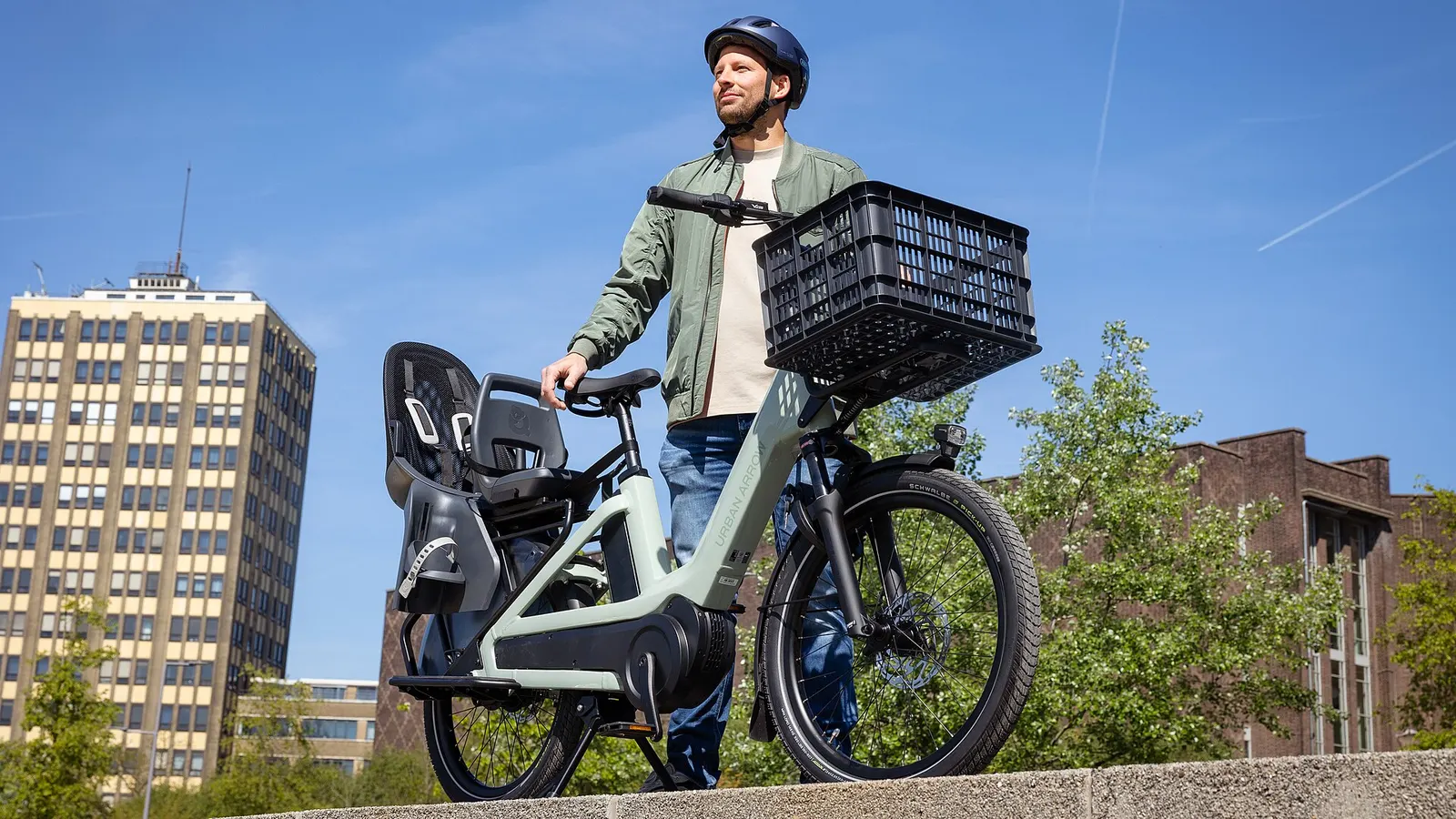
Weight limits, harness types, rack-mounted vs frame-mounted, and Australian safety standards for carrying children on e-bikes.
Carrying a child on an e-bike can be one of the nicest parts of family life: school runs, trips to the park and weekend cafe rides all get easier when the motor does the climbing. It also carries real responsibility. A child seat has to be the right type for your child, compatible with your bike and fitted correctly, and you need to know what your state or territory allows. This guide walks through the main decisions. It is general information only; always follow the manufacturer's instructions and check the current rules where you live.
Start With the Rules and the Manufacturer's Limits
Two things come before any purchase.
- The manufacturer's limits for the seat. Every child seat has a maximum child weight and usually a minimum age or size. Do not exceed them.
- The manufacturer's limits for the bike. Your e-bike has its own maximum load, which includes you, the bike, any gear and the child. Many frames and racks also have specific limits for mounting a child seat. Some e-bikes are not suitable for carrying a child at all.
State and territory road rules differ on carrying children on bicycles, including age or size requirements and helmet rules. Check your own state's transport authority before you buy. If anything is unclear, ask us or the manufacturer rather than guessing.
Front-Mounted vs Rear-Mounted Seats
Front-mounted seats
- Sit between the rider's arms, ahead of the saddle.
- Keep the child in view and allow easy conversation.
- Generally suit smaller, lighter children, within the manufacturer's stated limits.
- Can affect steering and visibility, and some riders find them cramped.
Rear-mounted seats
- Sit behind the rider, over the rear wheel.
- Typically accommodate larger children than front seats, within the manufacturer's limits.
- Place more weight at the back, which changes the bike's balance, especially when mounting and dismounting.
- Often need a compatible rack or frame mount.
Neither is simply better. The right choice depends on your child's size, your bike's frame and how you ride.
Rack Mount vs Frame Mount
How the seat attaches to the bike is as important as which seat you buy.
Rack-mounted seats
- Clip or bolt to a rear rack that is rated for a child seat.
- Easy to remove if you want to use the bike without a seat.
- Only suitable if the rack is explicitly rated for the seat and the load. Not every rack is.
Frame-mounted seats
- Attach directly to the frame, usually via a bracket on the seat tube or the seatpost area.
- Often more stable because the load transfers to the frame.
- Depend on the shape of your frame, the position of the battery and cables, and whether the frame has the right mounting area.
Check compatibility with your specific bike before purchase. E-bikes with integrated batteries, large rear hub motors or unusual frame shapes can limit what is possible. Where the manufacturer lists compatible bikes, rely on that list.
Weight and Balance
An e-bike with a child on board behaves differently from the same bike when empty.
- The extra weight lengthens your stopping distance.
- A rear load changes how the front wheel feels, and a front load changes steering.
- A heavier bike is harder to hold upright when stationary, so a good kickstand is a real help.
- Starting and stopping are the moments of greatest risk, because that is when the bike is least stable.
Practise with the seat fitted and without the child before you set off with your family. Learn how the assist level affects starting, and use a lower assist level so the bike pulls away smoothly rather than lurching forward.
Harness, Footrests and Safety Features
Look for these features when choosing a seat:
- A harness that holds your child securely. Adjust it to fit snugly each ride, and check it again whenever the child's clothing changes.
- Footrests with straps so feet cannot reach the spokes or wheel. Always make sure they are adjusted for the child's leg length.
- A supportive backrest and sides that keep the child comfortable and stable.
- A comfortable, padded seat for longer rides.
- A headrest or a high enough back for children who might fall asleep.
Check that moving parts, such as buckles, are easy for you to operate but hard for a child to undo.
Helmet and Clothing
A correctly fitted helmet that meets Australian standards is a basic requirement for children on bikes in most places. Make sure it fits properly and does not push forward or tilt back. Dress your child for the ride:
- Closed shoes, not sandals or thongs.
- No loose clothing that could get caught.
- Layers for cold weather, and sun protection for summer.
- Bright or reflective clothing for visibility. See our high-vis and reflective gear guide.
Installation Checklist
Whichever seat you choose, follow the instructions that came with it. As a general approach:
- Read the manual fully before starting.
- Check that the seat, rack or frame mount and bike are all listed as compatible.
- Tighten bolts to the manufacturer's specification, ideally with a torque wrench.
- Check for rattles, movement or flex after fitting.
- Test the seat with a weight before putting your child in.
- Re-check bolts after the first few rides, then regularly.
If you are not confident, have a qualified bike mechanic install and check the seat. This is not the place for guesswork.
Riding With a Child
- Mount and dismount with the bike stable. Where possible, lean the bike against a wall or hold both brakes firmly.
- Never leave a child in a seat on an unattended bike, even briefly. Bikes fall over easily.
- Ride more slowly and brake earlier than usual.
- Pick quieter routes and separated bike paths where you can.
- Take care on corners, gravel and wet surfaces.
- Keep the battery charged so you do not need to carry a heavy bike home by hand.
When Not to Use a Child Seat
Skip it if the child is over the seat's limits, if the bike is not rated for the load, if the seat does not fit properly, or if you do not feel confident handling the bike. Cargo bikes and bike trailers are other options for families, and they have their own rules, limits and safety considerations.
Shop Child Seats and Safety Gear
Browse our range of Child Seats, and look at Racks & Baskets if you need a compatible rack. Helmets and other protective gear are in Safety, Locks & Carry. If you are unsure whether a seat suits your bike, contact us with the bike model and we will help you check.
Ride Safer, Carry More
Helmets, lights, locks, racks and bags for e-bike and scooter riders.
Shop Safety, Locks & Carry →