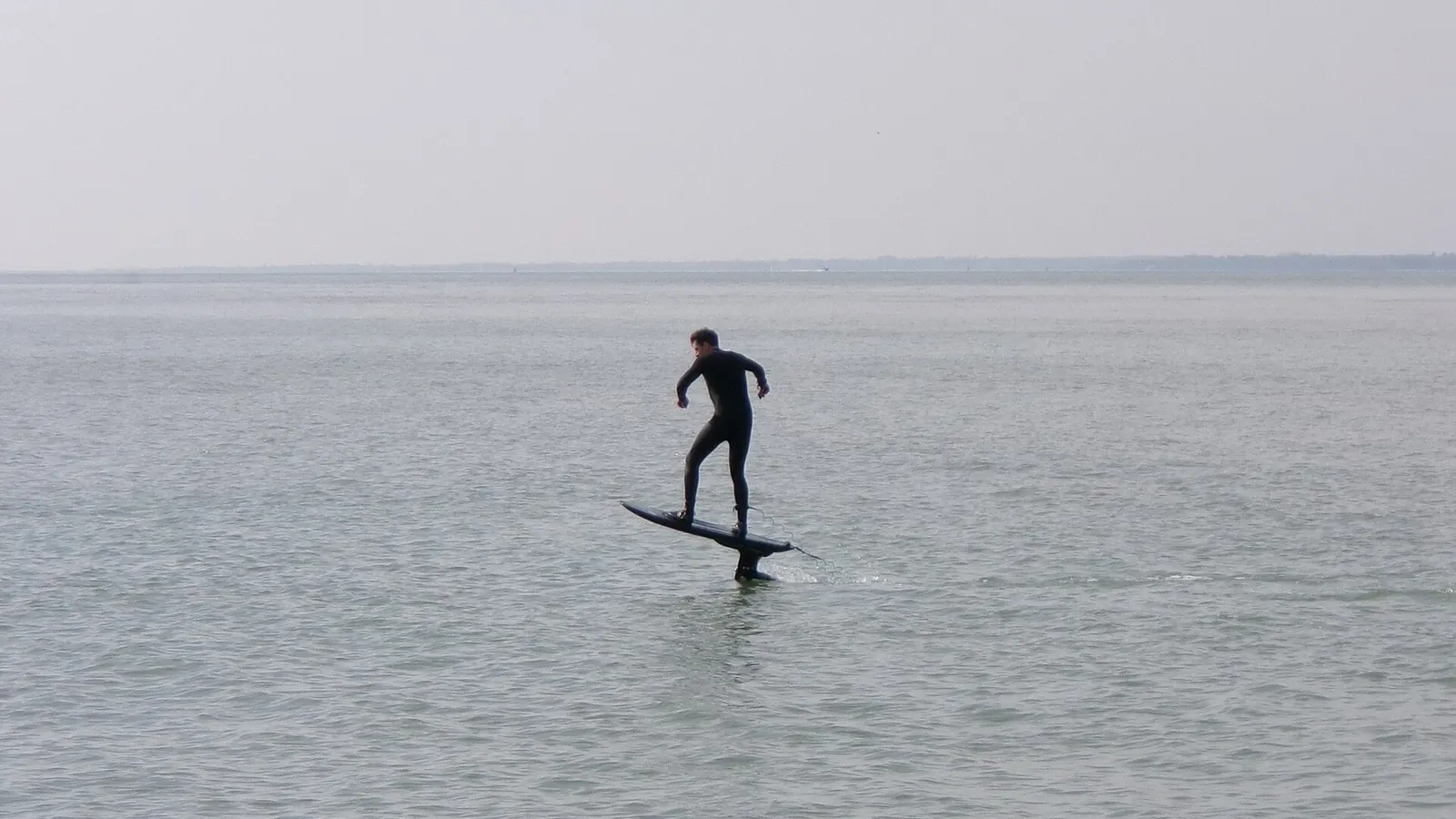
The first-ride experience, balance technique, safety gear, and how to progress from kneeling to standing on an electric hydrofoil.
Riding an eFoil is one of the most memorable experiences in electric watersports. Once you get up on the foil, the board lifts clear of the water and glides in near silence, with no waves or wind required. It is also a skill that takes patience to learn. Almost everyone falls off plenty in the first sessions, and that is completely normal. This guide walks through what to expect on your first ride, how to find your balance, which safety gear to wear, and how to progress at a sensible pace.
What Is an eFoil?
An eFoil is an electric hydrofoil board. It has a board you stand on, a mast beneath it, and a wing (the foil) that generates lift. An electric motor and propeller, powered by a battery, drive you forward. You control the speed with a handheld remote. As the board gains speed, the wing produces lift and the board rises above the surface.
Because the board is lifted out of the water, the ride feels very different from surfing or wakeboarding. It is smooth, quiet, and responsive, but also sensitive. Small shifts of weight make a big difference.
Before You Go
A bit of preparation makes your first session far more enjoyable.
- Read the manual so you understand the remote, the motor, and the safety features.
- Check your equipment. Look over the board, mast, wing, propeller, and battery. Check that connections are secure and that the battery is charged.
- Choose the right spot. Calm, flat, open water is ideal. Avoid crowded beaches, swimmers, boat traffic, and strong currents.
- Check conditions. Wind, chop, and waves make learning harder. Early morning is often calmest.
- Check local rules. State boating authorities may have regulations on where powered craft can be used, and there may be speed or distance requirements. Check with your state's boating authority.
- Tell someone where you are going, or ride with a buddy.
Safety Gear You Should Wear
Never skip the safety basics. A foil board has a spinning propeller and a hard wing, so protective gear matters.
- Helmet. A water sports helmet protects your head from the board and wing. Many instructors consider this essential.
- Impact vest or flotation device. It provides buoyancy and cushions falls. Choose one that suits the activity.
- Leash or safety cut-off. Many eFoils have a remote or leash system designed to stop the motor if you fall. Make sure it is attached and working before every ride.
- Wetsuit or rash vest. Even in warmer weather, you will spend time in the water. A wetsuit gives warmth and some protection against scrapes.
- Booties or water shoes for grip on the board and comfort on rocks.
- Gloves, optional, for cooler conditions.
Keep clear of the propeller when you fall, and learn how the motor stops so you are never close to a spinning prop.
Your First Ride: Step by Step
1. Start on your knees
Most beginners start kneeling on the board in shallow, calm water. This lowers your centre of gravity and lets you get used to the board and the remote without the added challenge of standing.
2. Get comfortable with the remote
Practise gently squeezing the trigger and releasing it. Learn how the board responds. Use low power at first. The throttle is sensitive, and sudden squeezes can launch you off the board.
3. Cruise on your knees
Ride slowly while kneeling and feel how the board moves through the water. At this stage, the board stays on the surface, and you are simply getting used to steering and control.
4. Move to standing
Once you feel stable, try standing up while the board is moving slowly. Keep your knees bent, your weight centred, and your eyes looking forward, not down at your feet.
5. Feel the lift
As your speed rises, the board will begin to lift. This is the moment where most beginners lose balance. Stay calm, keep weight centred, and ease off the throttle if you feel the board rising too fast.
6. Fly low and short
Aim to get the board just above the surface and glide for a short distance. Then slow down and settle back to the water. Short, controlled flights build confidence.
Balance: The Key Skill
Foiling is all about balance and subtle weight changes.
- Weight forward tends to push the nose down, while weight back lifts the nose.
- Keep your stance centred over the mast.
- Use small movements. Over-correcting is the most common beginner mistake.
- Look ahead, not at your feet.
- Keep your knees bent to absorb movement.
- Stay relaxed. Tension makes the board harder to control.
If the board rises too high, ease off the power and shift your weight to bring it back down. If it dives, adjust your weight back and keep your throttle smooth.
Common Beginner Mistakes
- Using too much power. Gentle throttle is the key early on.
- Looking down. It throws off your balance.
- Standing too upright. Staying low is safer and more stable.
- Leaning too far forward or back. Small shifts matter.
- Rushing progression. Skipping steps often leads to falls and frustration.
- Riding in poor conditions. Wind and chop make learning harder.
- Not rinsing gear after riding. Salt can damage components over time. See our electric water sports battery and range guide for care tips.
Learning With a Lesson
Many riders find that a lesson with an experienced instructor speeds up learning and improves safety. An instructor can set up the equipment for your weight and skill, coach your stance, and help you avoid bad habits early. If a lesson is available in your area, it is often a smart investment, especially for your first few sessions.
Progression
Once you can get up and fly a short distance, you can start building skills.
- Longer flights. Extend your time above the water.
- Turning. Practise gentle, wide turns, leaning smoothly into the direction.
- Throttle control. Learn to hold a steady speed rather than surging.
- Smoother takeoffs and landings. Smooth transitions are a sign of progress.
- Different conditions. Gradually try slightly choppier water as your confidence grows.
- Different equipment. As you improve, you may wish to try other wings or boards. Ask the retailer or manufacturer what is suitable for your level.
Progress at your own pace. Some people are flying within a few sessions, while others take longer, and both are normal.
Battery and Ride Time Tips
Beginners often use more power while learning, so ride time may be shorter than you expect. Keep an eye on the battery indicator, stay close to shore, and keep a reserve. If you want longer sessions, a spare battery may help where your equipment supports it.
Respect Others on the Water
- Keep well clear of swimmers, surfers, paddlers, and boats.
- Observe local rules and any exclusion zones.
- Avoid crowded areas.
- Be aware of wildlife and sensitive environments.
- Never ride impaired by alcohol or drugs.
Browse Electric Water Sports
Ready to get on the water? Explore our Electric Water Sports category for eFoils, boards, and related gear. Browse Safety, Security and Carry for protective and carry items, and see Batteries, Parts and Kits for spare and replacement power. If you are unsure which setup suits a beginner, contact our team and we will help you choose.
Ready for the Water?
Explore electric jet skis, eFoils and electric surfboards, or contact us for availability and delivery.
Shop Electric Water Sports →