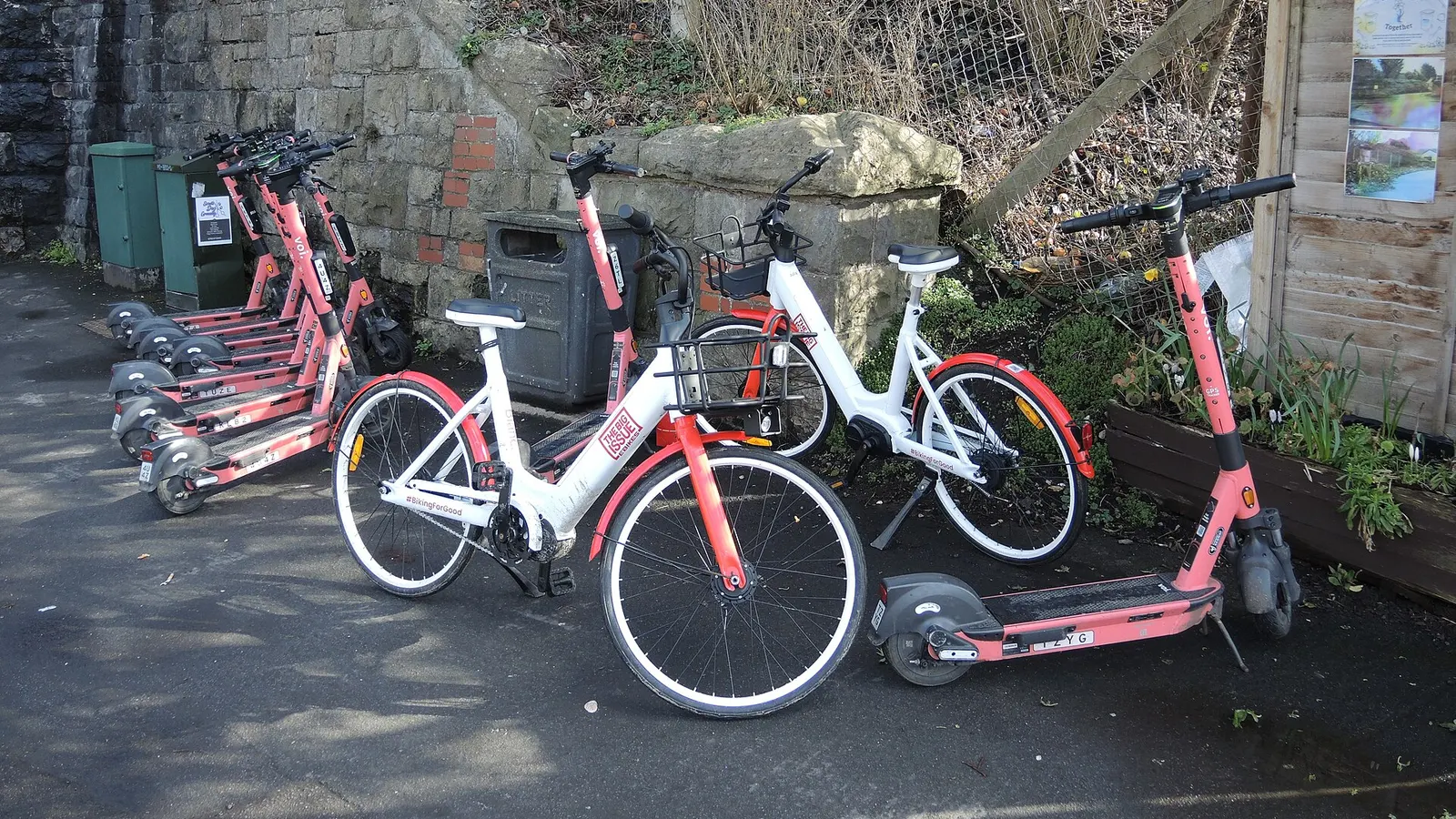
Speed, range, exercise, portability, cost, and safety compared — a detailed breakdown for Australian commuters choosing between e-scooters and e-bikes.
Electric scooters and e-bikes both replace car trips, both are legal in most Australian states, and both cost a fraction of driving. But they suit different commuters, different routes, and different lifestyles. Here is how they compare for daily commuting.
Speed and Range
| Spec | Electric scooter (legal) | Electric bike (pedal-assist) |
|---|---|---|
| Top speed (legal) | 25 km/h | 25 km/h (motor cut-off) |
| Practical cruising speed | 20–25 km/h | 22–30 km/h (pedalling extends beyond motor cut-off) |
| Typical range | 25–50 km | 40–100 km |
| Battery capacity | 300–700 Wh | 400–750 Wh |
The e-bike wins on practical speed and range. Because you pedal, you can exceed 25 km/h on your own power — the motor simply stops assisting. On a scooter, 25 km/h is the hard ceiling. Range is also better on an e-bike because your legs contribute energy that the motor does not need to provide.
Exercise
This is the single biggest practical difference.
E-bike: you pedal. Even on the highest assist level, you are doing 30–50 % of the work. A 10 km commute at moderate assist burns roughly 150–250 calories. Over a year of daily commuting, that adds up to meaningful fitness.
E-scooter: you stand. The motor does all the work. Calorie burn is negligible — roughly equivalent to standing at a desk. An e-scooter commute is transport, not exercise.
If fitness matters to you, the e-bike is the clear winner. If you want zero exertion (arriving at work without any sweat), the scooter has an advantage.
Portability
E-scooter: folds in seconds, weighs 12–20 kg, rolls on its own wheels when folded. Fits under a desk, in a car boot, or on a train without a bike permit. The folding mechanism is the scooter's greatest advantage for multi-modal commuters.
E-bike: does not fold (unless it is a folding e-bike, which is a separate category). Weighs 20–30 kg. Requires bike parking, a rack, or a secure lock-up point. On trains, unfolded bikes are banned during peak hours in most cities.
For commuters who need to combine riding with trains, buses, or office storage, the scooter is significantly more convenient — unless you invest in a folding e-bike.
Comfort
E-bike: a proper saddle, large wheels (700c or 26"+), suspension fork (many models), and an upright riding position. Comfortable for rides of any length. A 20 km commute on an e-bike is pleasant.
E-scooter: standing on a narrow deck, small wheels (8–10 inches), minimal or no suspension. Comfortable for 5–10 km. Beyond 15 km, standing fatigue sets in — your feet, ankles, and lower back feel it. Rough roads amplify vibration through the small wheels and rigid deck.
For short commutes (under 10 km), both are comfortable. For longer rides, the e-bike is vastly more comfortable.
Safety
E-bike: larger wheels roll over potholes, tram tracks, and debris more safely. Hydraulic disc brakes provide strong, consistent stopping power. The seated riding position gives a lower centre of gravity and more stability.
E-scooter: small wheels are vulnerable to potholes, gutter lips, and tram tracks (a 10-inch wheel can drop into a tram groove and throw the rider). Braking is less powerful — most scooters have drum or disc brakes on one wheel only. The standing position means a sudden stop pitches you forward.
Injury data: emergency department data from Melbourne and Sydney shows that e-scooter riders present with more head injuries, wrist fractures, and facial injuries than e-bike riders, relative to the number of vehicles on the road. The standing position and small wheels are the primary factors.
Both require a helmet in all Australian states. Both should have front and rear lights for night riding.
Cost
| Cost factor | E-scooter | E-bike |
|---|---|---|
| Purchase price | $500–$2,000 | $1,500–$6,000 |
| Annual maintenance | $50–$150 | $100–$300 |
| Tyre replacement | $20–$40 per tyre | $30–$60 per tyre |
| Battery replacement | $200–$500 | $500–$1,500 |
| Insurance (optional) | $100–$200/year | $150–$300/year |
| Accessories (helmet, lock, lights) | $100–$200 | $150–$400 |
The e-scooter is significantly cheaper upfront and over its lifetime. For budget-conscious commuters, this is a real factor.
Weather
Rain: neither is ideal. E-bikes handle wet roads better (larger tyres, more traction, mudguards available). Most e-scooters are rated IP54 at best — they handle light rain but should not be ridden through standing water. Wet scooter decks are slippery underfoot.
Wind: e-bikes are more stable in crosswinds (heavier, lower centre of gravity, seated position). Standing on a scooter in strong wind is genuinely unsafe — gusty days are a valid reason to leave the scooter at home.
Heat: both are fine. The e-bike rider arrives slightly sweatier (pedalling) but can use lower assist to reduce effort.
Cargo
E-bike: rear rack, panniers, front basket, frame bag. You can carry a laptop, groceries, a change of clothes, and a lock without wearing a backpack. Cargo e-bikes carry 80–200 kg of payload.
E-scooter: a backpack or a small bag hung from the handlebars. No rack, no panniers. Carrying anything heavy shifts your centre of gravity and makes the scooter less stable.
If you need to carry anything more than a phone and wallet, the e-bike wins decisively.
Terrain
E-bike: handles hills, gravel, rough roads, and mixed surfaces comfortably. Mid-drive motors excel on steep grades.
E-scooter: best on flat, smooth surfaces. Small wheels struggle with gravel, grass, and rough pavement. Hills above 10 % gradient slow most scooters significantly and drain the battery fast.
Which Should You Choose?
Choose an e-scooter if:
- Your commute is under 10 km on flat, smooth roads
- You need to fold and carry the vehicle onto trains or into offices
- Budget is a primary concern
- You do not need to carry cargo
- You want zero physical effort
Choose an e-bike if:
- Your commute is over 10 km or involves hills
- You want exercise as part of your commute
- You need to carry cargo (laptop, groceries, child)
- You ride in varied weather and on mixed surfaces
- Comfort on longer rides matters
Bottom Line
E-scooters are better short-distance city tools — cheap, portable, and effortless. E-bikes are better all-round commuter vehicles — comfortable, capable, and healthy. Most riders who start on a scooter and later try an e-bike do not go back. But for the specific use case of a short, flat, multi-modal commute, the scooter remains hard to beat.
Ready to Pick Your E-Scooter?
Compare commuter and long-range electric scooters, with accessories and spares, dispatched from Brunswick, Victoria.
Shop E-Scooters →